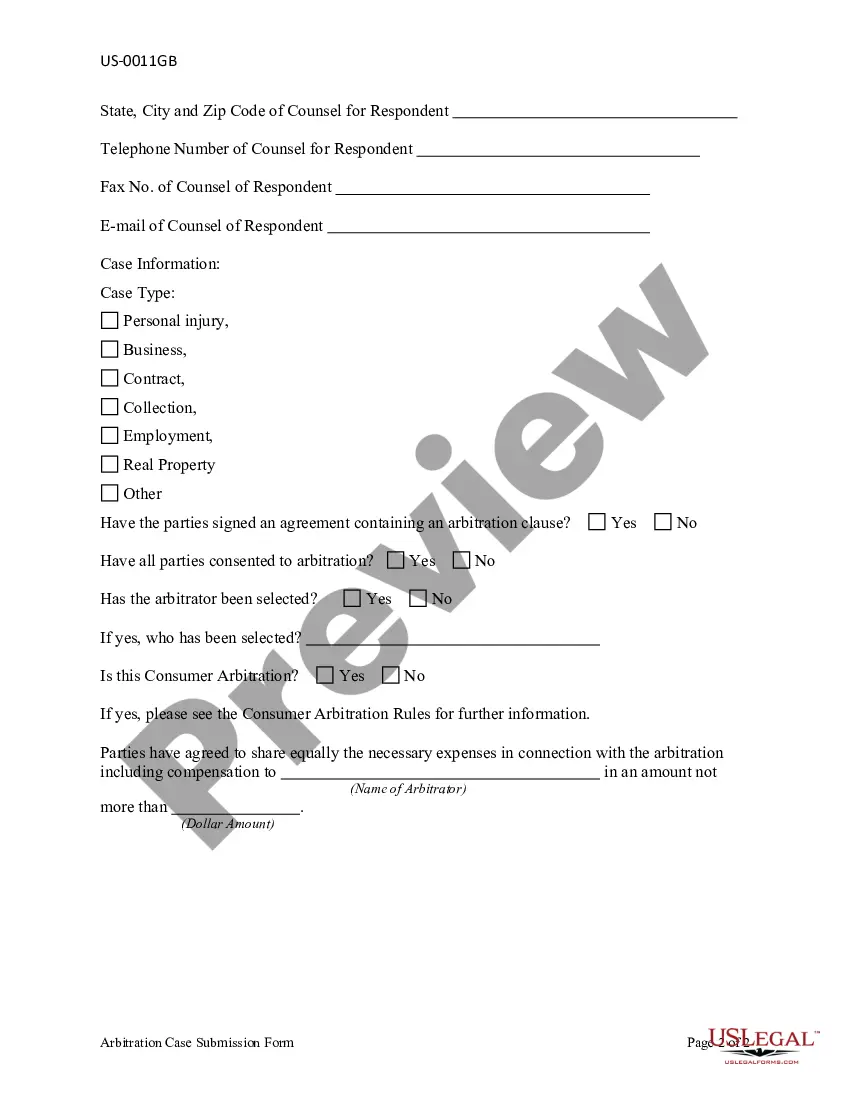
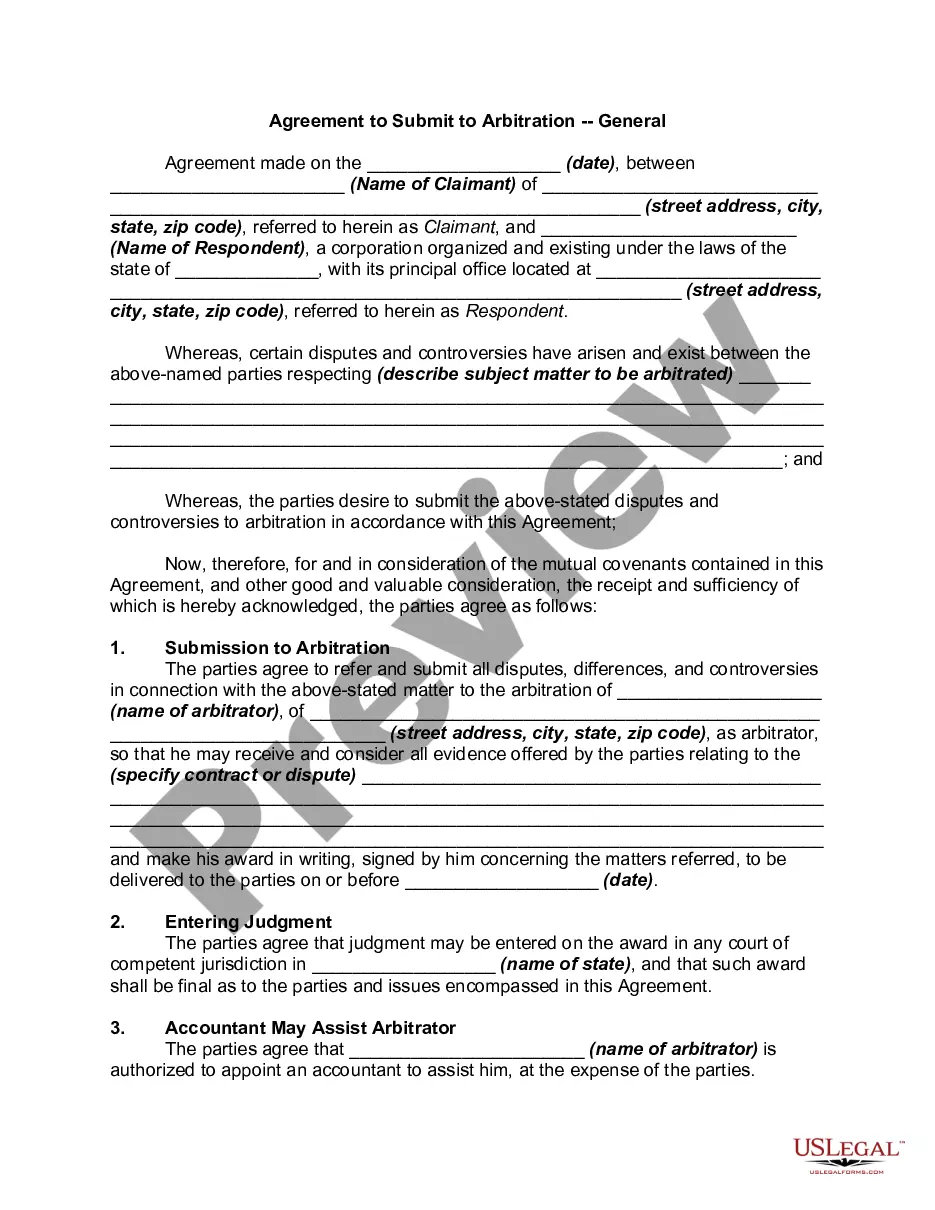
Arbitration Case Statement With Multiple Conditions In Phoenix
Description



Get your form ready online
Our built-in tools help you complete, sign, share, and store your documents in one place.
Make edits, fill in missing information, and update formatting in US Legal Forms—just like you would in MS Word.
Download a copy, print it, send it by email, or mail it via USPS—whatever works best for your next step.
Sign and collect signatures with our SignNow integration. Send to multiple recipients, set reminders, and more. Go Premium to unlock E-Sign.
If this form requires notarization, complete it online through a secure video call—no need to meet a notary in person or wait for an appointment.
We protect your documents and personal data by following strict security and privacy standards.

Make edits, fill in missing information, and update formatting in US Legal Forms—just like you would in MS Word.

Download a copy, print it, send it by email, or mail it via USPS—whatever works best for your next step.

Sign and collect signatures with our SignNow integration. Send to multiple recipients, set reminders, and more. Go Premium to unlock E-Sign.

If this form requires notarization, complete it online through a secure video call—no need to meet a notary in person or wait for an appointment.

We protect your documents and personal data by following strict security and privacy standards.
Looking for another form?





Form popularity
FAQ
Under the new version of Rule 68(g), the sanctions against a party who fails to obtain a more favorable judgment than the offer is “twenty percent of the difference between the amount of the offer and the amount of the final judgment.” This change applies to offers of judgment served on or after January 1, 2022.
Rule 72 - Suitability for Arbitration (a) Decision to Require Compulsory Arbitration. Rules 72 through 77 apply if the superior court in a county, by a majority vote of the judges in that county, decides to require arbitration of certain claims and establishes jurisdictional limits by local rule under A.R.S.
A magistrate judge to whom a pretrial matter not dispositive of a claim or defense of a party is referred to hear and determine shall promptly conduct such proceedings as are required and when appropriate enter into the record a written order setting forth the disposition of the matter.
All civil cases filed with the Clerk of the Court in which the Court finds or the parties agree that the amount in controversy does not exceed $50,000 shall be subject to the provisions of A.R.S. § 12-133 and Rules 72 to 77 of the Arizona Rules of Civil Procedure governing compulsory arbitration.
As provided by Rule 72(d), Arizona Rules of Civil Procedure, the Court will waive the arbitration requirement if the parties agree to participate in a summary jury trial.
In actions involving multiple defendants, if default has been entered against one or more, but fewer than all of the defendants before the arbitration hearing, the arbitrator must refer all further proceedings involving the defaulted defendant(s) to the judge assigned to the action.