Arbitration Case In Malaysia In Arizona
Description


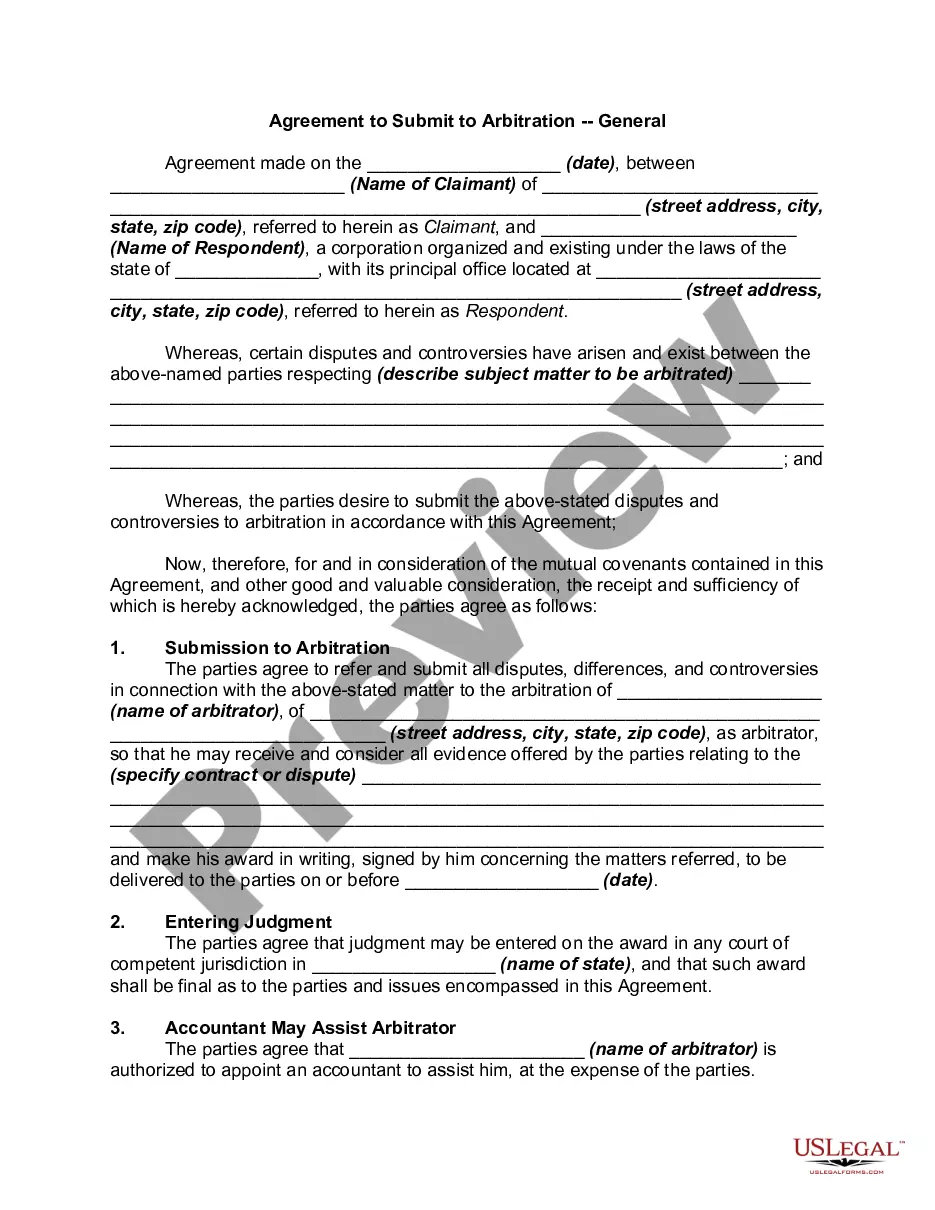

Get your form ready online
Our built-in tools help you complete, sign, share, and store your documents in one place.
Make edits, fill in missing information, and update formatting in US Legal Forms—just like you would in MS Word.
Download a copy, print it, send it by email, or mail it via USPS—whatever works best for your next step.
Sign and collect signatures with our SignNow integration. Send to multiple recipients, set reminders, and more. Go Premium to unlock E-Sign.
If this form requires notarization, complete it online through a secure video call—no need to meet a notary in person or wait for an appointment.
We protect your documents and personal data by following strict security and privacy standards.

Make edits, fill in missing information, and update formatting in US Legal Forms—just like you would in MS Word.

Download a copy, print it, send it by email, or mail it via USPS—whatever works best for your next step.

Sign and collect signatures with our SignNow integration. Send to multiple recipients, set reminders, and more. Go Premium to unlock E-Sign.

If this form requires notarization, complete it online through a secure video call—no need to meet a notary in person or wait for an appointment.

We protect your documents and personal data by following strict security and privacy standards.
Looking for another form?










Form popularity
FAQ
The Arbitration Hearing Similar to a court trial, each side can call witnesses, introduce documents, and cross-examine the other side's witnesses. The arbitrator listens to the evidence and arguments from both sides but usually in a less formal setting than a courtroom.
Arbitration does not require the use of court rules or procedures and is viewed as a simplified private court proceeding. Each side will present their case to the arbitrator who will then decide the issue. Once the matter is decided the case is over and in most cases the court will enforce the arbitrators decision.
Arbitration is often less costly than litigation due to streamlined procedures and fewer formalities. Litigation expenses can escalate quickly with court fees, attorney fees, and lengthy proceedings.
Arbitration is a form of alternative dispute resolution (ADR) where a neutral third party, called an arbitrator, listens to both sides and makes a decision. Unlike mediation, where the mediator helps both parties reach a mutual agreement, arbitration results in a binding decision.
Arizona generally recognizes arbitration agreements as enforceable and irrevocable contracts, absent legal or equitable reasons to justify their unenforceability, where the following elements are present: (1) a mutuality of obligation; (2) formal requirements such as writing and signature; (3) consideration by both ...
After the opening statement, the claimants present evidence, that is, the details of their case. For example, they present witnesses and introduce any relevant documents. If the arbitrators did not swear a witness in at the beginning of a hearing, they will administer the oath before that person testifies.
Outline a concise factual background and then move on to a discussion of the issues at the heart of the case. Your arguments should flow easily from the relevant facts and applicable law. And, by all means, avoid exaggeration of the strengths of your case as well as disparagement of the opposing side.
Necessary Elements Details of the Parties. Details of the relationship between the parties. Demand for Arbitration. The mention of agreement/contract (if any). The mention of already existing arbitration agreement between the parties pursuant to which the concerned notice of arbitration has been sent (if any).