Approval For Resignation In Santa Clara
Description
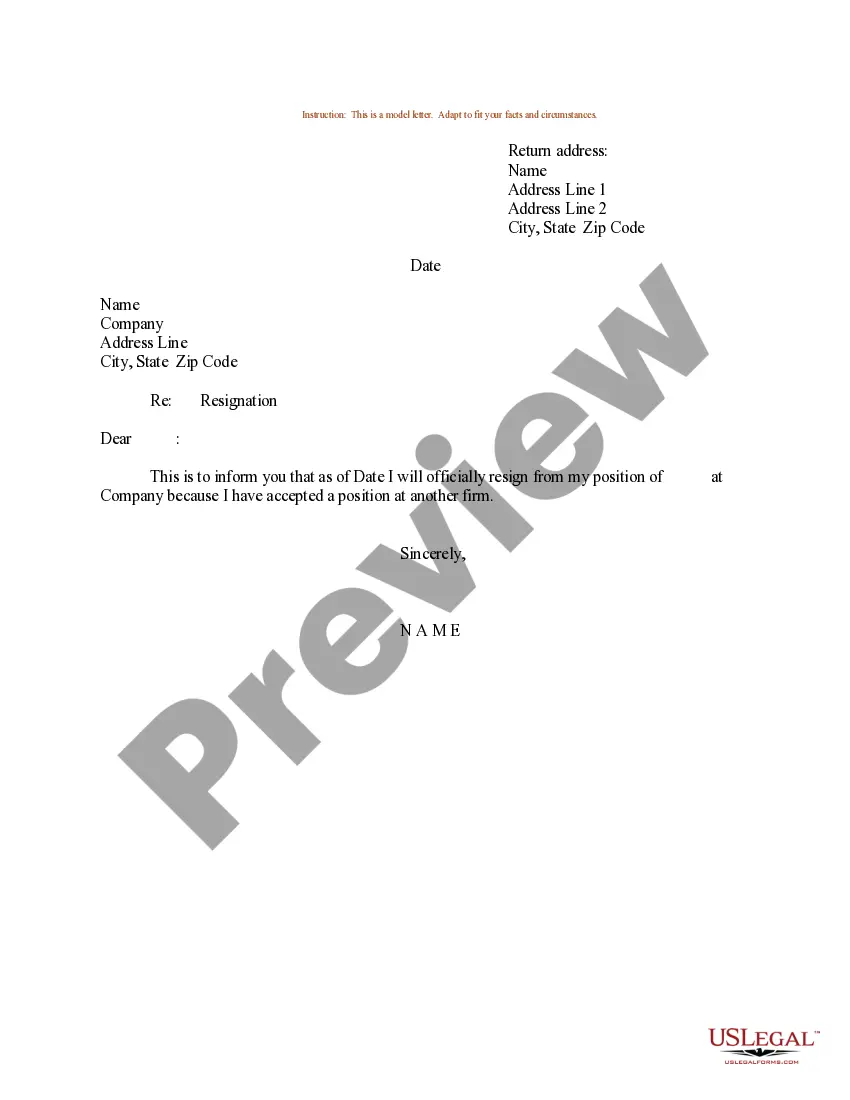
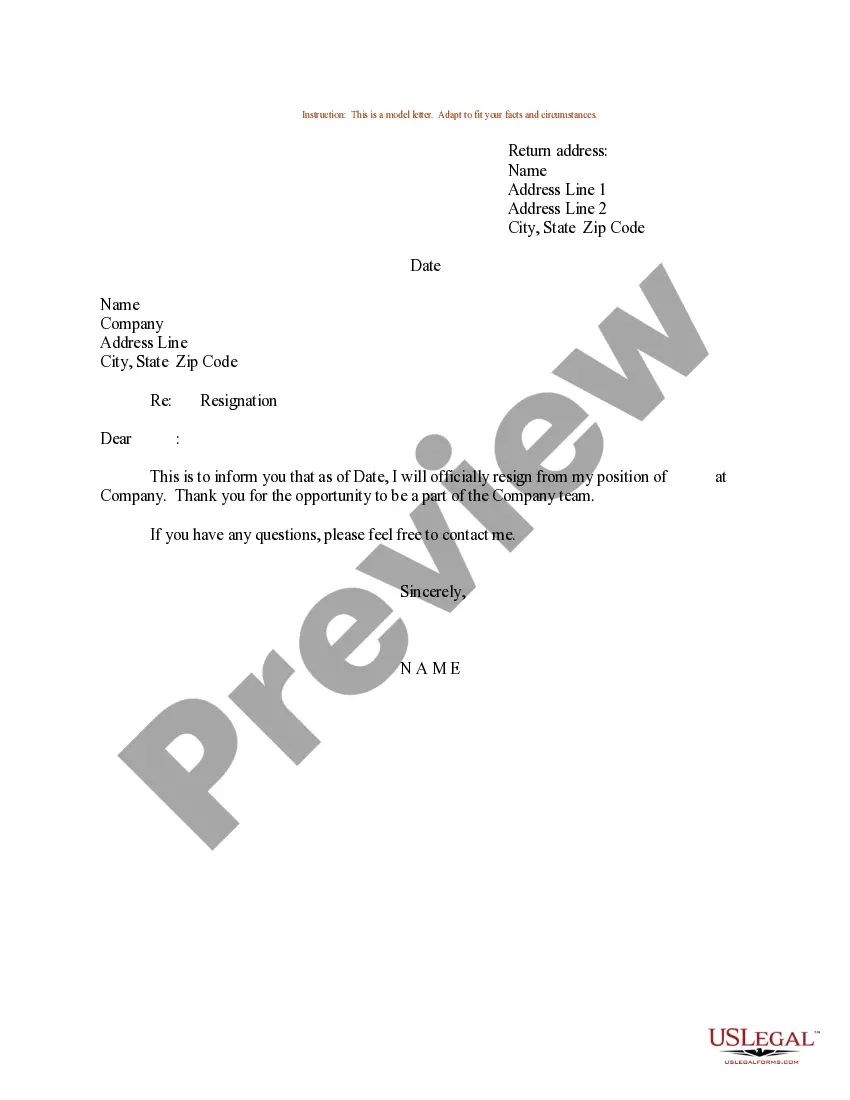

Get your form ready online
Our built-in tools help you complete, sign, share, and store your documents in one place.
Make edits, fill in missing information, and update formatting in US Legal Forms—just like you would in MS Word.
Download a copy, print it, send it by email, or mail it via USPS—whatever works best for your next step.
Sign and collect signatures with our SignNow integration. Send to multiple recipients, set reminders, and more. Go Premium to unlock E-Sign.
If this form requires notarization, complete it online through a secure video call—no need to meet a notary in person or wait for an appointment.
We protect your documents and personal data by following strict security and privacy standards.

Make edits, fill in missing information, and update formatting in US Legal Forms—just like you would in MS Word.

Download a copy, print it, send it by email, or mail it via USPS—whatever works best for your next step.

Sign and collect signatures with our SignNow integration. Send to multiple recipients, set reminders, and more. Go Premium to unlock E-Sign.

If this form requires notarization, complete it online through a secure video call—no need to meet a notary in person or wait for an appointment.

We protect your documents and personal data by following strict security and privacy standards.
Looking for another form?









Form popularity
FAQ
Failure to Provide Advance Notice Can Affect Your Final Paycheck. While you might be able to quit at any time, California's labor laws do require you to give at least 72 hours' notice if you want your final paycheck at the time you leave.
Payroll.team@fin.sccgov or by phone at (408) 299-5200.
California employment law strictly prohibits employers from engaging in coercive tactics to force an employee to resign.
Your employer can ask you to resign at any time, with or without cause, or notice. California follows the “at-will” employment doctrine, which means that either the employer or the employee can terminate the employment relationship at any time, with or without cause, and with or without notice.
Yes, employers can ask employees to resign, but the context and manner in which they do so are important. Here are some key points to consider: Voluntary Resignation: Employers may request that an employee resign rather than face termination. This can be framed as a way to avoid the stigma of being fired.
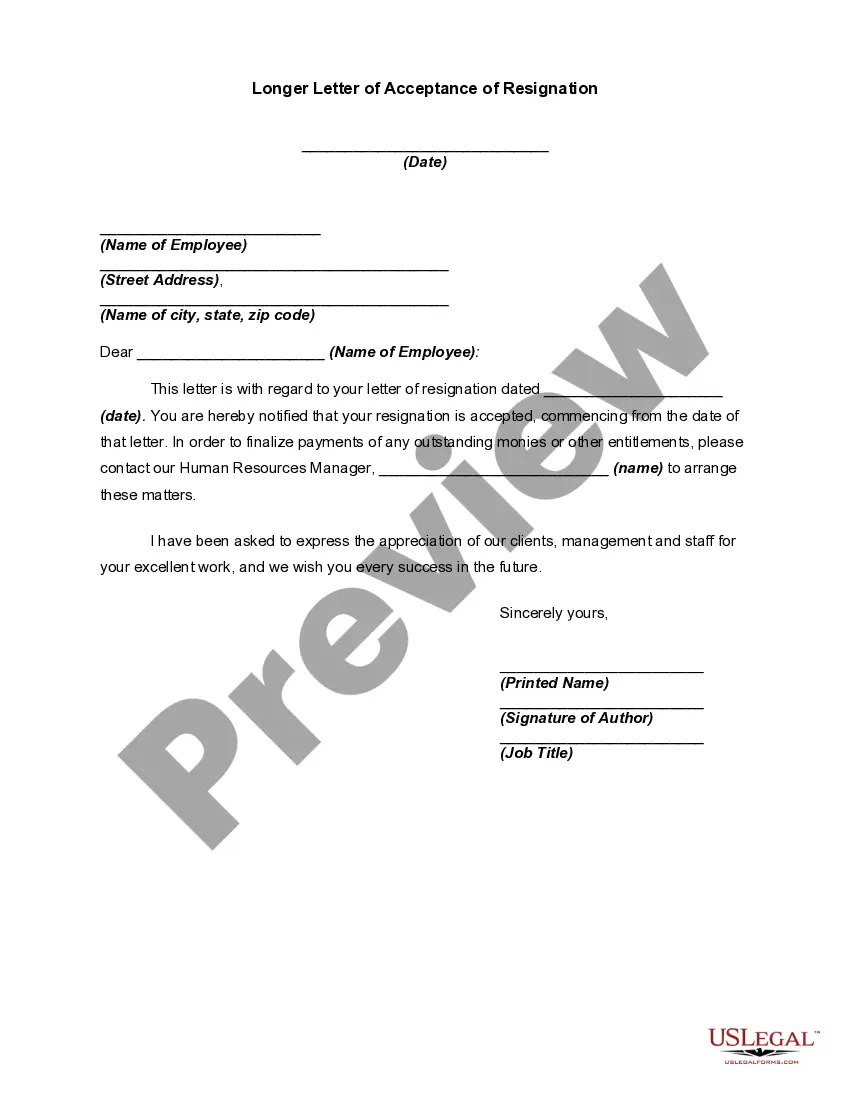
The resignation of an employee must be handled with care. It is important for departing employees to continue to have a positive opinion of the business and management. Thus, your resignation acceptance letter must be professional and well-formatted.
Follow these steps to write a resignation acceptance letter: Use the right formatting and structure. Include the date and contact information. Include a salutation. Accept the resignation. Include the final date of employment. Add other information. Express appreciation. Add a complimentary close.
In the first paragraph of a resignation acceptance letter, employers should directly acknowledge the employee's intention to resign. Confirm the acceptance and be straightforward, while maintaining a positive and professional tone. Once the resignation letter has been acknowledged and accepted, express gratitude.
The resignation is complete upon acceptance by the employer. An employee must therefore be careful and circumspect in filing his resignation because if he changes his mind, he needs to re-apply for the job as held in Intertrod Maritime, Inc. vs. NLRC (G.R.
It is a common misconception that an employee's notice of resignation is not valid unless it has been "accepted" by the employer. The position at common law is that a notice, once validly given, is effective and can neither be "refused" by the employer or "withdrawn" by the employee, without the other's agreement.

