Resignation Letters For A Job You Hate In Sacramento
Description

Get your form ready online
Our built-in tools help you complete, sign, share, and store your documents in one place.
Make edits, fill in missing information, and update formatting in US Legal Forms—just like you would in MS Word.
Download a copy, print it, send it by email, or mail it via USPS—whatever works best for your next step.
Sign and collect signatures with our SignNow integration. Send to multiple recipients, set reminders, and more. Go Premium to unlock E-Sign.
If this form requires notarization, complete it online through a secure video call—no need to meet a notary in person or wait for an appointment.
We protect your documents and personal data by following strict security and privacy standards.

Make edits, fill in missing information, and update formatting in US Legal Forms—just like you would in MS Word.

Download a copy, print it, send it by email, or mail it via USPS—whatever works best for your next step.

Sign and collect signatures with our SignNow integration. Send to multiple recipients, set reminders, and more. Go Premium to unlock E-Sign.

If this form requires notarization, complete it online through a secure video call—no need to meet a notary in person or wait for an appointment.

We protect your documents and personal data by following strict security and privacy standards.
Looking for another form?









Form popularity
FAQ
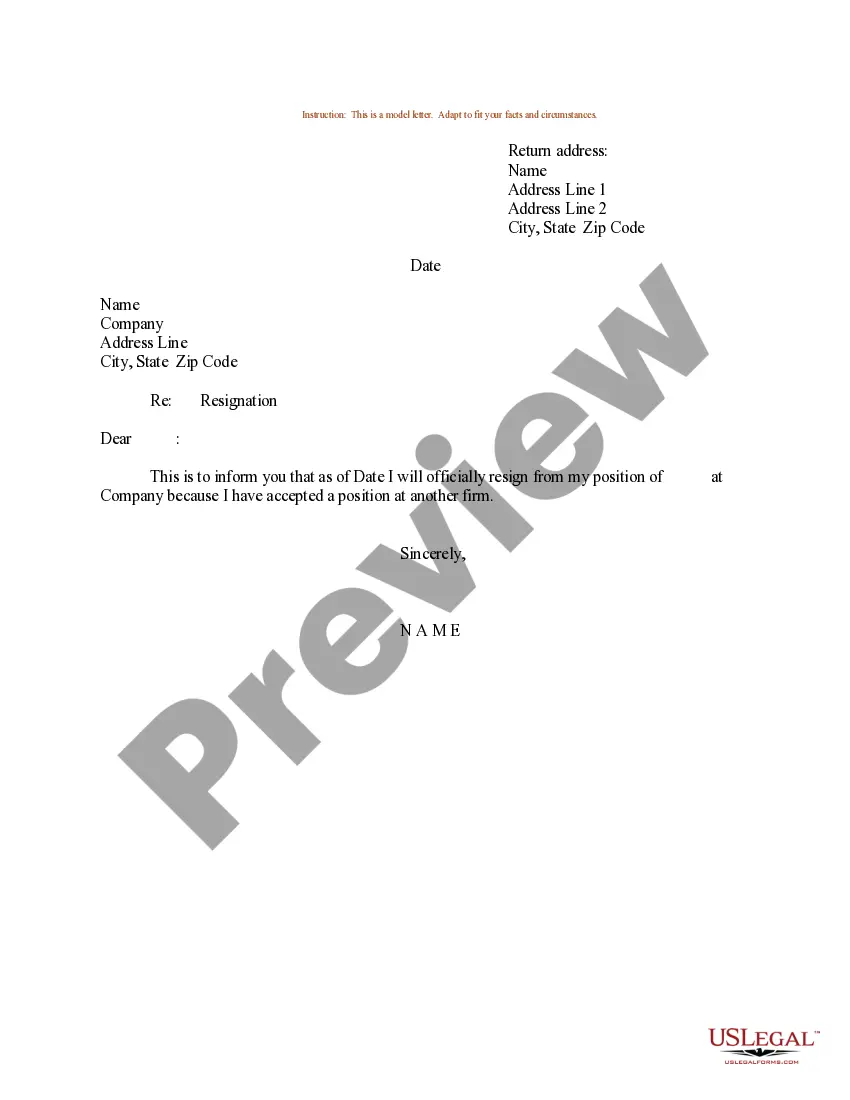
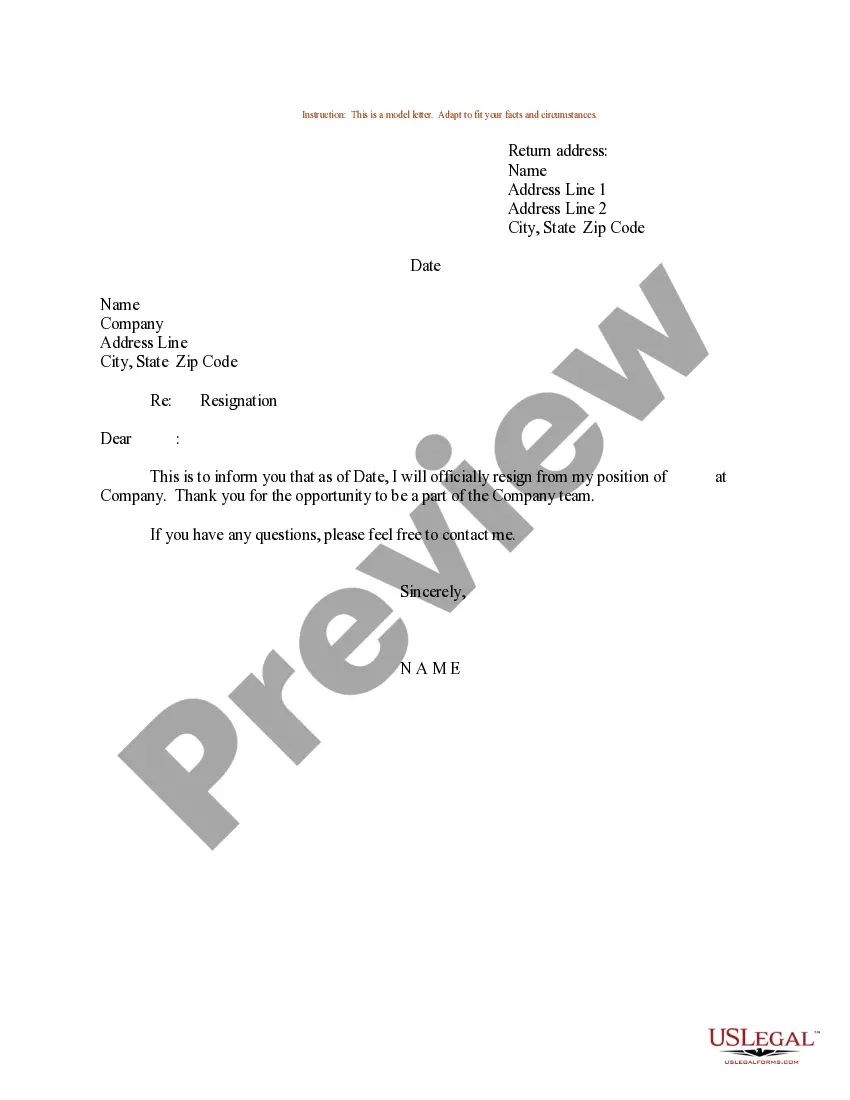
How to write a resignation letter for a job that isn't a good fit for you Begin by addressing your letter. State the purpose of your letter. Include your date of resignation. Explain your reason for leaving. Include a statement of gratitude. Discuss next steps and offer your help. Close your letter.
How to write a resignation letter when you're unhappy with management Start with a date and time. Use a formal address. Detail the exact date you plan to leave. Explain your reason for resigning. Express your gratitude. Discuss transitioning your responsibilities. Request a recommendation letter for future employers.
How to write a resignation letter due to job dissatisfaction Evaluate why you're resigning. Determine your resignation conditions. Format your resignation letter. Maintain a positive tone. Proofread your resignation letter. Submit your resignation letter.
10 tips for how to quit a job you hate Provide adequate notice. Remain professional. Tell your manager first. Participate in an exit interview. Complete unfinished tasks. Update your records and files. Set up your communication methods. Clean up your digital and physical space.
Clearly state your intention to resign and your last working day. Express gratitude for the opportunities you had, without delving into the toxic aspects. Choose the Right Time and Place: Schedule a meeting with your manager to discuss your resignation. Ensure it's a private, calm setting.
How to write a resignation letter when you're unhappy with management Start with a date and time. Use a formal address. Detail the exact date you plan to leave. Explain your reason for resigning. Express your gratitude. Discuss transitioning your responsibilities. Request a recommendation letter for future employers.
Mention your reasons If you feel disappointed, you may express this along with your reasons. In your letter of resignation, you also have the opportunity to give your manager feedback about your experience for future candidates. That said, make sure you're maintaining formality as you express yourself.
Here are some steps to thoughtfully and honestly submit your resignation without burning a bridge. Work Through Your Emotions First. Two Weeks is Customary. Speak to Your Manager in Person (or via Zoom if you work remotely) ... Send a Recap Email. Spill Your Guts During the Exit Interview. Purpose to Practice:
Follow these steps to resign gracefully and leave your job in a positive manner: Notify your supervisor. Tell your supervisor you intend to leave your job before notifying your coworkers and clients. Submit your resignation letter. Work through your notice period. Return any company property. Take personal items home.
How to write a resignation letter when you're unhappy with management Start with a date and time. Use a formal address. Detail the exact date you plan to leave. Explain your reason for resigning. Express your gratitude. Discuss transitioning your responsibilities. Request a recommendation letter for future employers.

