Email Resignation Letter To Customer In Sacramento
Description

Get your form ready online
Our built-in tools help you complete, sign, share, and store your documents in one place.
Make edits, fill in missing information, and update formatting in US Legal Forms—just like you would in MS Word.
Download a copy, print it, send it by email, or mail it via USPS—whatever works best for your next step.
Sign and collect signatures with our SignNow integration. Send to multiple recipients, set reminders, and more. Go Premium to unlock E-Sign.
If this form requires notarization, complete it online through a secure video call—no need to meet a notary in person or wait for an appointment.
We protect your documents and personal data by following strict security and privacy standards.

Make edits, fill in missing information, and update formatting in US Legal Forms—just like you would in MS Word.

Download a copy, print it, send it by email, or mail it via USPS—whatever works best for your next step.

Sign and collect signatures with our SignNow integration. Send to multiple recipients, set reminders, and more. Go Premium to unlock E-Sign.

If this form requires notarization, complete it online through a secure video call—no need to meet a notary in person or wait for an appointment.

We protect your documents and personal data by following strict security and privacy standards.
Looking for another form?







Form popularity
FAQ
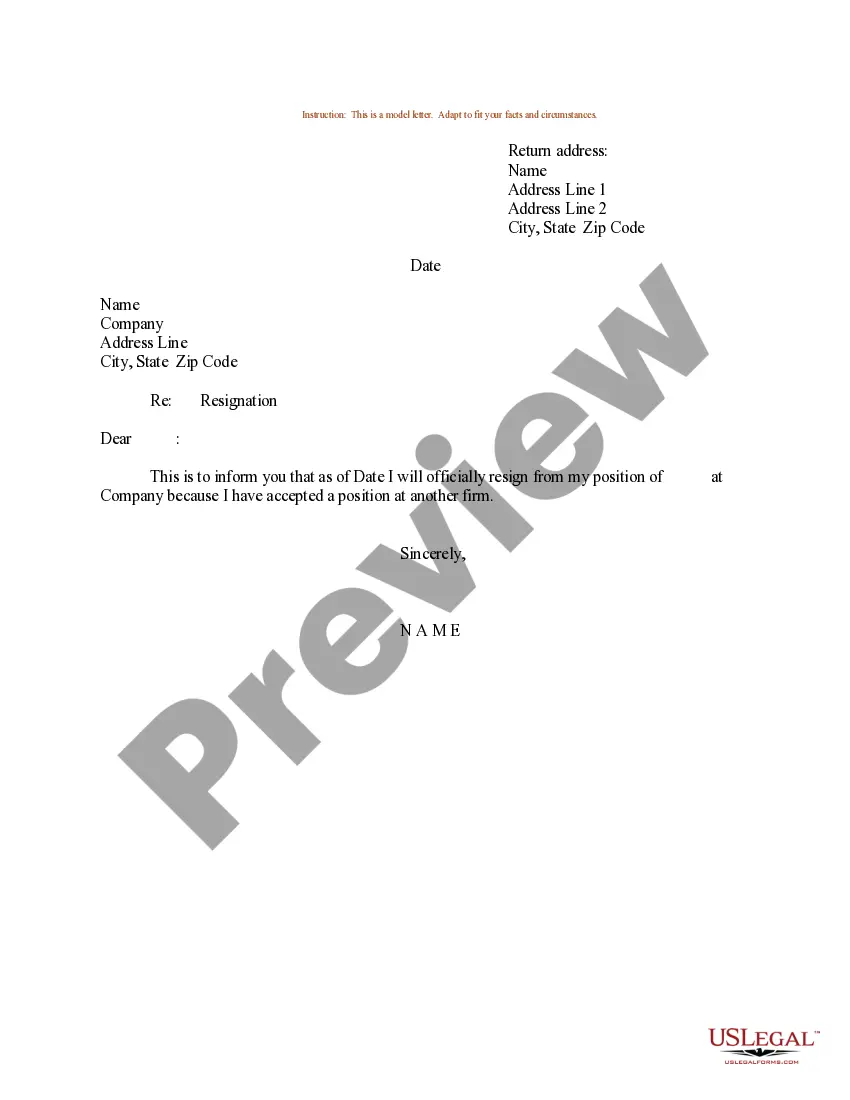
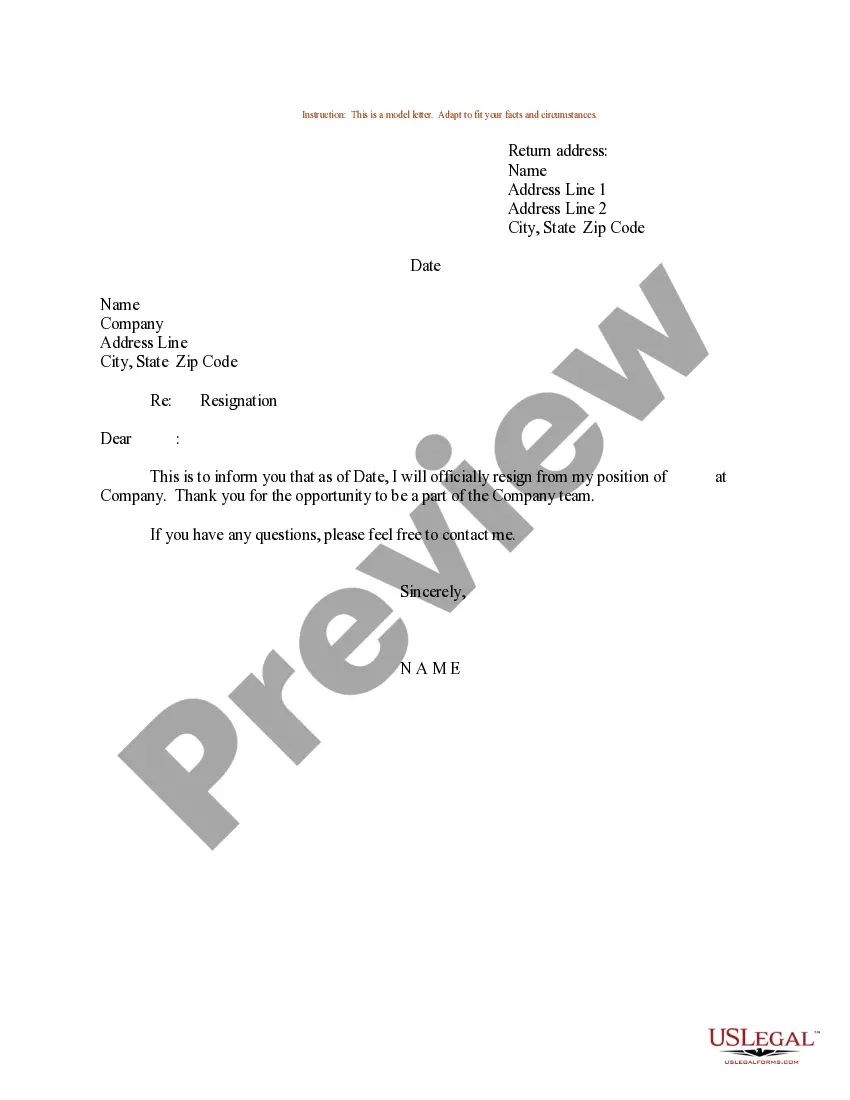
If you plan to resign from your current position, it's important to end your employment positively by emailing a resignation letter. This message can allow you to express your gratitude to your current employer and show them you appreciated their support and guidance.
Personalize Your Approach: Announcing your resignation shouldn't be a one-size-fits-all mass email. Tailor your message to each client. It shows respect for your unique relationship and allows you to address their specific concerns while reinforcing your commitment to their success.
1> Clarity: Clearly state the dates of your vacation and any relevant details about your absence. 2> Responsibilities: If necessary, mention who will cover your responsibilities or who the client can contact in your absence. 3> Urgent Matters: Invite the client to communicate any urgent matters before you leave.
State that you are resigning You do not need to share the reasons for your resignation with your client. It is fine to offer a brief but vague explanation, such as "for personal reasons" or "for my health," but the focus of your message should be about the client's future with the company.
It's my last day at (company name), and I wanted to reach out and thank you for everything. You're a highly valued customer, and it's been a pleasure working with you. So while I'm leaving the business, I know you'll be safe with my replacement. I'm sure they'll be in touch shortly to discuss future plans.
Resignation email: While in-person and on paper is the best way to submit a resignation letter, it's not always possible (e.g., remote workers). In such cases, you can send a resignation email which is a slightly shorter version of your resignation letter.
Dear Client's Name, I hope this message finds you well. I am writing to share some personal news: I will be transitioning out of my position as your Key Account Manager at Company Name, with my last day being date. Working with you over the past number years has been a highlight of my time here.
I wanted to email you to let you know that as of (DATE) I will no longer be working for (COMPANY). Thank you very much for your support over the last (TIME FRAME) years. It was a pleasure to work with you on (PROJECT) while I was part of the (COMPANY) team. (PERSON) will be handling your account beginning (DATE).
It's my last day at (company name), and I wanted to reach out and thank you for everything. You're a highly valued customer, and it's been a pleasure working with you. So while I'm leaving the business, I know you'll be safe with my replacement. I'm sure they'll be in touch shortly to discuss future plans.
After you greet your client, briefly announce that you're resigning and let them know the last day you plan to handle their account. You can determine what style of language to use based on the relationship you developed with the client and the nature of your company.

