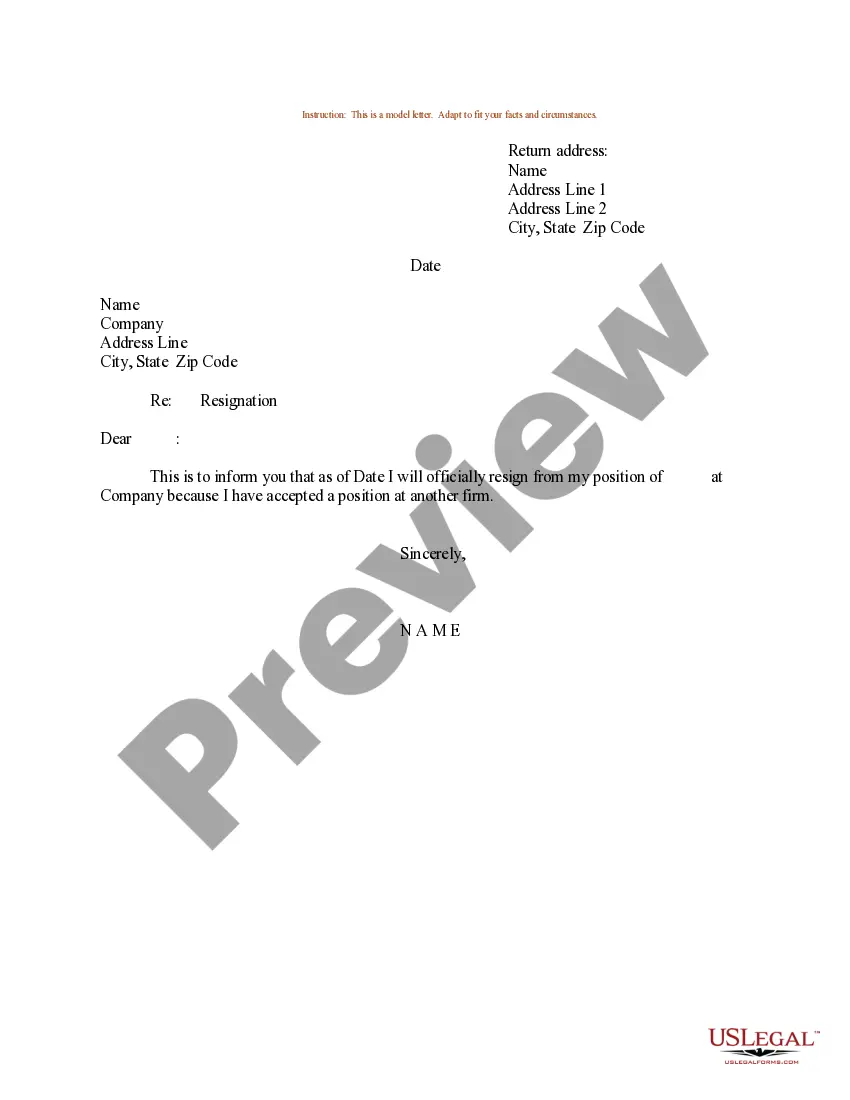
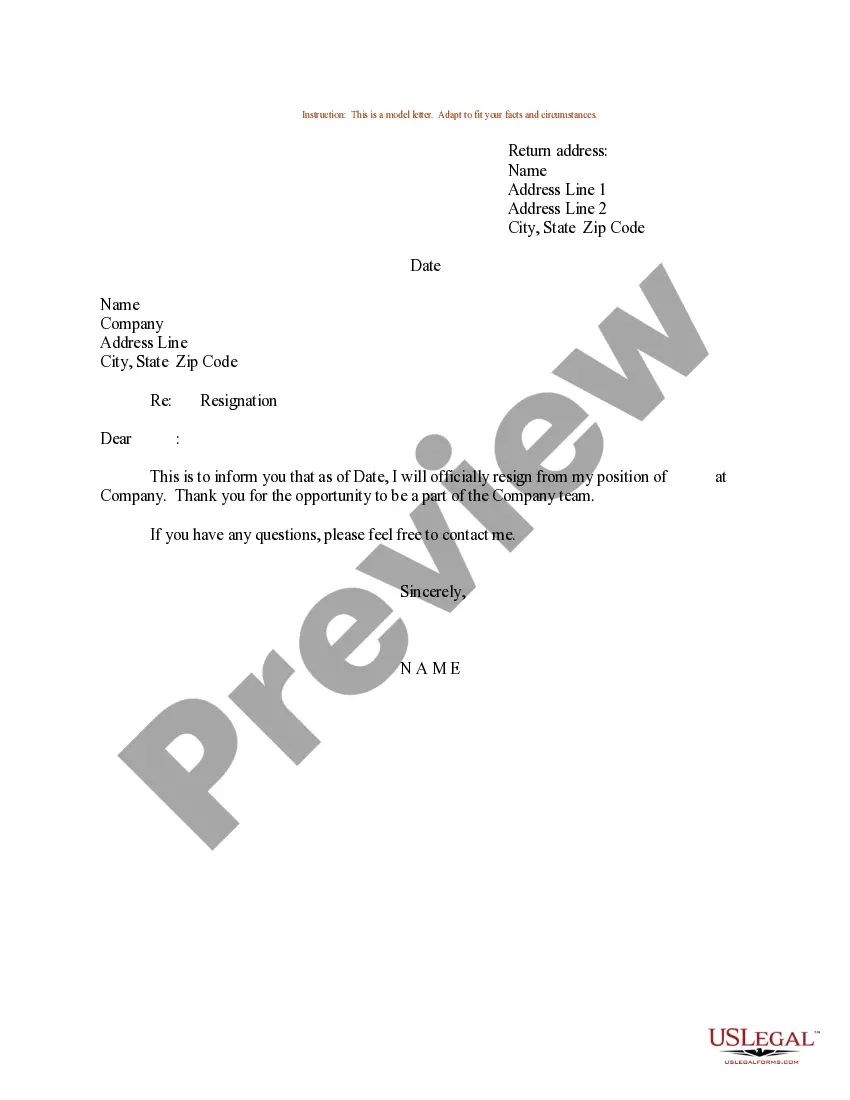
Resignation Letter Template For New Job In Orange
Description

Get your form ready online
Our built-in tools help you complete, sign, share, and store your documents in one place.
Make edits, fill in missing information, and update formatting in US Legal Forms—just like you would in MS Word.
Download a copy, print it, send it by email, or mail it via USPS—whatever works best for your next step.
Sign and collect signatures with our SignNow integration. Send to multiple recipients, set reminders, and more. Go Premium to unlock E-Sign.
If this form requires notarization, complete it online through a secure video call—no need to meet a notary in person or wait for an appointment.
We protect your documents and personal data by following strict security and privacy standards.

Make edits, fill in missing information, and update formatting in US Legal Forms—just like you would in MS Word.

Download a copy, print it, send it by email, or mail it via USPS—whatever works best for your next step.

Sign and collect signatures with our SignNow integration. Send to multiple recipients, set reminders, and more. Go Premium to unlock E-Sign.

If this form requires notarization, complete it online through a secure video call—no need to meet a notary in person or wait for an appointment.

We protect your documents and personal data by following strict security and privacy standards.
Looking for another form?








Form popularity
FAQ
Your letter could even be as simple as this, “I am writing to inform you of my resignation from Company, effective Date. I appreciate the opportunities for growth during my time here. Please let me know if there is anything I can do to ensure a smooth handover.” An effective resignation letter is concise.
I am writing to regretfully inform you that while I appreciate the opportunity, it's quickly become clear my role at (company name) is not the good fit we'd both hoped it would be. Please accept this as my two week notice. My last day will be (insert date). Thank you for understanding.''
Begin by stating your intent to resign, include the date of your last working day, and express gratitude for the opportunity. Briefly mention any positive experiences, and offer to assist with the transition. Avoid negative remarks. This approach ensures a respectful departure and maintains good relations.
Your resignation letter should say ONLY these things: Today's date Thank you for the opportunity to work here. (no matter how much you hated it) I've accepted a new position. My last day will be X. This is Y week notice. (preferably 2 weeks in the US for a standard corporate desk job) Sincerely, me.
Your resignation letter should say ONLY these things: Today's date Thank you for the opportunity to work here. (no matter how much you hated it) I've accepted a new position. My last day will be X. This is Y week notice. (preferably 2 weeks in the US for a standard corporate desk job) Sincerely, me.
How to quit a job you just started Determine if quitting is the right choice. Explore other roles within the company. Start job hunting. Draft your resignation letter. Submit your resignation personally. Prepare for an exit interview. Keep doing your best. Reflect and move forward.
Begin by stating your intent to resign, include the date of your last working day, and express gratitude for the opportunity. Briefly mention any positive experiences, and offer to assist with the transition. Avoid negative remarks. This approach ensures a respectful departure and maintains good relations.
Many people feel like they can't leave a job immediately after accepting the role, but there are valid reasons to resign sooner rather than later. The decision ultimately hinges on why you want to leave. “If it's truly a much better opportunity for your long-term career growth, that is a good reason,” Glynn said.
You can do so in person or via email. It's really up to you. Just say the date you resign, that you appreciate the opportunity, and that's pretty much it. You don't owe any employer anything further than that.

