Email Resignation Letter To Customer In Ohio
Description

Get your form ready online
Our built-in tools help you complete, sign, share, and store your documents in one place.
Make edits, fill in missing information, and update formatting in US Legal Forms—just like you would in MS Word.
Download a copy, print it, send it by email, or mail it via USPS—whatever works best for your next step.
Sign and collect signatures with our SignNow integration. Send to multiple recipients, set reminders, and more. Go Premium to unlock E-Sign.
If this form requires notarization, complete it online through a secure video call—no need to meet a notary in person or wait for an appointment.
We protect your documents and personal data by following strict security and privacy standards.

Make edits, fill in missing information, and update formatting in US Legal Forms—just like you would in MS Word.

Download a copy, print it, send it by email, or mail it via USPS—whatever works best for your next step.

Sign and collect signatures with our SignNow integration. Send to multiple recipients, set reminders, and more. Go Premium to unlock E-Sign.

If this form requires notarization, complete it online through a secure video call—no need to meet a notary in person or wait for an appointment.

We protect your documents and personal data by following strict security and privacy standards.
Looking for another form?








Form popularity
FAQ
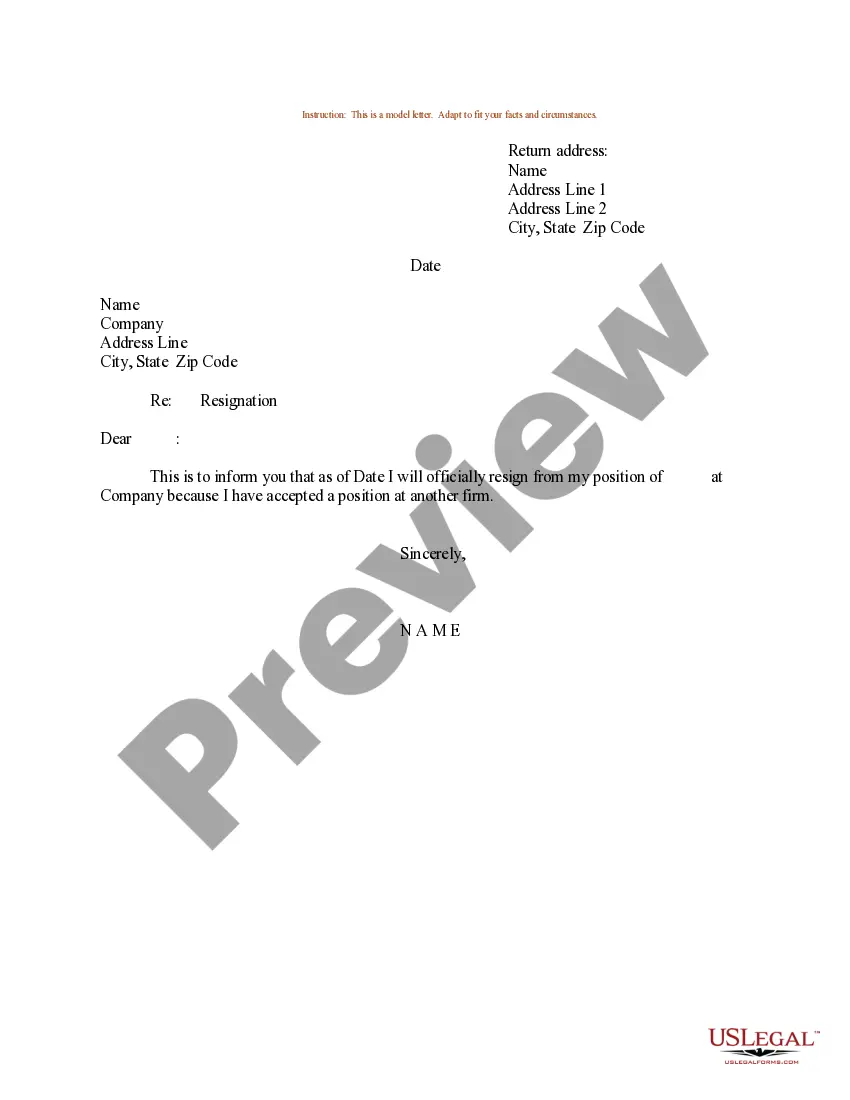
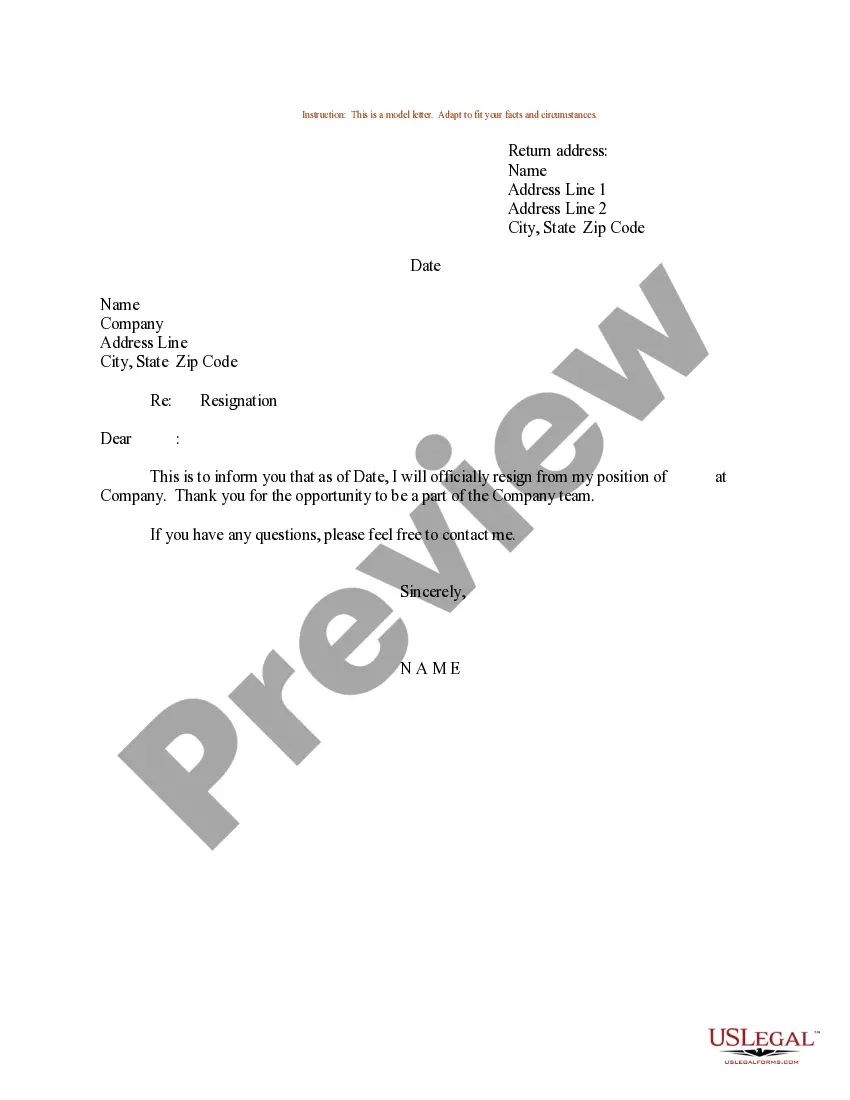
Resignation letters can be delivered both in person through hard copy or online attached as a PDF via email. Ultimately, they both have the same purpose: letting the company know you're leaving.
How to write a resignation email Choose a direct and descriptive email subject. Address the recipient professionally. State your intention to resign clearly and concisely. Provide your last working day. Express gratitude. Offer assistance during the transition period. Close the email respectfully.
Writing a well-crafted resignation email isn't just a formality of moving on from a job. It's an opportunity to leave on positive terms and maintain a professional relationship with your previous employer. You never know how your paths might cross again in the future, and you may want to use them as a resumé reference.
The items you include are: A clear statement that expresses your intention to resign. Provide the proper amount of notice. Offer a transition plan. A short explanation about why you're leaving. A polite expression of gratitude. A statement about your immediate departure from the company. Criticism of your colleagues.
Personalize Your Approach: Announcing your resignation shouldn't be a one-size-fits-all mass email. Tailor your message to each client. It shows respect for your unique relationship and allows you to address their specific concerns while reinforcing your commitment to their success.
How to write a resignation email Choose a direct and descriptive email subject. Address the recipient professionally. State your intention to resign clearly and concisely. Provide your last working day. Express gratitude. Offer assistance during the transition period. Close the email respectfully.
How to write a call center rep resignation letter Address the letter. State the purpose of the letter. State the date of your last day of work. State the reason for your resignation. Add additional information about your decision. Show appreciation for the employment opportunity. Include contact information.
How to write an email informing clients of resignation Address clients formally but personally. State that you are resigning. Offer a clear transition timeline. Include your contact info. Introduce them to their new contact person. Thank your client.
Dear Client's Name, I hope this message finds you well. I am writing to share some personal news: I will be transitioning out of my position as your Key Account Manager at Company Name, with my last day being date. Working with you over the past number years has been a highlight of my time here.
How to write an email informing clients of resignation Address clients formally but personally. State that you are resigning. Offer a clear transition timeline. Include your contact info. Introduce them to their new contact person. Thank your client. Check with your supervisor first. Build in transition time.

