Resignation Letter Samples For Nurses In Nevada
Description

Get your form ready online
Our built-in tools help you complete, sign, share, and store your documents in one place.
Make edits, fill in missing information, and update formatting in US Legal Forms—just like you would in MS Word.
Download a copy, print it, send it by email, or mail it via USPS—whatever works best for your next step.
Sign and collect signatures with our SignNow integration. Send to multiple recipients, set reminders, and more. Go Premium to unlock E-Sign.
If this form requires notarization, complete it online through a secure video call—no need to meet a notary in person or wait for an appointment.
We protect your documents and personal data by following strict security and privacy standards.

Make edits, fill in missing information, and update formatting in US Legal Forms—just like you would in MS Word.

Download a copy, print it, send it by email, or mail it via USPS—whatever works best for your next step.

Sign and collect signatures with our SignNow integration. Send to multiple recipients, set reminders, and more. Go Premium to unlock E-Sign.

If this form requires notarization, complete it online through a secure video call—no need to meet a notary in person or wait for an appointment.

We protect your documents and personal data by following strict security and privacy standards.
Looking for another form?





Form popularity
FAQ
How to write a heartfelt resignation letter Address your letter. Start by addressing your letter to your supervisor specifically. Explain why you're writing. Give information about your preparation to leave. Express your gratitude for the opportunity. Thank the employer and express your desire to stay in touch.
Please accept this letter as notice of my resignation effective immediately from my position as a department nurse. The role of a nurse is no longer sustainable for myself and my family. Nursing in the current healthcare environment is too detrimental to my mental and physical well-being for me to continue in the role.
Be Concise and Clear: While expressing gratitude is important, keep the letter concise and to the point. State your intention to resign clearly, including the date of your last working day; this allows your employer to plan for a smooth transition and ensures transparency in your departure.
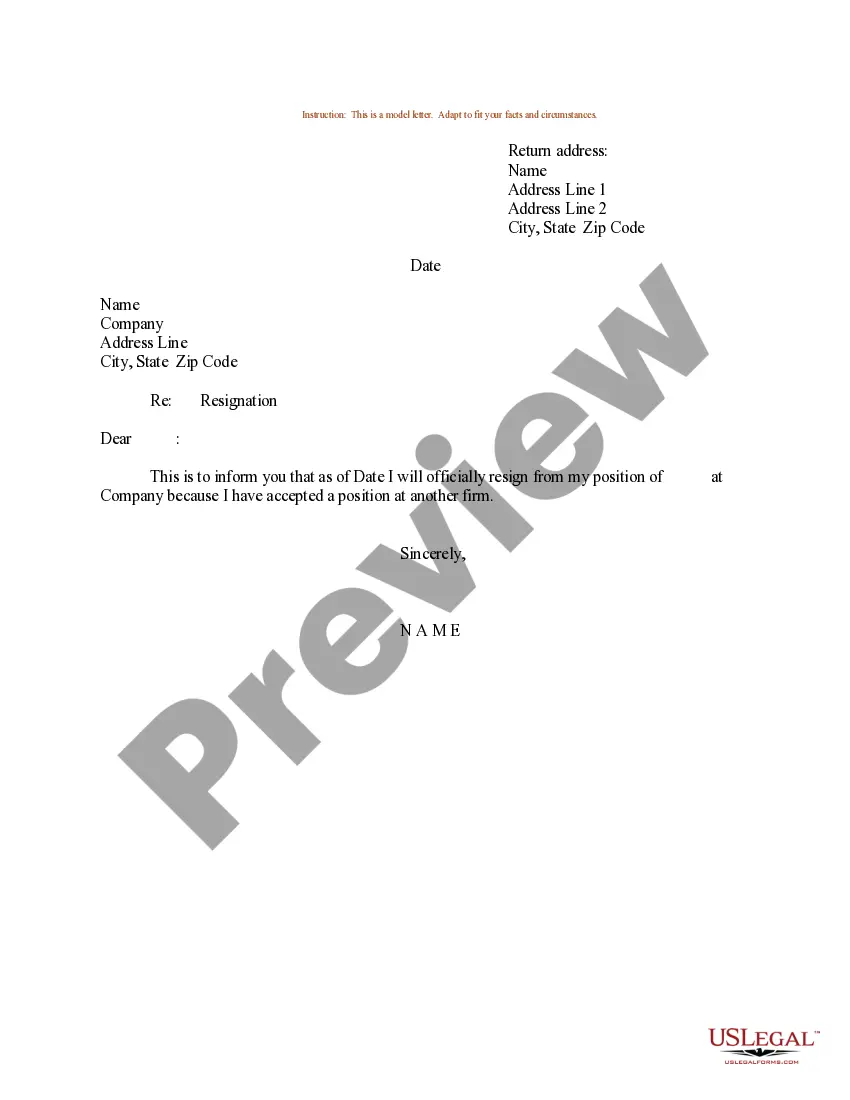
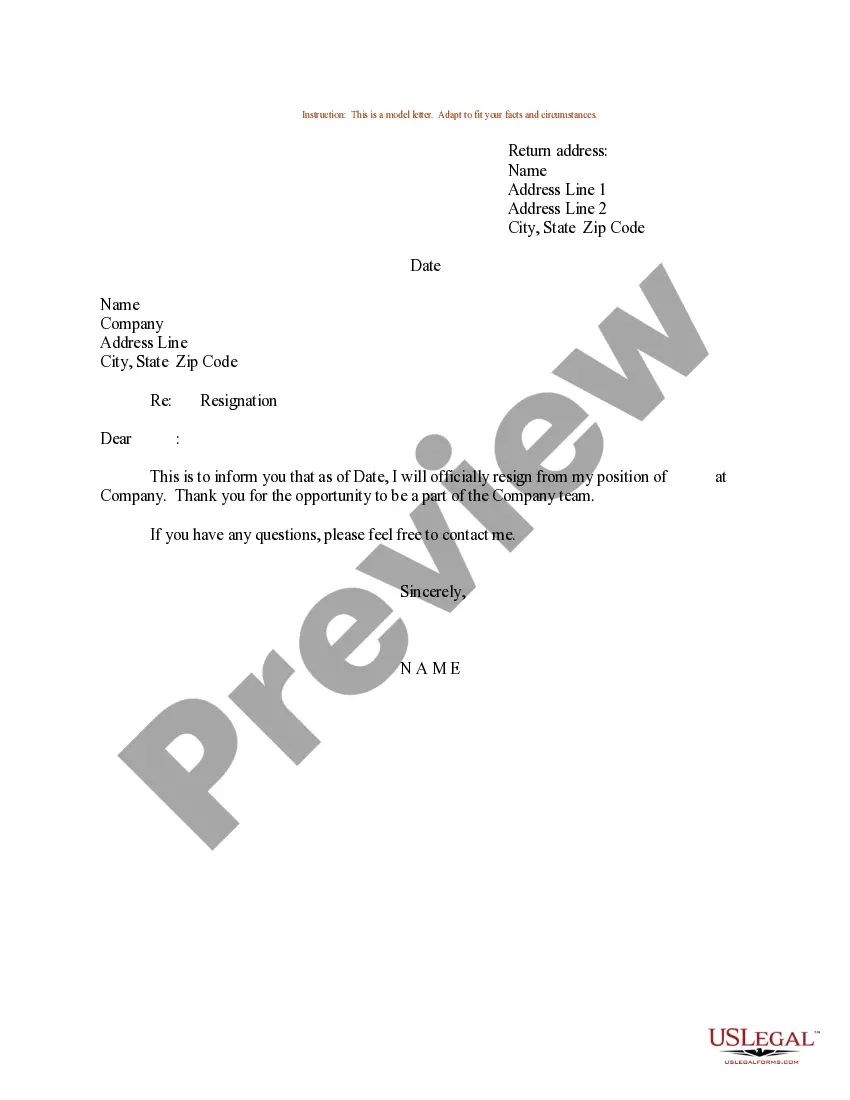
How to Write a Resignation Letter A greeting: Start formal. A statement of resignation. Offer help with transitioning. Thank your employer for giving you a chance to be a part of their company, and for their time. Leave your contact information for your employer. Sign off with “Sincerely” or “Thank you”
I am writing to inform you that I have decided to resign from my position as Job Title at Company Name. My last day of work will be Date. I want to take this opportunity to thank you and the entire team for the valuable experience and support provided during my time at Company Name.
In nursing, many organizations request two weeks although four weeks is preferred to allow the employer time to find and train a replacement. Marshall said that for known departures, such as maternity leave or an out-of-state move, early notice is appreciated so there's plenty of time to fill the opening.
Please accept this letter as notice of my resignation effective immediately from my position as a department nurse. The role of a nurse is no longer sustainable for myself and my family. Nursing in the current healthcare environment is too detrimental to my mental and physical well-being for me to continue in the role.
A simple, “Resignation: Name” is good enough. Add contact details, company name, and date. Address your manager. State your decision to resign and last day of work. Provide a reason for leaving (optional) ... Express your gratitude in good faith. 6. Make a closing statement. End with a formal closing.
Can nurses quit immediately? Unless it's an emergency, it's best to give notice when turning in your resignation letter. Quitting without notice could damage your relationship with your employer, so offering as much notice as you're able to and explaining the situation professionally may protect your reputation.

