Resignation Letter Samples For Bad Work Environment In Maricopa
Description

Get your form ready online
Our built-in tools help you complete, sign, share, and store your documents in one place.
Make edits, fill in missing information, and update formatting in US Legal Forms—just like you would in MS Word.
Download a copy, print it, send it by email, or mail it via USPS—whatever works best for your next step.
Sign and collect signatures with our SignNow integration. Send to multiple recipients, set reminders, and more. Go Premium to unlock E-Sign.
If this form requires notarization, complete it online through a secure video call—no need to meet a notary in person or wait for an appointment.
We protect your documents and personal data by following strict security and privacy standards.

Make edits, fill in missing information, and update formatting in US Legal Forms—just like you would in MS Word.

Download a copy, print it, send it by email, or mail it via USPS—whatever works best for your next step.

Sign and collect signatures with our SignNow integration. Send to multiple recipients, set reminders, and more. Go Premium to unlock E-Sign.

If this form requires notarization, complete it online through a secure video call—no need to meet a notary in person or wait for an appointment.

We protect your documents and personal data by following strict security and privacy standards.
Looking for another form?








Form popularity
FAQ
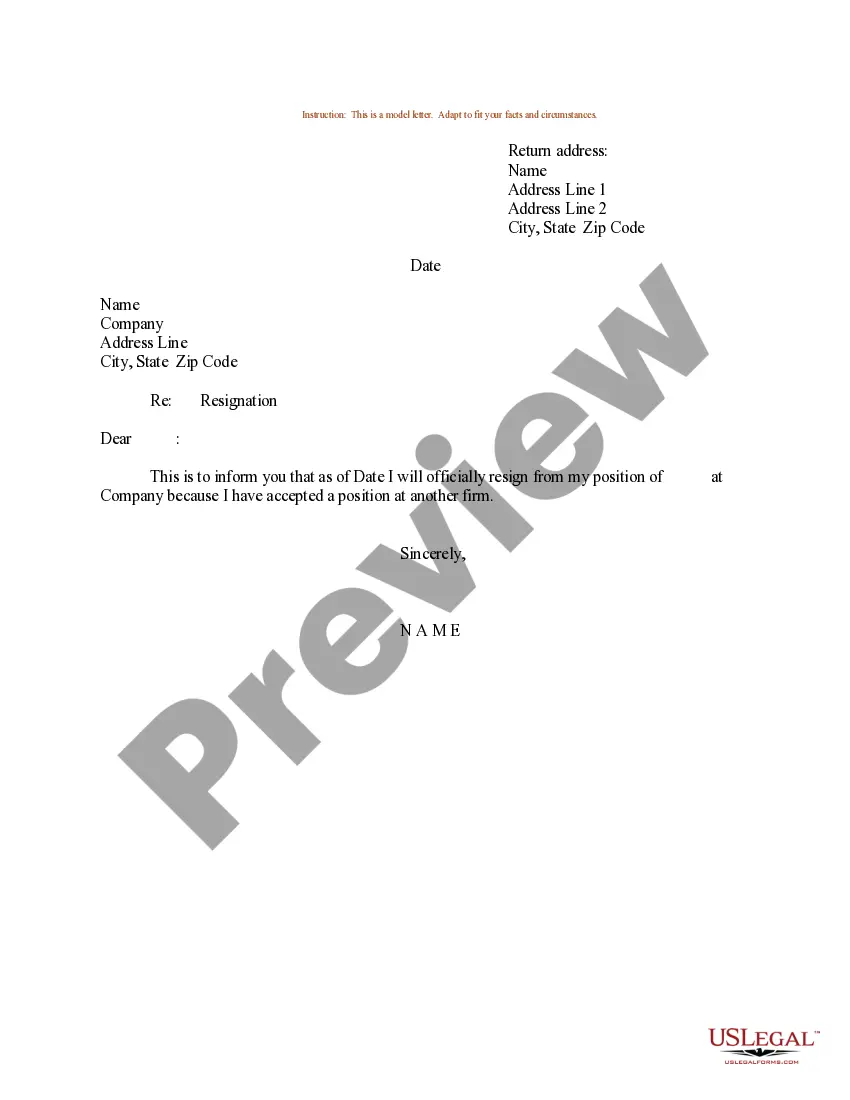
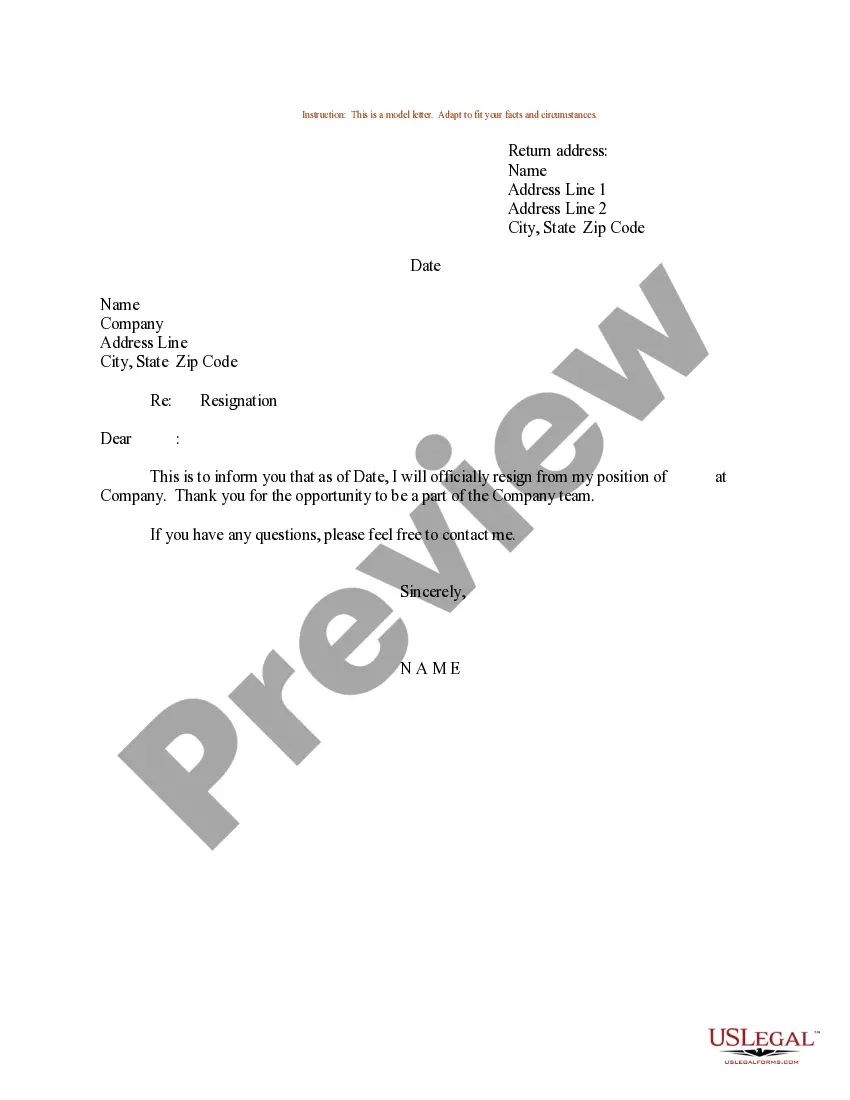
Write a Professional Resignation Letter: Your letter should be concise, polite, and professional. Clearly state your intention to resign and your last working day. Express gratitude for the opportunities you had, without delving into the toxic aspects.
Avoid accusatory language or venting frustrations. Focus on stating your intention to resign, effective on a specific date, without going into extensive detail about the unfair treatment. A simple statement like ``I am writing to inform you of my resignation from (position), effective (date)'' is sufficient.
Gather records and document why your work environment was toxic before resigning, ensuring you'll have evidence if you make a claim later. To avoid burning bridges, stay polite and professional when submitting your resignation, give your employer a full two weeks' notice, and participate in any offboarding formalities.
Keep it brief but focused. Clearly state your desire to resign. No need to get into the particulars of why you're leaving or share any gripes you have. Try to keep it positive and gracious, if possible. Despite any painful reasons for leaving a toxic job, your moving on signifies a new career direction for you.
Regrettably, the work environment has become unsustainable for me due to ongoing concerns regarding specific issues – optional to mention, making it challenging for me to perform at my best. I am committed to ensuring a smooth transition of my responsibilities before my departure.
A toxic workplace has overwhelming negative factors that affect the well-being of those within it. A toxic work environment can manifest through discriminatory practices, harassment, lack of respect among colleagues, poor communication, excessive workload, lack of teamwork and overbearing office politics.
How to write a resignation letter for a job that isn't a good fit for you Begin by addressing your letter. State the purpose of your letter. Include your date of resignation. Explain your reason for leaving. Include a statement of gratitude. Discuss next steps and offer your help. Close your letter.
Example resignation letter due to illness I am writing to formally announce my resignation from my position at Company Name, effective two weeks from today, Last Working Day. After careful consideration, I have made this difficult decision due to health reasons that require my immediate and full attention.
Avoid accusatory language or venting frustrations. Focus on stating your intention to resign, effective on a specific date, without going into extensive detail about the unfair treatment. A simple statement like ``I am writing to inform you of my resignation from (position), effective (date)'' is sufficient.

