Resignation Letter Gracefully Forum In Dallas
Description

Get your form ready online
Our built-in tools help you complete, sign, share, and store your documents in one place.
Make edits, fill in missing information, and update formatting in US Legal Forms—just like you would in MS Word.
Download a copy, print it, send it by email, or mail it via USPS—whatever works best for your next step.
Sign and collect signatures with our SignNow integration. Send to multiple recipients, set reminders, and more. Go Premium to unlock E-Sign.
If this form requires notarization, complete it online through a secure video call—no need to meet a notary in person or wait for an appointment.
We protect your documents and personal data by following strict security and privacy standards.

Make edits, fill in missing information, and update formatting in US Legal Forms—just like you would in MS Word.

Download a copy, print it, send it by email, or mail it via USPS—whatever works best for your next step.

Sign and collect signatures with our SignNow integration. Send to multiple recipients, set reminders, and more. Go Premium to unlock E-Sign.

If this form requires notarization, complete it online through a secure video call—no need to meet a notary in person or wait for an appointment.

We protect your documents and personal data by following strict security and privacy standards.
Looking for another form?



Form popularity
FAQ
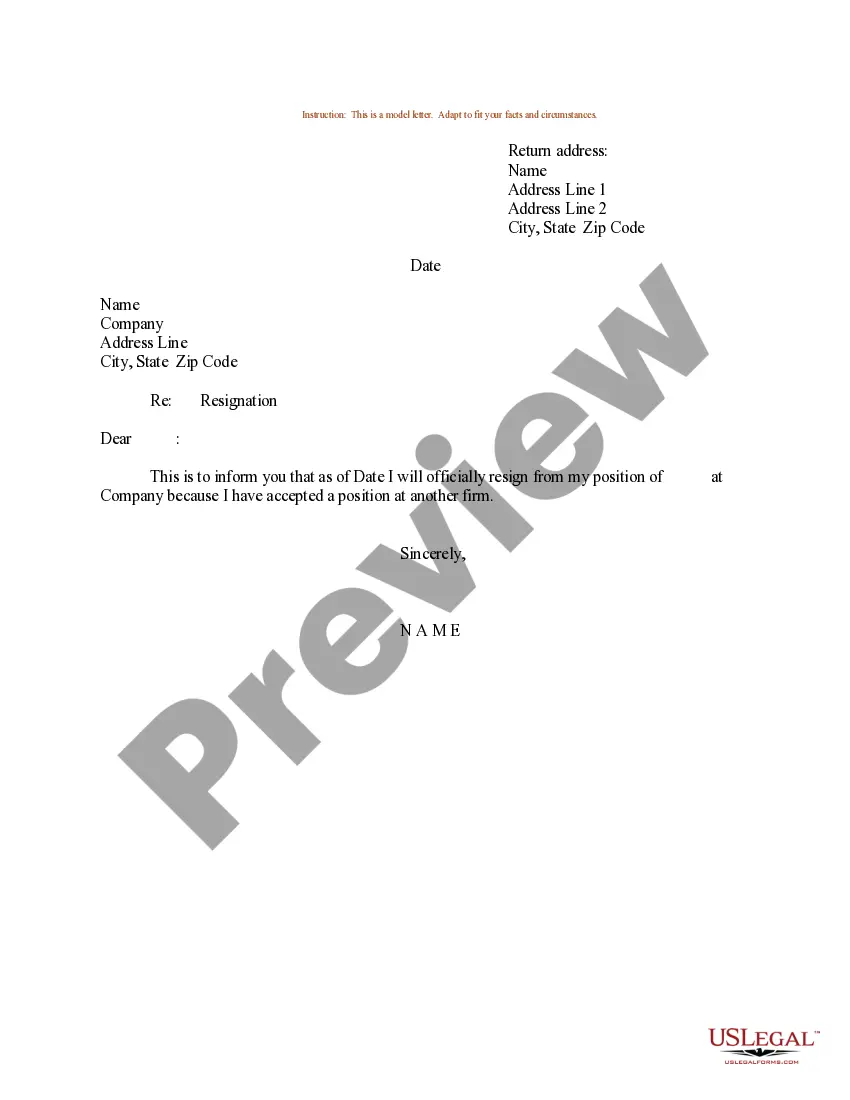
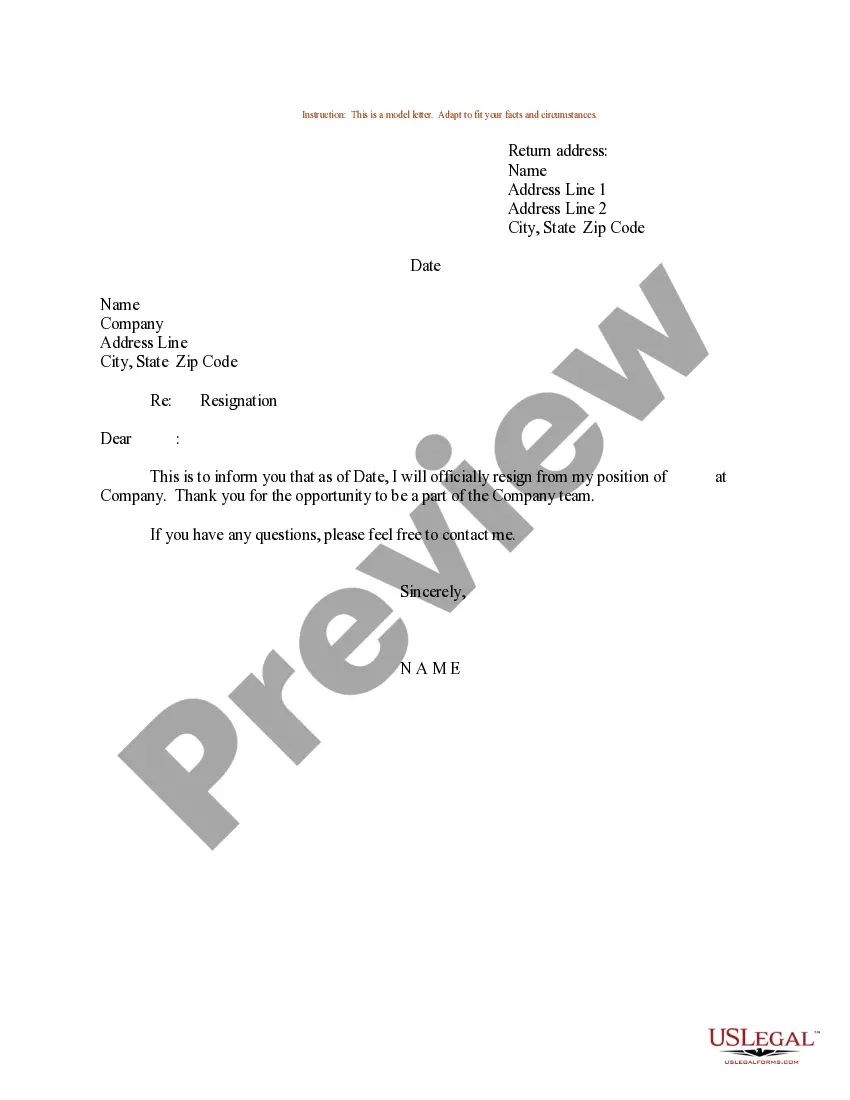
Dear Supervisor's Name, I am writing to inform you that I have decided to resign from my position as Job Title at Company Name. My last day of work will be Date. I want to take this opportunity to thank you and the entire team for the valuable experience and support provided during my time at Company Name.
Start with a proper greeting: Address your resignation letter to your immediate supervisor or manager. Use their name and formal title, such as “Dear Mr. Smith” or “Dear Dr. Johnson.”
Dear (Recipient's Name), I am writing to inform you of my immediate resignation from my position at (Company Name). After careful consideration, I have decided that it is in my best interest to conclude my employment with (Company Name) effective immediately.
When writing a professional resignation letter, address it to the right person. This is either your current line manager or the HR department. Writing “To whom it may concern” is unprofessional.
Unless stated in an employment agreement, you have no obligation to disclose where you are going. If asked, just say that you are grateful for the time you spend with your current company, and the time has come to make a change for the betterment of your career. Keep repeating as necessary.
Address the letter to your manager or HR representative. You can begin with their name, such as “Ms.
What to Include in a Resignation Letter Due to Working Conditions? A Clear Statement of Resignation. Explanation of the Working Conditions (Optional) ... Expression of Gratitude. Offer of Transition Assistance. Your Last Working Day. Contact Information for Future Communication. A Professional Closing.
Typically, you should submit your resignation letter to your direct manager. This allows them to acknowledge your decision and discuss the next steps. However, it's also a good practice to send a copy to HR, especially if your company has specific procedures for resignations.
Use a neutral and civil tone An unprofessional or emotional resignation letter could affect your reputation and hiring potential. Therefore, it's best to describe your reason for leaving in a neutral, civil and non-accusatory tone, using polite language and phrasing throughout.
Write a Professional Resignation Letter: Your letter should be concise, polite, and professional. Clearly state your intention to resign and your last working day. Express gratitude for the opportunities you had, without delving into the toxic aspects.
