Submission Agreement Sample With Witness In Wake
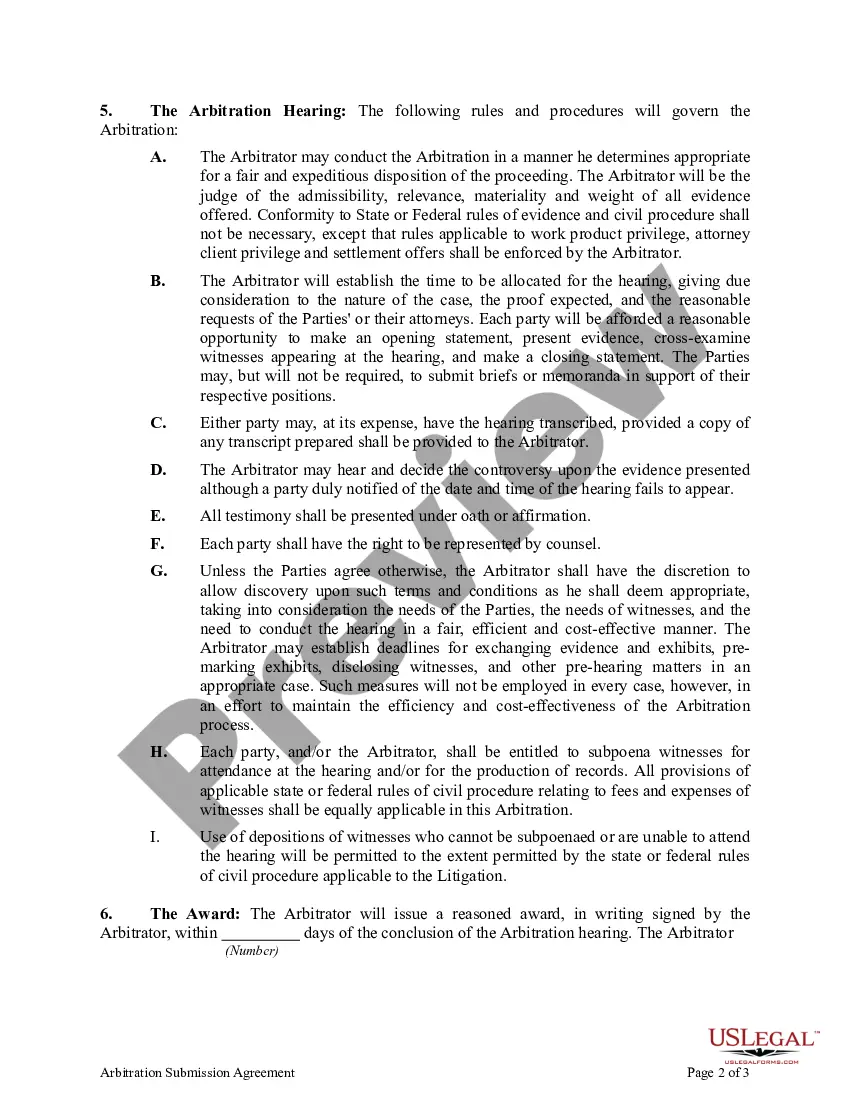
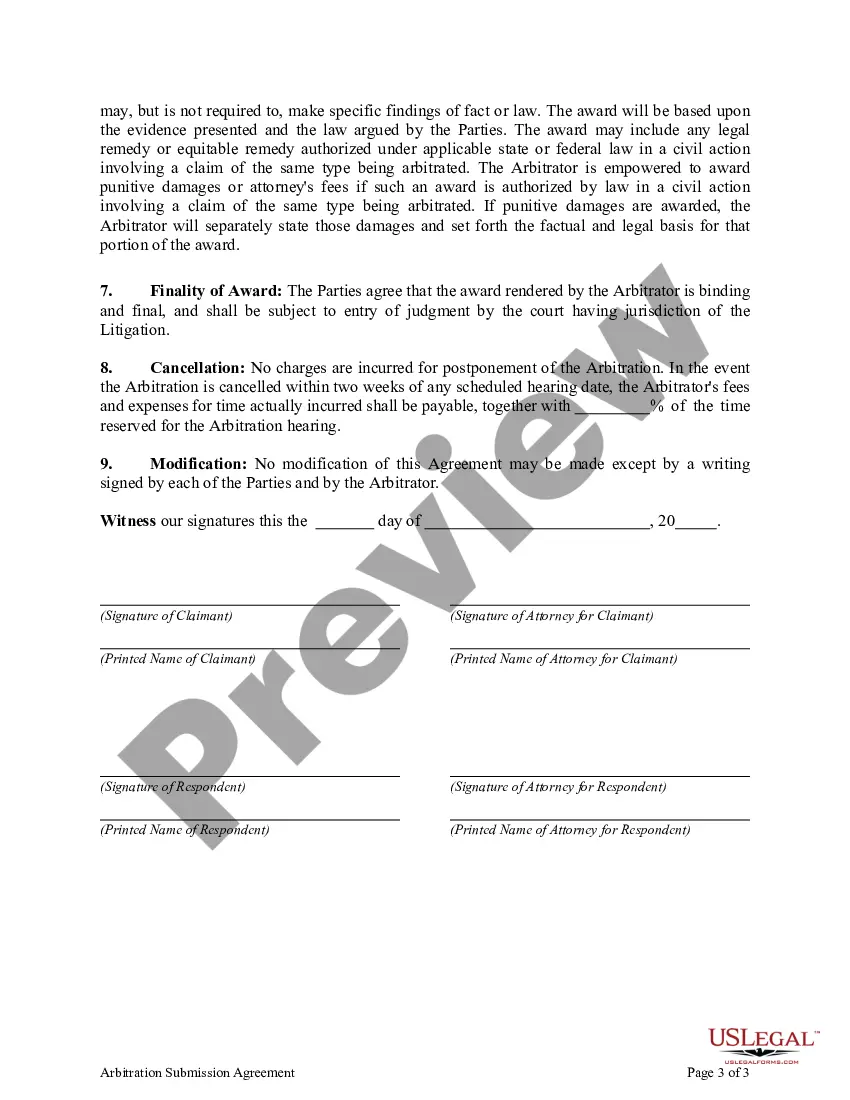
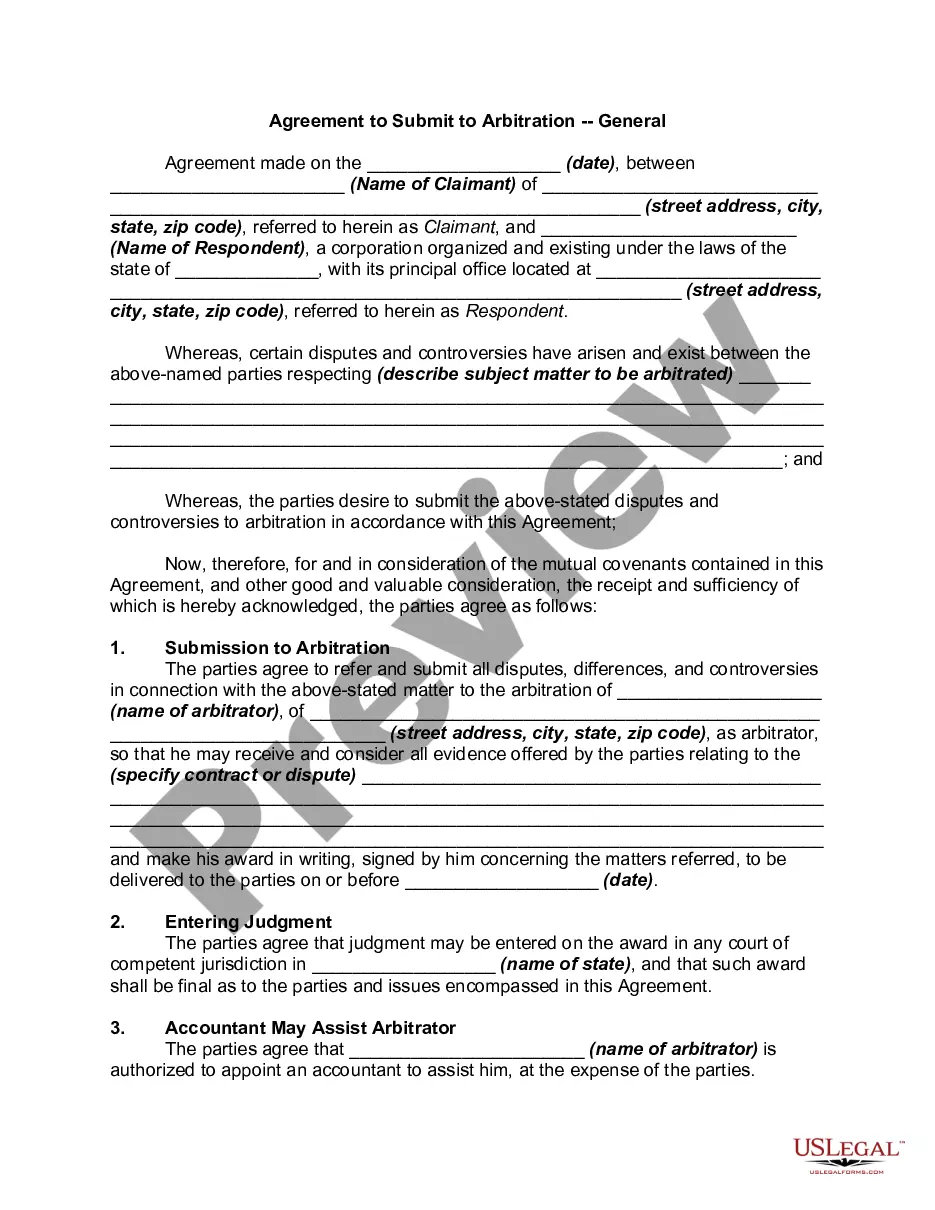
Description



Get your form ready online
Our built-in tools help you complete, sign, share, and store your documents in one place.
Make edits, fill in missing information, and update formatting in US Legal Forms—just like you would in MS Word.
Download a copy, print it, send it by email, or mail it via USPS—whatever works best for your next step.
Sign and collect signatures with our SignNow integration. Send to multiple recipients, set reminders, and more. Go Premium to unlock E-Sign.
If this form requires notarization, complete it online through a secure video call—no need to meet a notary in person or wait for an appointment.
We protect your documents and personal data by following strict security and privacy standards.

Make edits, fill in missing information, and update formatting in US Legal Forms—just like you would in MS Word.

Download a copy, print it, send it by email, or mail it via USPS—whatever works best for your next step.

Sign and collect signatures with our SignNow integration. Send to multiple recipients, set reminders, and more. Go Premium to unlock E-Sign.

If this form requires notarization, complete it online through a secure video call—no need to meet a notary in person or wait for an appointment.

We protect your documents and personal data by following strict security and privacy standards.
Looking for another form?

Form popularity
FAQ
As impartial third parties, they hear and decide disputes between opposing parties. Arbitrators may work alone or on a panel with other arbitrators. In some cases, arbitrators may decide procedural issues, such as what evidence may be submitted and when hearings will be held.
Unlike an arbitrator, a mediator has no power to decide a dispute. Rather, the mediator's role is to facilitate conversations between the parties to help them come to a resolution.
An arbitrator plays the role of a neutral person, who makes decisions on a dispute based on evidence presented by the parties. The decision the arbitrator makes is not always legally binding, but if it is, individuals and/or businesses are not able to go to court later if they do not agree with the outcome.
What does a FINRA arbitrator do? Arbitrators serve as dispute decision makers. They hear all sides of the case, study the evidence and render a final and binding decision. Arbitrators may serve as the sole arbitrator or as a member of a three-person arbitration panel.
The Statement of Claim is a document you compose that provides the following: Name(s) of the claimant(s) — who is filing the claim. Name(s) of the respondent(s) — whom the claim is against. Details of the dispute.
Submission Agreement: The Submission Agreement lists the parties in the arbitration case and confirms that FINRA will administer it. It also establishes that, if the case ends with a hearing, the parties all agree to abide by the arbitrators' decisions.
A submission agreement will contain details of the dispute and the issues between the parties, and record that it is being referred to arbitration.
A “submission agreement” (also called an “agreement to arbitrate”) is a written agreement between two parties that establishes the use of arbitration to settle a dispute (or any and all disputes) that may arise between them.
Arbitration agreements require that persons who signed them resolve any disputes by binding arbitration, rather than in court before a judge and/or jury. What is binding arbitration? Binding arbitration involves the submission of a dispute to a neutral party who hears the case and makes a decision.
