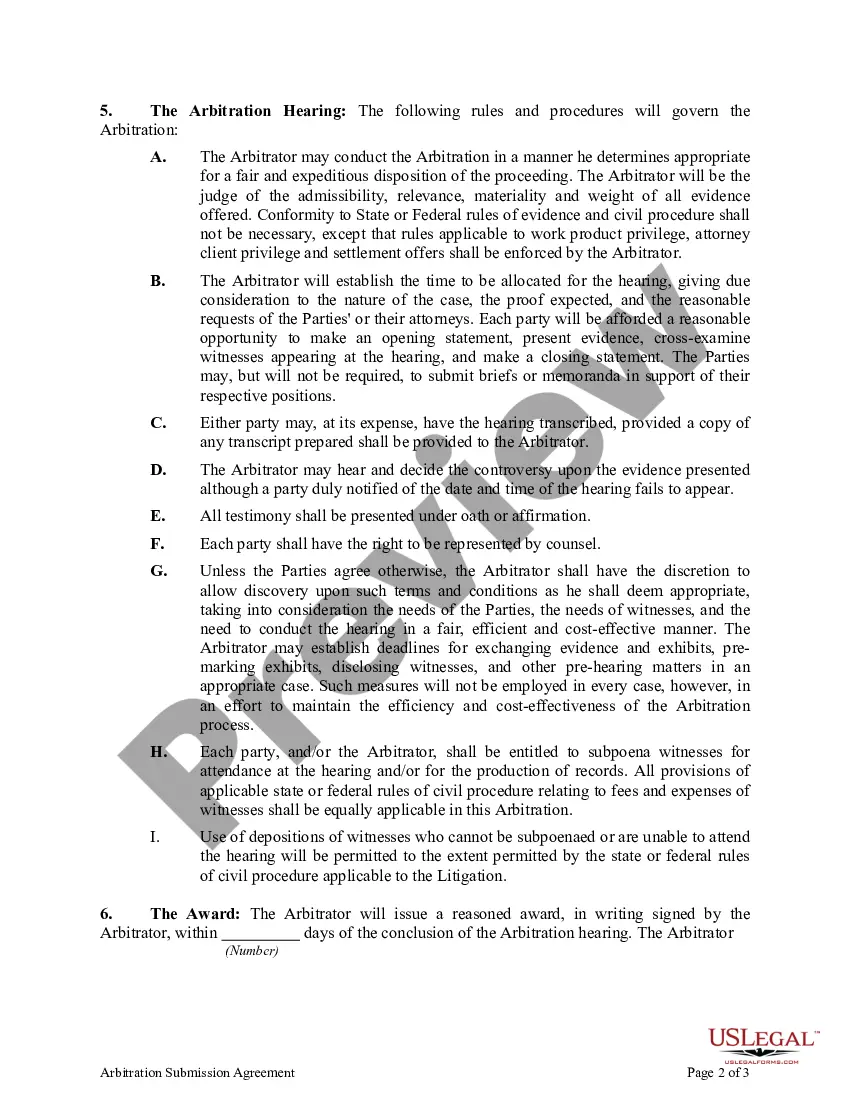
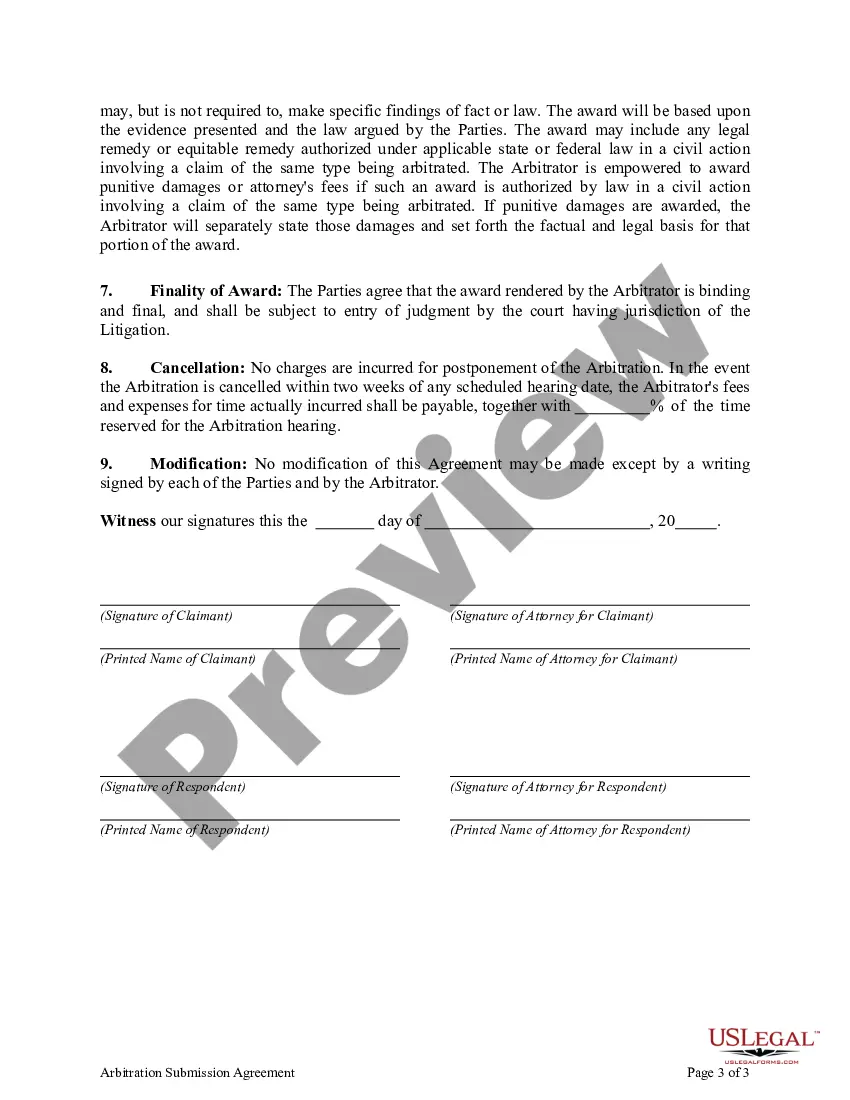
Submission Agreement Sample For Land In Virginia
Description



Get your form ready online
Our built-in tools help you complete, sign, share, and store your documents in one place.
Make edits, fill in missing information, and update formatting in US Legal Forms—just like you would in MS Word.
Download a copy, print it, send it by email, or mail it via USPS—whatever works best for your next step.
Sign and collect signatures with our SignNow integration. Send to multiple recipients, set reminders, and more. Go Premium to unlock E-Sign.
If this form requires notarization, complete it online through a secure video call—no need to meet a notary in person or wait for an appointment.
We protect your documents and personal data by following strict security and privacy standards.

Make edits, fill in missing information, and update formatting in US Legal Forms—just like you would in MS Word.

Download a copy, print it, send it by email, or mail it via USPS—whatever works best for your next step.

Sign and collect signatures with our SignNow integration. Send to multiple recipients, set reminders, and more. Go Premium to unlock E-Sign.

If this form requires notarization, complete it online through a secure video call—no need to meet a notary in person or wait for an appointment.

We protect your documents and personal data by following strict security and privacy standards.
Looking for another form?







Form popularity
FAQ
How to draft a contract in 13 simple steps Start with a contract template. Understand the purpose and requirements. Identify all parties involved. Outline key terms and conditions. Define deliverables and milestones. Establish payment terms. Add termination conditions. Incorporate dispute resolution.
A land contract is typically between two parties: the buyer – sometimes referred to as the vendee – and the seller, also known as the vendor. In a land contract, the seller agrees to finance the property for the buyer in exchange for the buyer meeting the terms agreed upon in the land contract.
A Land Contract includes information about the: Seller. Purchaser. State the property is located in. Legal property description (typically found in the title or deed to the property) Monthly payment amount, the date that the purchaser should start monthly payments, and the interest rate.
In a traditional land contract, the seller retains legal ownership of the property until the buyer completes payment. In a wraparound land contract, however, the buyer immediately gains ownership through a warranty deed.
Land agreement/ Deed of Assignment It permanently transfers ownership of a landed property from the seller (assignor) to the buyer (assignee) subject to perfection. It also traces the origin of the landed property as well as other relevant conveyance deeds.
A deed of agreement is a binding promise to do something. In commercial terms, the signing of a deed indicates a serious commitment by the person or company executing it to perform certain duties and obligations.
A simple sale agreement can be structured as follows: Title the document appropriately. List all parties involved in the agreement. Detail the product or service, including all rights, warranties, and limitations. Specify the duration of the contract and any important deadlines.
An agreement is a promise or arrangement between two or more parties to do, or not do, something. It's usually informal and sometimes unwritten (but not always). Some examples of agreements include a letter of intent, or a confidentiality agreement that precedes a commercial discussion.