Submission Agreement In Arbitration In New York
Description

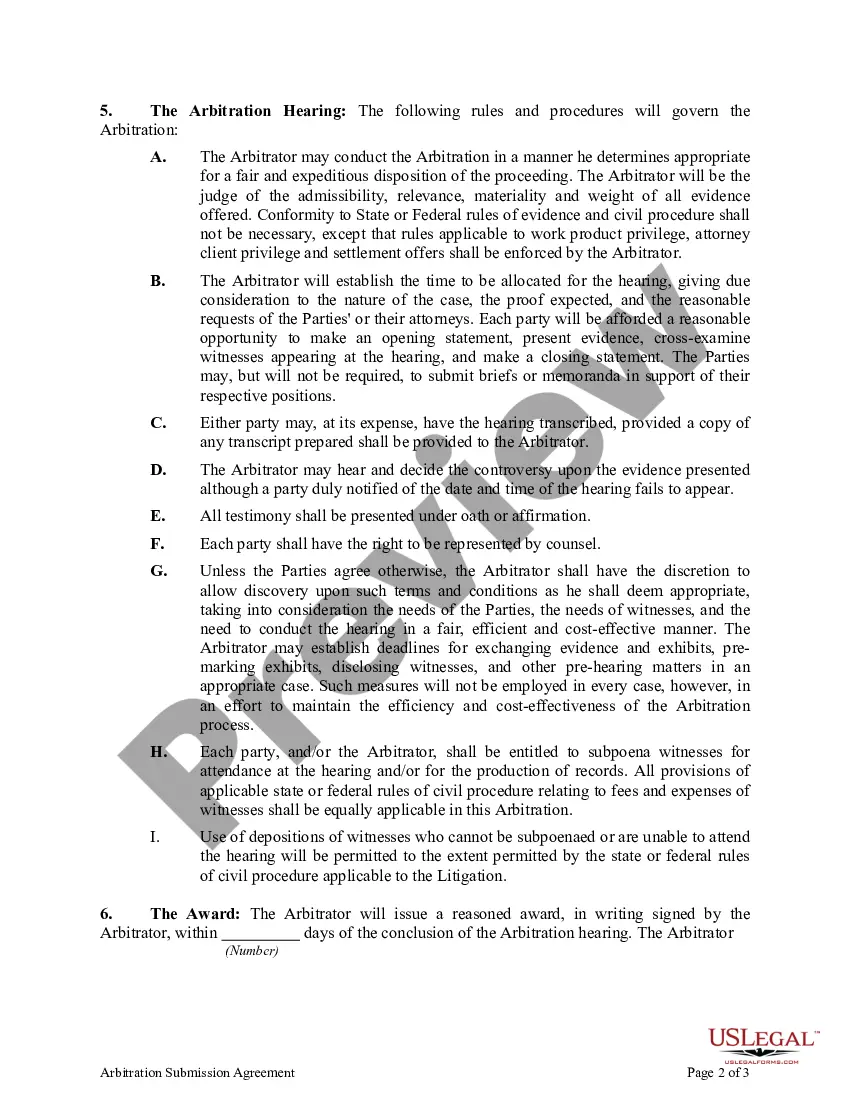
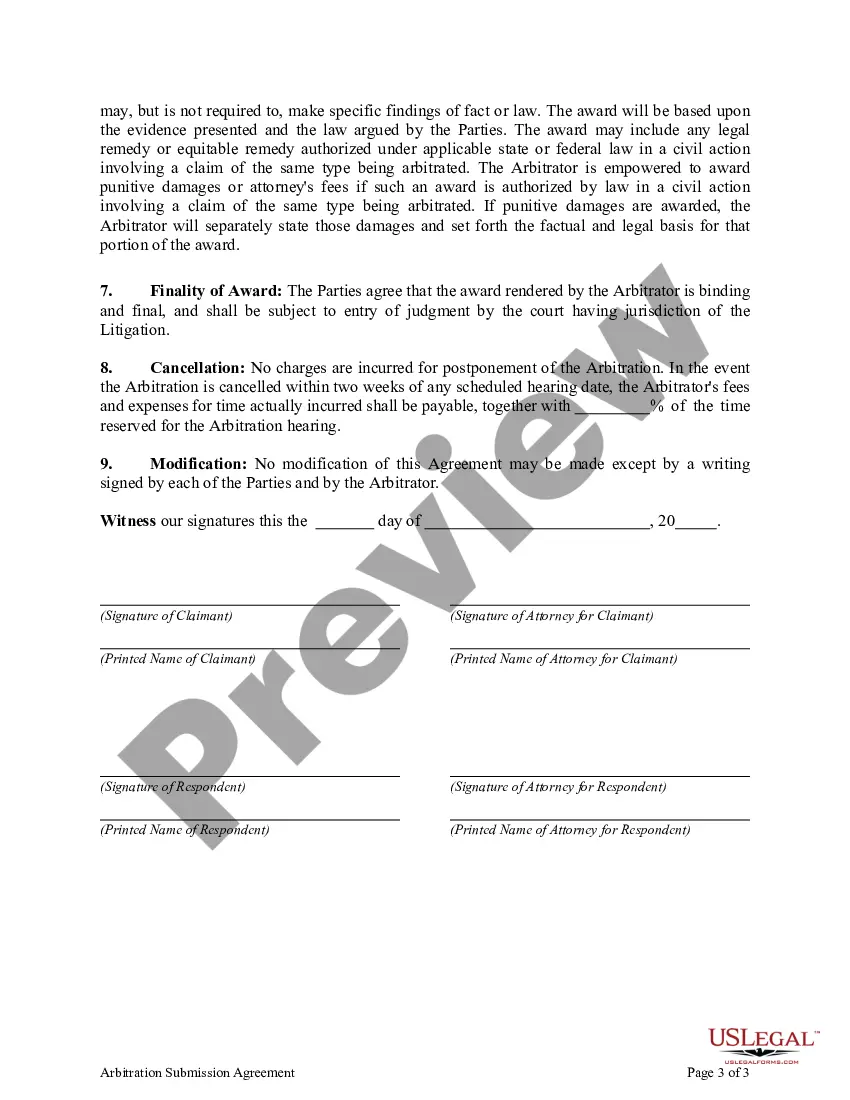

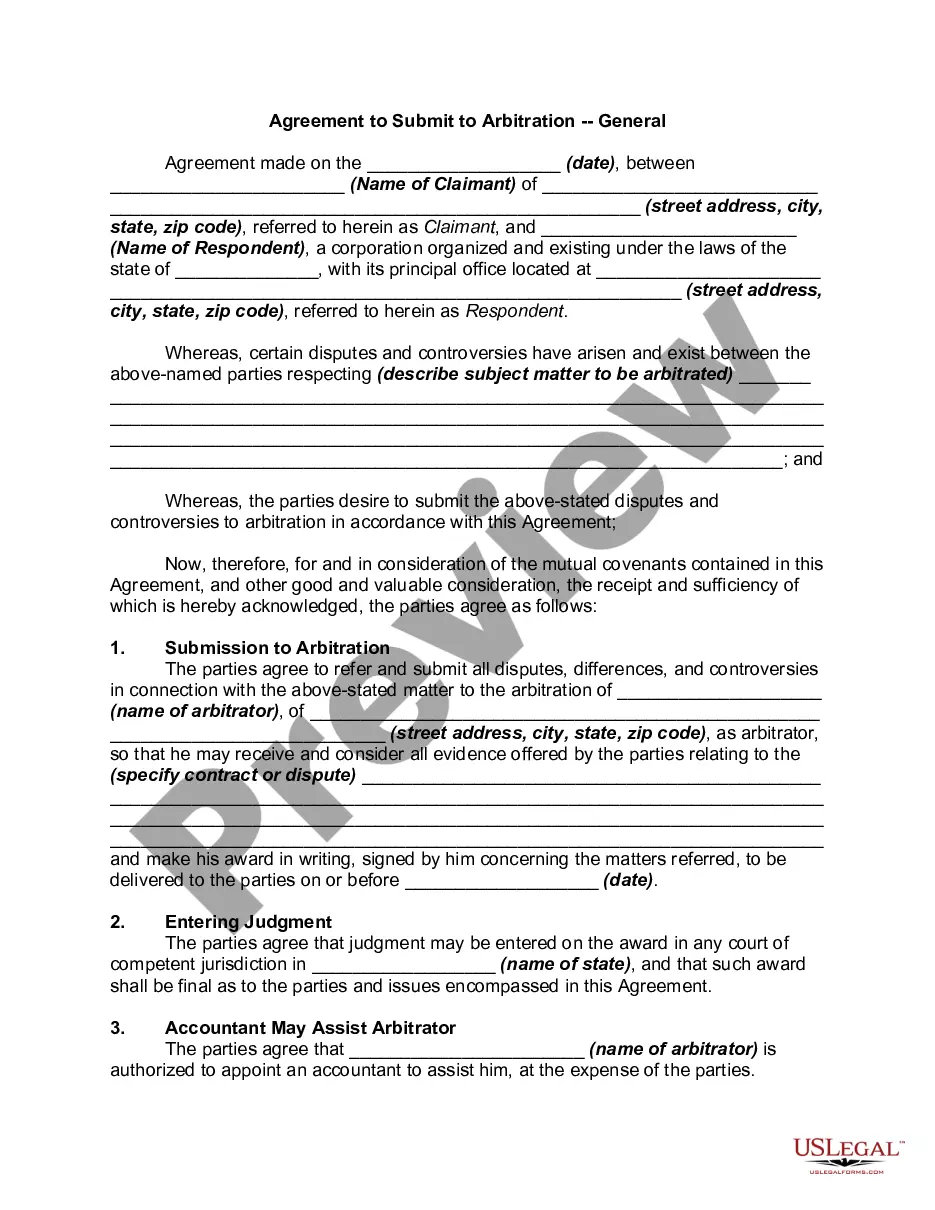

Get your form ready online
Our built-in tools help you complete, sign, share, and store your documents in one place.
Make edits, fill in missing information, and update formatting in US Legal Forms—just like you would in MS Word.
Download a copy, print it, send it by email, or mail it via USPS—whatever works best for your next step.
Sign and collect signatures with our SignNow integration. Send to multiple recipients, set reminders, and more. Go Premium to unlock E-Sign.
If this form requires notarization, complete it online through a secure video call—no need to meet a notary in person or wait for an appointment.
We protect your documents and personal data by following strict security and privacy standards.

Make edits, fill in missing information, and update formatting in US Legal Forms—just like you would in MS Word.

Download a copy, print it, send it by email, or mail it via USPS—whatever works best for your next step.

Sign and collect signatures with our SignNow integration. Send to multiple recipients, set reminders, and more. Go Premium to unlock E-Sign.

If this form requires notarization, complete it online through a secure video call—no need to meet a notary in person or wait for an appointment.

We protect your documents and personal data by following strict security and privacy standards.
Looking for another form?







Form popularity
FAQ
TYPICALLY, THE PARTIES ENTER INTO A 'SUBMISSION AGREEMENT' THAT IDENTIFIES THE PARTIES, DESCRIBES THE DISPUTE TO BE SETTLED, INDICATES THE RELIEF SOUGHT BY EACH OF THE PARTIES, AND PROVIDES FOR ADMINISTRATION, AS UNDER THE RULES OF THE AMERICAN ARBITRATION ASSOCIATION (AAA).
Is arbitration legal? Yes. The Federal Arbitration Act, or FAA, was passed in 1925 in response to a variety of court decisions that held arbitration agreements unenforceable. This law provides that arbitration agreements are generally valid and enforceable.
An employer cannot enforce a non-compete agreement against an employee unless it can demonstrate a legitimate interest that needs to be protected. In most cases, the only legitimate interest that justifies the enforcement of a non-compete clause is a trade secret.
A “submission agreement” (also called an “agreement to arbitrate”) is a written agreement between two parties that establishes the use of arbitration to settle a dispute (or any and all disputes) that may arise between them.
The arbitrator conducts a day-long hearing at which both parties present their respective cases. At the conclusion of the arbitration hearing the arbitrator will issue an award in favor one party, which will be binding, unless one of the parties requests a trial de novo.
If you are not in receipt of a denial of claim form, you can file for arbitration by fully completing and AAA Form AR1, the No-Fault Arbitration Request Form. This form should be obtained directly from the website of the American Arbitration Association.
Section 7501 deals with the effect of an arbitration agreement, providing that “a written agreement to submit any controversy thereafter arising or any existing controversy to arbitration is enforceable without regard to the justiciable character of the controversy and confers jurisdiction on the courts of the state to ...
A submission agreement, on the other hand, is an agreement entered into between the parties to submit existing disputes to arbitration. The terms 'arbitration clause' and 'submission agreement' are used throughout this Guide in ance with these descriptions.
Arbitration might be the right choice for some cases. Limited discovery rights and costs might be useful when less is at stake. Arbitration might feel less adversarial, which could be an advantage where ongoing relationships are hoped to be preserved. Arbitration lends some confidentiality.
