Contract Law In Australia In Philadelphia
Description




Get your form ready online
Our built-in tools help you complete, sign, share, and store your documents in one place.
Make edits, fill in missing information, and update formatting in US Legal Forms—just like you would in MS Word.
Download a copy, print it, send it by email, or mail it via USPS—whatever works best for your next step.
Sign and collect signatures with our SignNow integration. Send to multiple recipients, set reminders, and more. Go Premium to unlock E-Sign.
If this form requires notarization, complete it online through a secure video call—no need to meet a notary in person or wait for an appointment.
We protect your documents and personal data by following strict security and privacy standards.

Make edits, fill in missing information, and update formatting in US Legal Forms—just like you would in MS Word.

Download a copy, print it, send it by email, or mail it via USPS—whatever works best for your next step.

Sign and collect signatures with our SignNow integration. Send to multiple recipients, set reminders, and more. Go Premium to unlock E-Sign.

If this form requires notarization, complete it online through a secure video call—no need to meet a notary in person or wait for an appointment.

We protect your documents and personal data by following strict security and privacy standards.
Looking for another form?





Form popularity
FAQ
The basic elements required for the agreement to be a legally enforceable contract are: mutual assent, expressed by a valid offer and acceptance; adequate consideration; capacity; and legality. In some states, elements of consideration can be satisfied by a valid substitute.
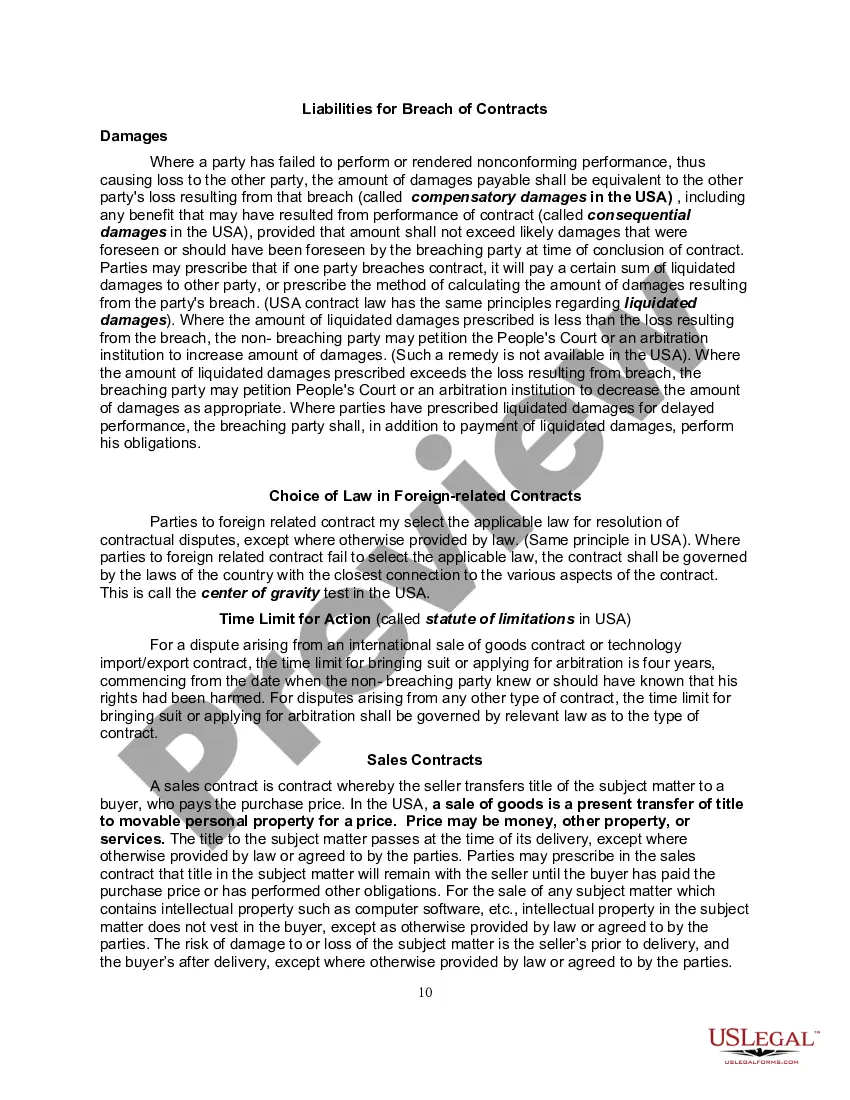
In Australia contract law is primarily governed by the 'common law', but increasingly statutes are supplementing the common law of contract - most notably, but certainly not exclusively, in the area of consumer protection.
Australian contract law is based on the English common law, rather than on any codified or statute law. The basic principle of Australian contract law is freedom of contract, under which parties are at liberty to strike whatever bargain they choose.
4 Sources of Contract Law. There are four basic sources of contract law: the Constitution, federal and state statutes, federal and state case law, and administrative law.
There are two main sources of law in Australia, case law or common law, based on the decisions of judges in the superior courts, and legislation, the law made by Parliament.
Elements of common law contracts That the offer was accepted; That there was consideration given (most commonly a monetary amount); There was an intention to be bound by contract; The parties agree on the same thing – mutuality; The parties were legally capable of reaching an agreement – capacity; and.
The CISG governs international sales contracts if (1) both parties are located in Contracting States, or (2) private international law leads to the application of the law of a Contracting State (although, as permitted by the CISG (article 95), several Contracting States have declared that they are not bound by the ...
Australian contract law is based on the English common law, rather than on any codified or statute law. The basic principle of Australian contract law is freedom of contract, under which parties are at liberty to strike whatever bargain they choose.
Treaties and other international agreements are written agreements between sovereign states (or between states and international organizations) governed by international law. The United States enters into more than 200 treaties and other international agreements each year.
