Contract Law In Australia In Middlesex
Description



Get your form ready online
Our built-in tools help you complete, sign, share, and store your documents in one place.
Make edits, fill in missing information, and update formatting in US Legal Forms—just like you would in MS Word.
Download a copy, print it, send it by email, or mail it via USPS—whatever works best for your next step.
Sign and collect signatures with our SignNow integration. Send to multiple recipients, set reminders, and more. Go Premium to unlock E-Sign.
If this form requires notarization, complete it online through a secure video call—no need to meet a notary in person or wait for an appointment.
We protect your documents and personal data by following strict security and privacy standards.

Make edits, fill in missing information, and update formatting in US Legal Forms—just like you would in MS Word.

Download a copy, print it, send it by email, or mail it via USPS—whatever works best for your next step.

Sign and collect signatures with our SignNow integration. Send to multiple recipients, set reminders, and more. Go Premium to unlock E-Sign.

If this form requires notarization, complete it online through a secure video call—no need to meet a notary in person or wait for an appointment.

We protect your documents and personal data by following strict security and privacy standards.
Looking for another form?









Form popularity
FAQ
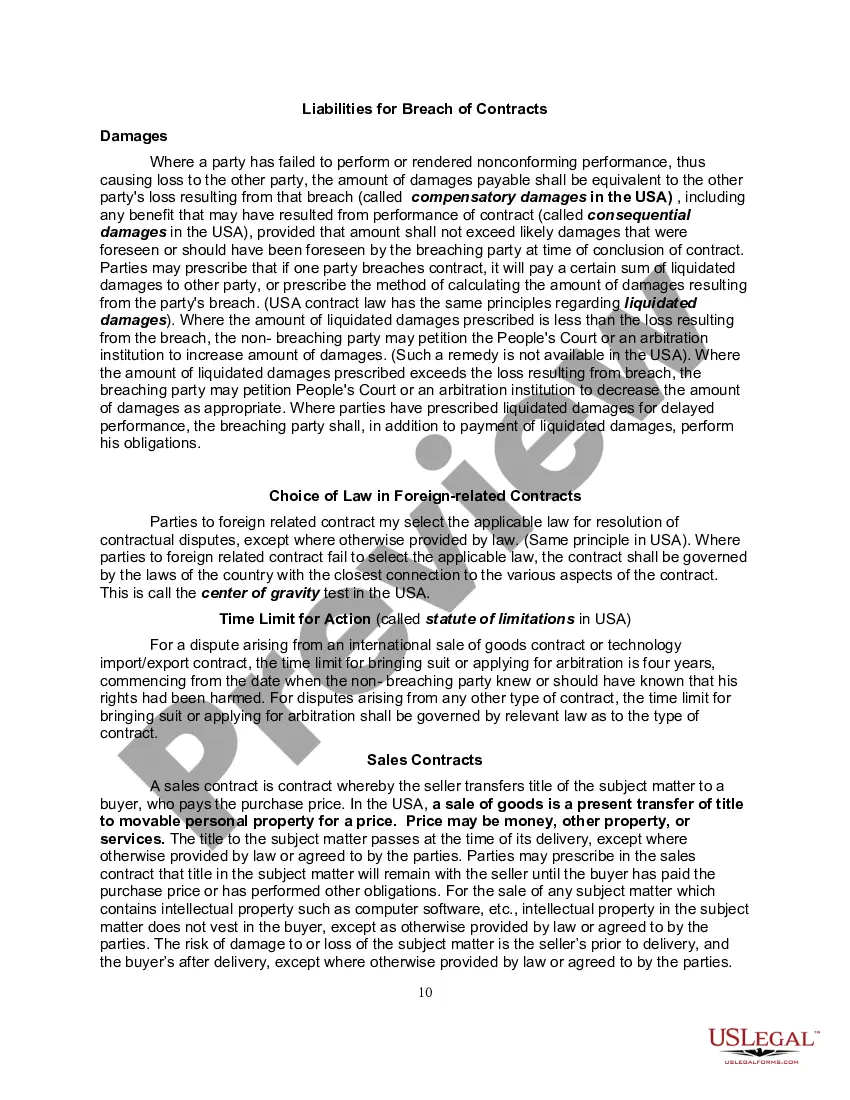
The 4 Elements Of A Successful Breach Of Contract Claim In... Existence Of A Valid Contract Between The Parties. You Performed Your Part Of The Contract. The Defendant Failed To Perform Their Contract Obligations. You Suffered Damages Or Loss.
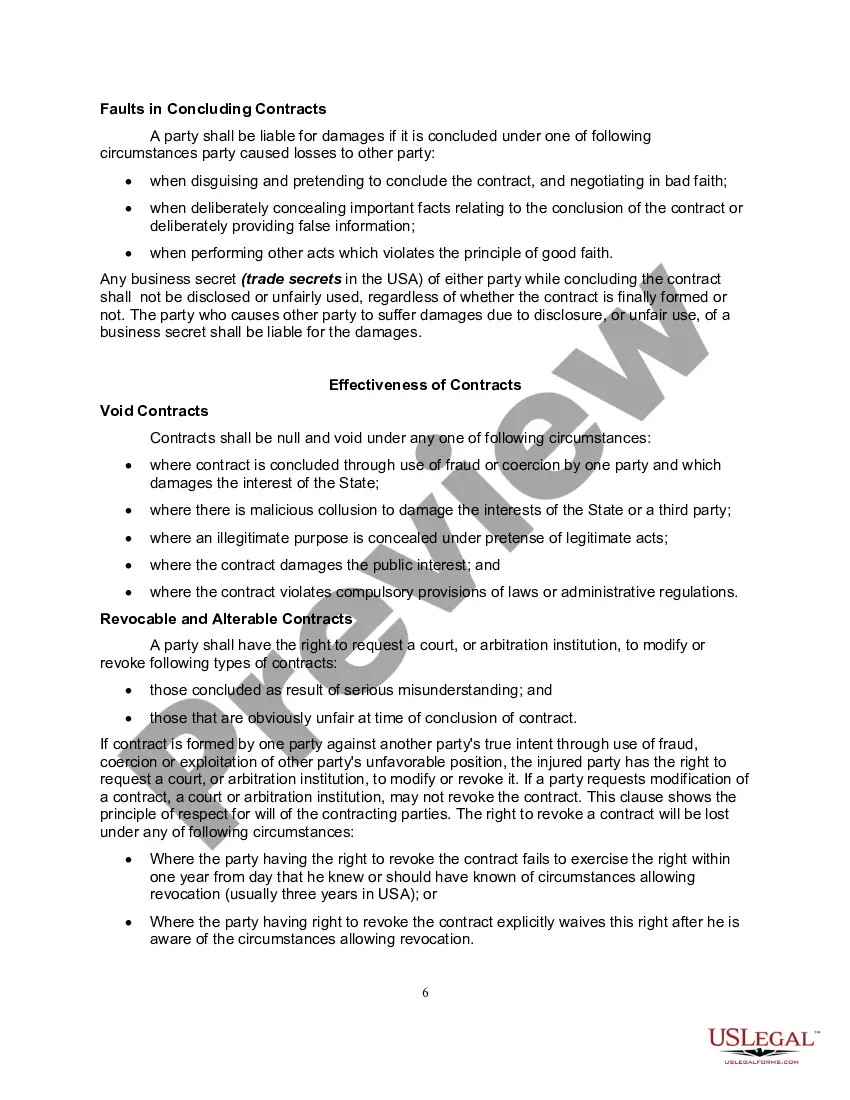
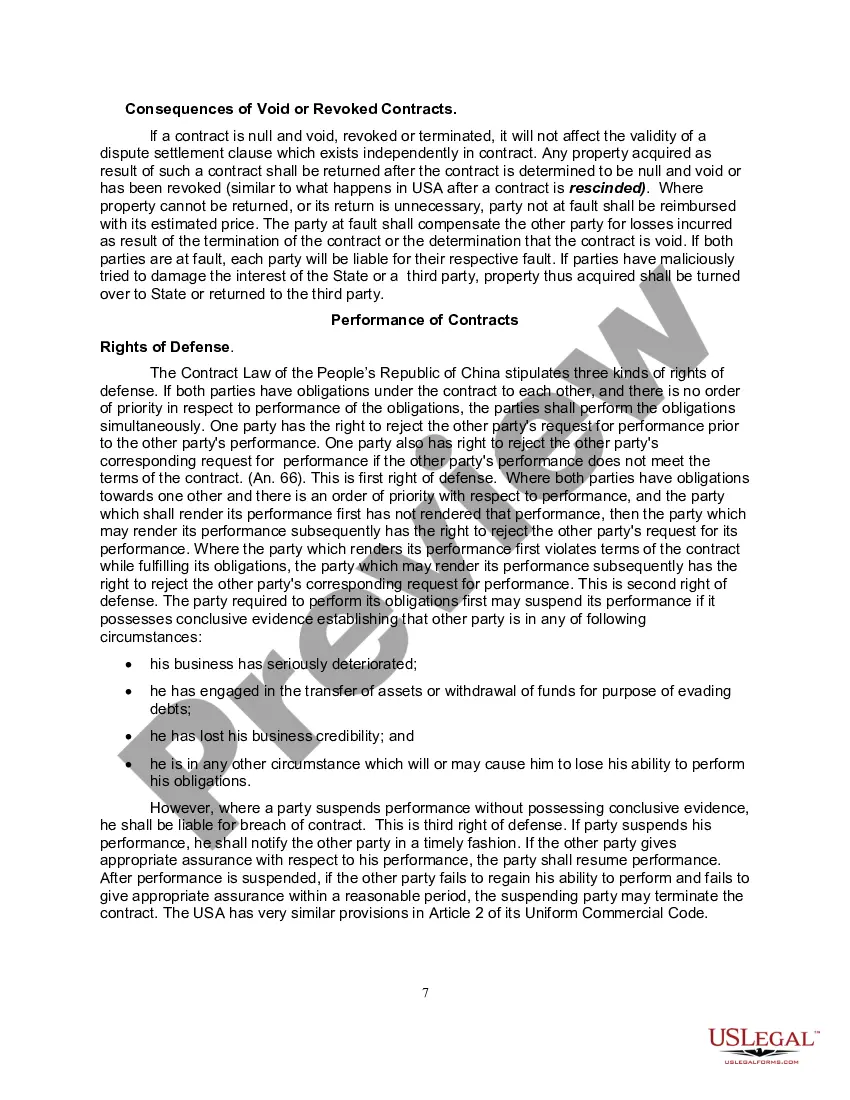
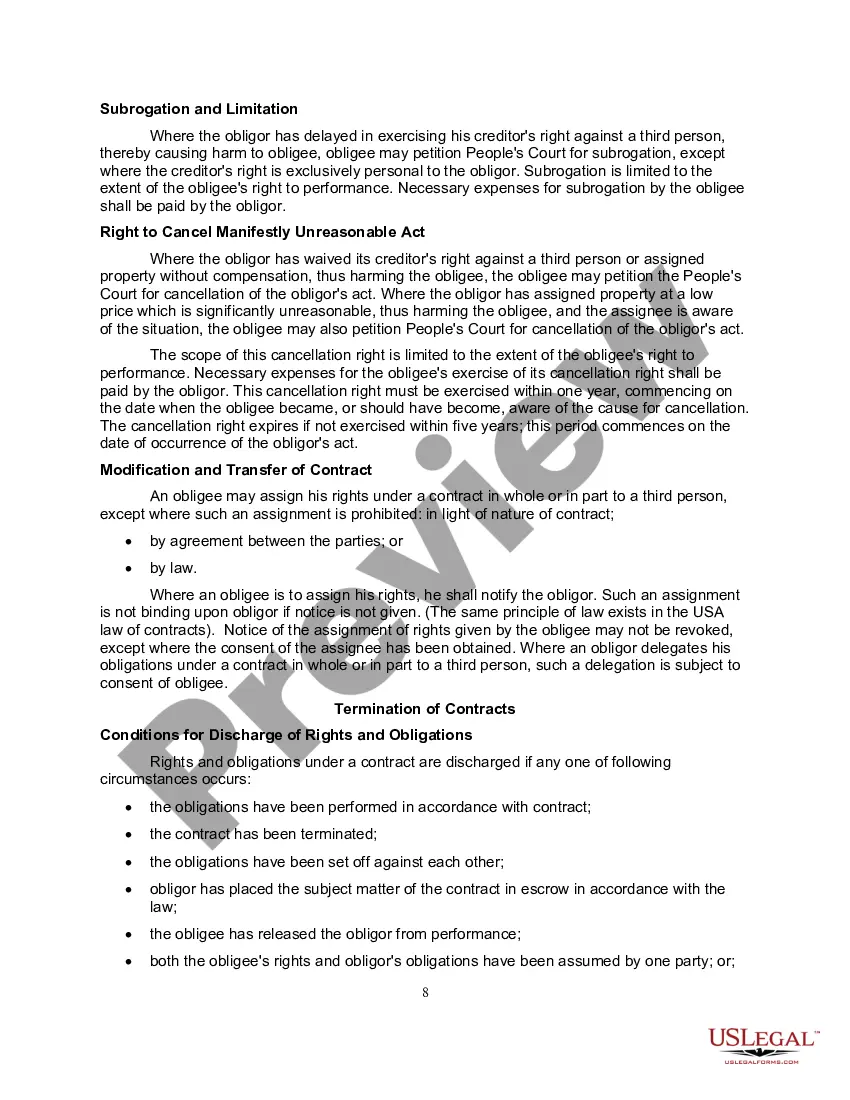
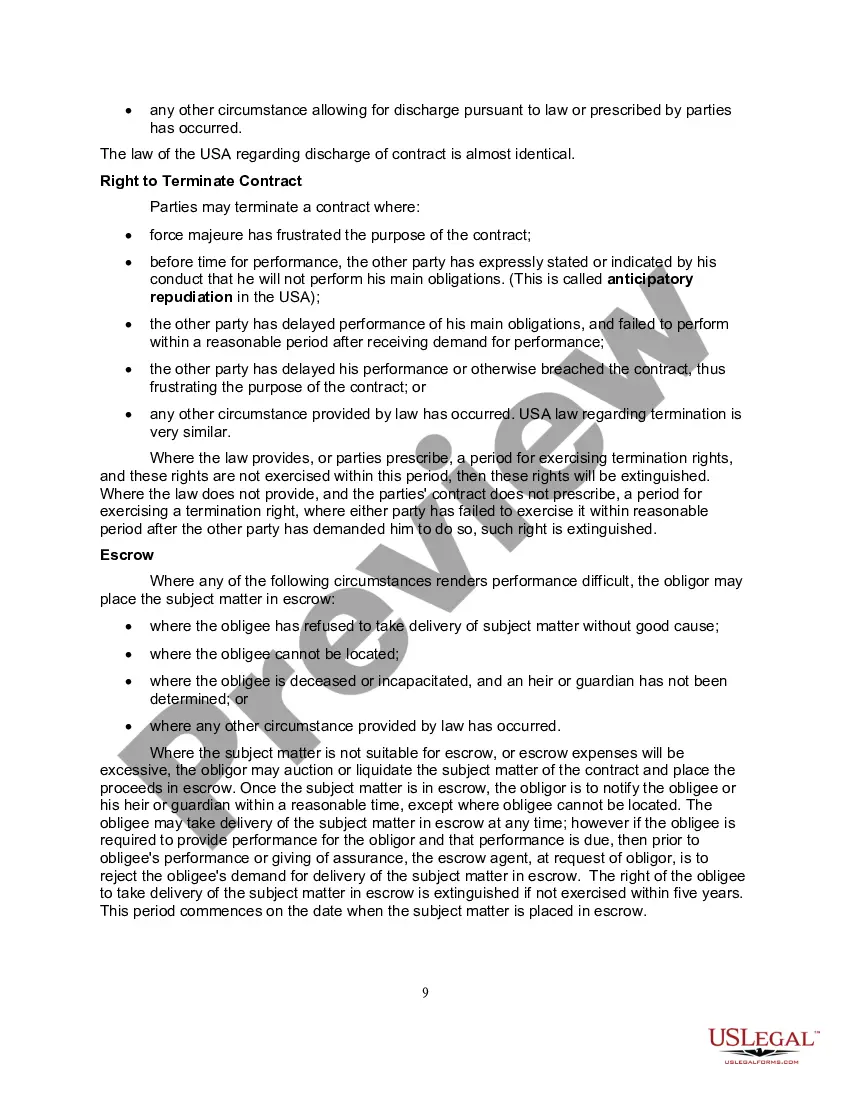
In Australia contract law is primarily governed by the 'common law', but increasingly statutes are supplementing the common law of contract - most notably, but certainly not exclusively, in the area of consumer protection. This site is designed to provide an introduction to Australian contract and consumer law.
The ACL and the ASIC Act define 'consumer contract' as a contract for the supply of goods or services, or the sale or grant of an interest in land, to an individual for personal, domestic or household use or consumption. A court can declare a term of a standard form consumer contract to be unfair.
Although you don't have to hire a lawyer, you should. Entering into a legally binding agreement isn't something you should take lightly. Signing a document without fully comprehending the terms or your rights is dangerous. It can lead to significant unintended consequences and time-consuming legal battles.
Contracts are mainly governed by state statutory and common (judge-made) law and private law (i.e. the private agreement). Private law principally includes the terms of the agreement between the parties who are exchanging promises. This private law may override many of the rules otherwise established by state law.
Australian contract law is based on the English common law, rather than on any codified or statute law. The basic principle of Australian contract law is freedom of contract, under which parties are at liberty to strike whatever bargain they choose.
Acceptance must be unambiguous, have no conditions attached to the acceptance and can be verbal or given in writing. Acceptance is a key element of a binding contract in Australia. This article looks at what acceptance means, how it happens, and why it matters in Australian contract law.
While the 3 elements of contract law—offer, acceptance, and consideration—are crucial, there are additional elements that ensure a contract is valid and enforceable. These include capacity, legality, and awareness.
Key Contract Law Legislation Act No. 51 of 1974 as amended. (ComLaw) Incorporating the Australian Consumer Law (in Schedule 2) - the Trade Practices Act 1974 was re-named the Competition and Consumer Act 2010 on 1 January 2011.
In order for a contract to be valid, there must be a meeting of the minds on all of the essential elements of the contract, including the offer, acceptance, consideration, capacity, and legality. If there is no meeting of the minds on any of these elements, the contract may be void or unenforceable.
