Contract Law For Paralegals In Massachusetts
Description

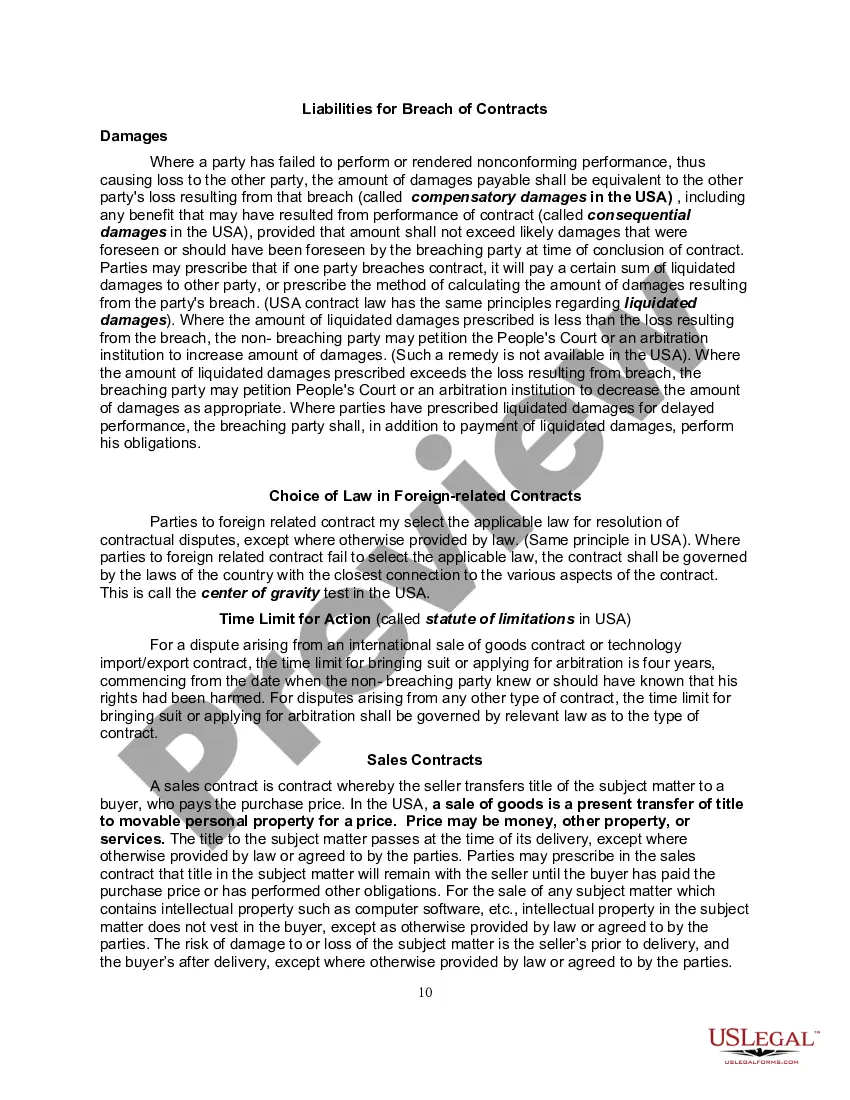



Get your form ready online
Our built-in tools help you complete, sign, share, and store your documents in one place.
Make edits, fill in missing information, and update formatting in US Legal Forms—just like you would in MS Word.
Download a copy, print it, send it by email, or mail it via USPS—whatever works best for your next step.
Sign and collect signatures with our SignNow integration. Send to multiple recipients, set reminders, and more. Go Premium to unlock E-Sign.
If this form requires notarization, complete it online through a secure video call—no need to meet a notary in person or wait for an appointment.
We protect your documents and personal data by following strict security and privacy standards.

Make edits, fill in missing information, and update formatting in US Legal Forms—just like you would in MS Word.

Download a copy, print it, send it by email, or mail it via USPS—whatever works best for your next step.

Sign and collect signatures with our SignNow integration. Send to multiple recipients, set reminders, and more. Go Premium to unlock E-Sign.

If this form requires notarization, complete it online through a secure video call—no need to meet a notary in person or wait for an appointment.

We protect your documents and personal data by following strict security and privacy standards.
Looking for another form?






Form popularity
FAQ
A contract paralegal cannot work directly with the public; under California law, paralegals must work under the direction and supervision of an active member of the State Bar of California, or an attorney practicing law in the federal courts of this state.
A contract paralegal cannot work directly with the public; under California law, paralegals must work under the direction and supervision of an active member of the State Bar of California, or an attorney practicing law in the federal courts of this state.
First, to become a contract attorney, one must earn a bachelor's degree and graduate with good grades. It is recommended, but not required, to earn a degree in a legally-related field, such as criminal justice or political science. Before applying for law school, you must take the LSAT and get a good score.
A binding contract requires both an offer and acceptance of that offer. A party makes an offer by expressing a willingness or desire to enter into an agreement with the intent that, if the other party accepts the terms of the offer, then there is a binding contract.
Large businesses. Large companies often have their in-house legal team conduct contract reviews. If the contracts in question are basic, the paralegals, legal assistants, or junior lawyers will review the contracts to make sure they are lawful and enforceable.
In Massachusetts, the education and training requirements for paralegals are not regulated by the state. Thus, aspiring paralegals may seek on-the-job training or educational programs in order to enter their desired field.
Even though paralegals do a lot of the administrative work within a firm, know the law, and work with clients, they are not lawyers. Paralegals cannot give legal advice, make decisions on behalf of clients, or represent clients in court as they are not licensed attorneys.
7 Essential Elements of A Contract Offer. For there to be a contract, there must first be an offer by one party and an acceptance by the other. Acceptance. Acceptance is the agreement to the specific conditions of an offer. Consideration. Intention to create legal relations. Authority and capacity. Certainty.
Understanding these seven essential elements of a contract — offer, acceptance, consideration, legally competent parties, meeting of the minds, terms of the contract, and legality of purpose — will help you check whether any agreement you enter into is a strong, legally binding contract.
There are seven essential elements an agreement must have to be considered a valid contract. The elements of a contract include identification, offer, acceptance, consideration, meeting of the minds, competency and capacity, and contract legality. Preferably, the document will be in writing (electronic or on paper).
