Contract Law For Beginners In Florida
Description

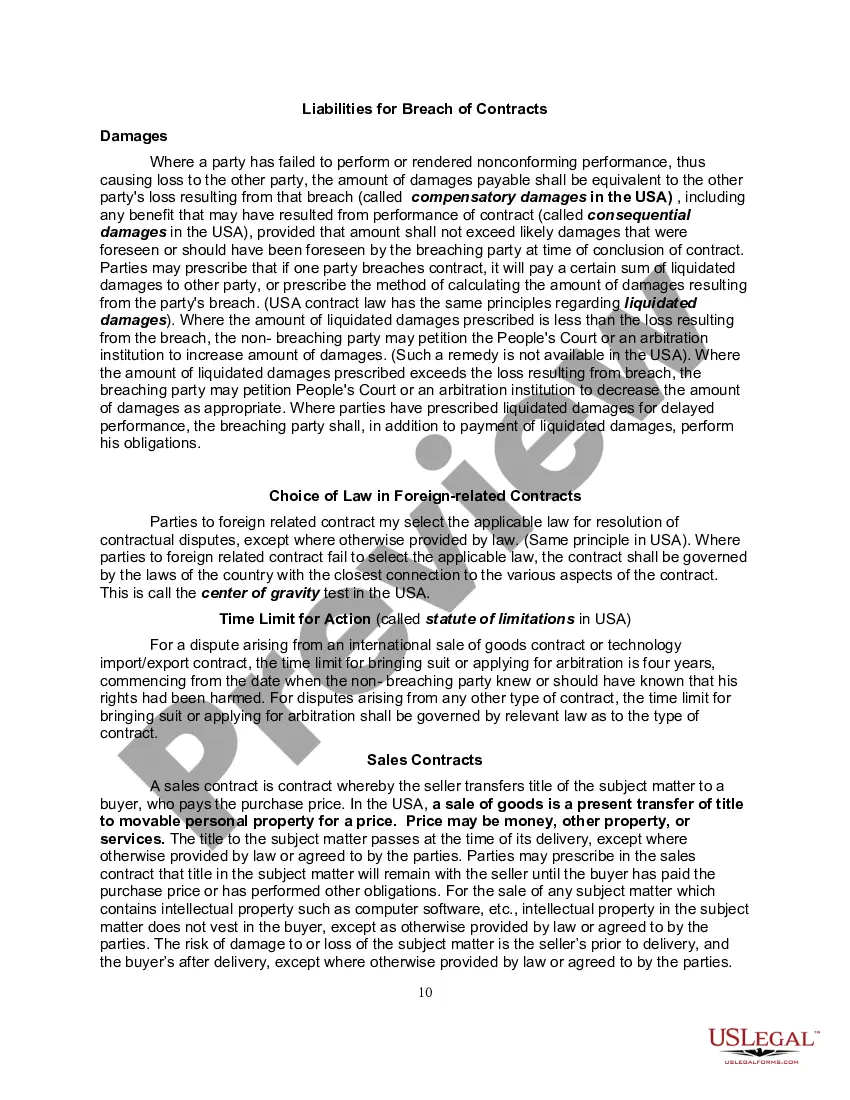



Get your form ready online
Our built-in tools help you complete, sign, share, and store your documents in one place.
Make edits, fill in missing information, and update formatting in US Legal Forms—just like you would in MS Word.
Download a copy, print it, send it by email, or mail it via USPS—whatever works best for your next step.
Sign and collect signatures with our SignNow integration. Send to multiple recipients, set reminders, and more. Go Premium to unlock E-Sign.
If this form requires notarization, complete it online through a secure video call—no need to meet a notary in person or wait for an appointment.
We protect your documents and personal data by following strict security and privacy standards.

Make edits, fill in missing information, and update formatting in US Legal Forms—just like you would in MS Word.

Download a copy, print it, send it by email, or mail it via USPS—whatever works best for your next step.

Sign and collect signatures with our SignNow integration. Send to multiple recipients, set reminders, and more. Go Premium to unlock E-Sign.

If this form requires notarization, complete it online through a secure video call—no need to meet a notary in person or wait for an appointment.

We protect your documents and personal data by following strict security and privacy standards.
Looking for another form?









Form popularity
FAQ
A contract is legally binding. It is formed when there is an offer, an acceptance, and, importantly, consideration by both parties. Without consideration, there is no enforceable contract in Florida.
To that end, several key elements constitute contract formation; contract law is shaped by considerations of public policy, and parties involved, such as the offeror, must be aware of these legal principles. Those elements are offer, consideration, acceptance, and mutuality.
It is a legal framework for the agreement between the parties, which is both certain and enforceable. However, to be legally binding, a contract must include four key elements: an offer, acceptance, consideration, and an intention to create legal relations.
For a contract to be enforceable, it must include all five elements: offer, acceptance, consideration, capacity, and lawful purpose. These elements ensure that the agreement is legal, fair, and binding for everyone.
A contract is an agreement between parties , creating mutual obligations that are enforceable by law . The basic elements required for the agreement to be a legally enforceable contract are: mutual assent , expressed by a valid offer and acceptance ; adequate consideration ; capacity ; and legality .
A legally enforceable contract must include an offer, acceptance, consideration, capacity, legality, and mutual assent.
A contract will only be legally binding upon the contracting parties if the following requirements are complied with: consensus, contractual capacity, certainty, possibility, legality and formalities. 39 The above requirements will be discussed next. 39Para 1 1 above.
There are three elements that must be present for a contract to exist: offer, acceptance and consideration. The first step to a contract is an offer. An offer is a written or spoken statement by one of his or her intention to be held to a commitment upon acceptance of the offer.
Write the contract in six steps Start with a contract template. Open with the basic information. Describe in detail what you have agreed to. Include a description of how the contract will be ended. Write into the contract which laws apply and how disputes will be resolved. Include space for signatures.
Contracts generally do not need to be notarized to be legally binding, but notarization adds a layer of authentication that can be helpful in disputes. Certain types of contracts, such as real estate deeds, wills, and medical releases, often require notarization.
