Contract Law With Examples In Fairfax
Description

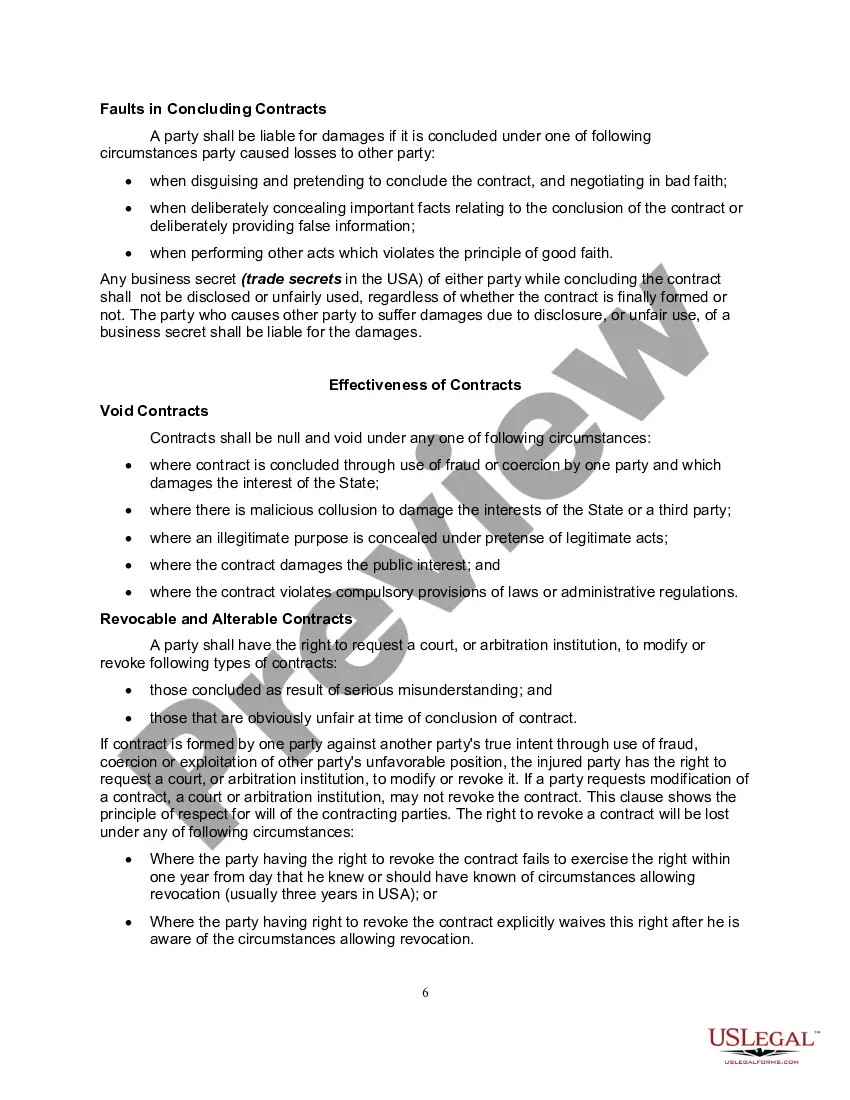
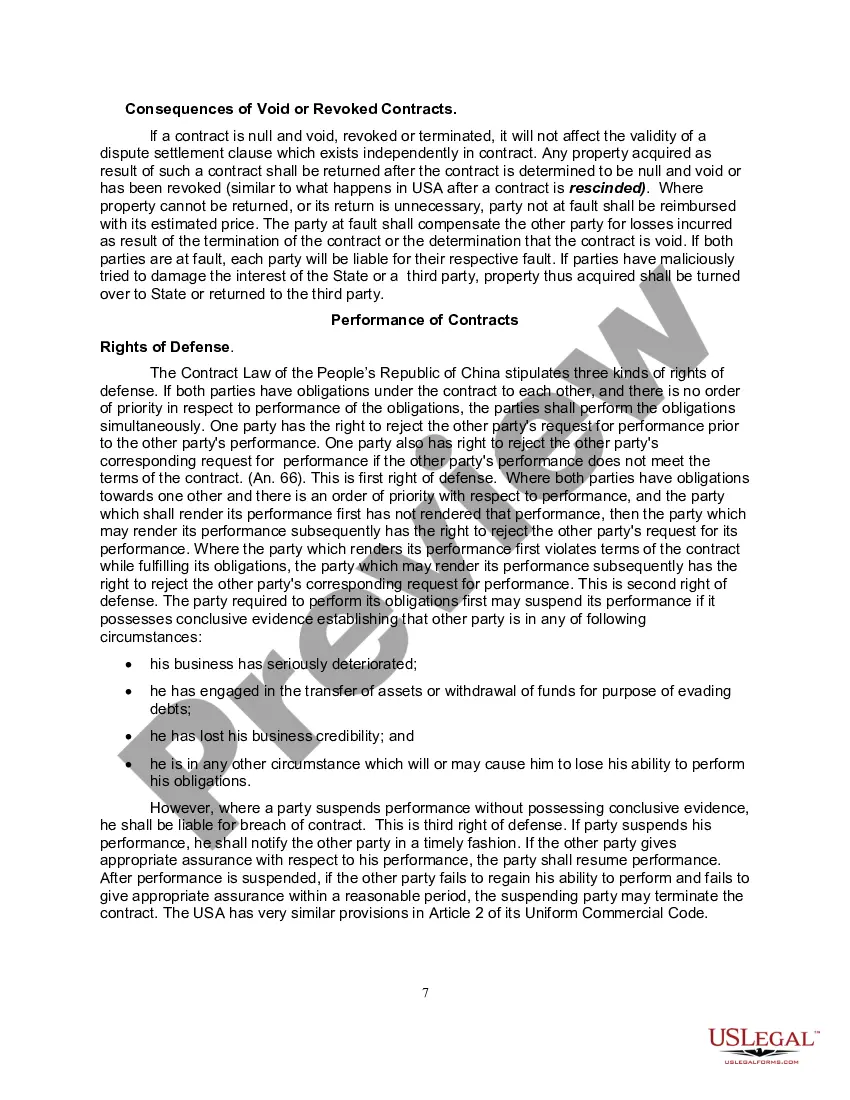
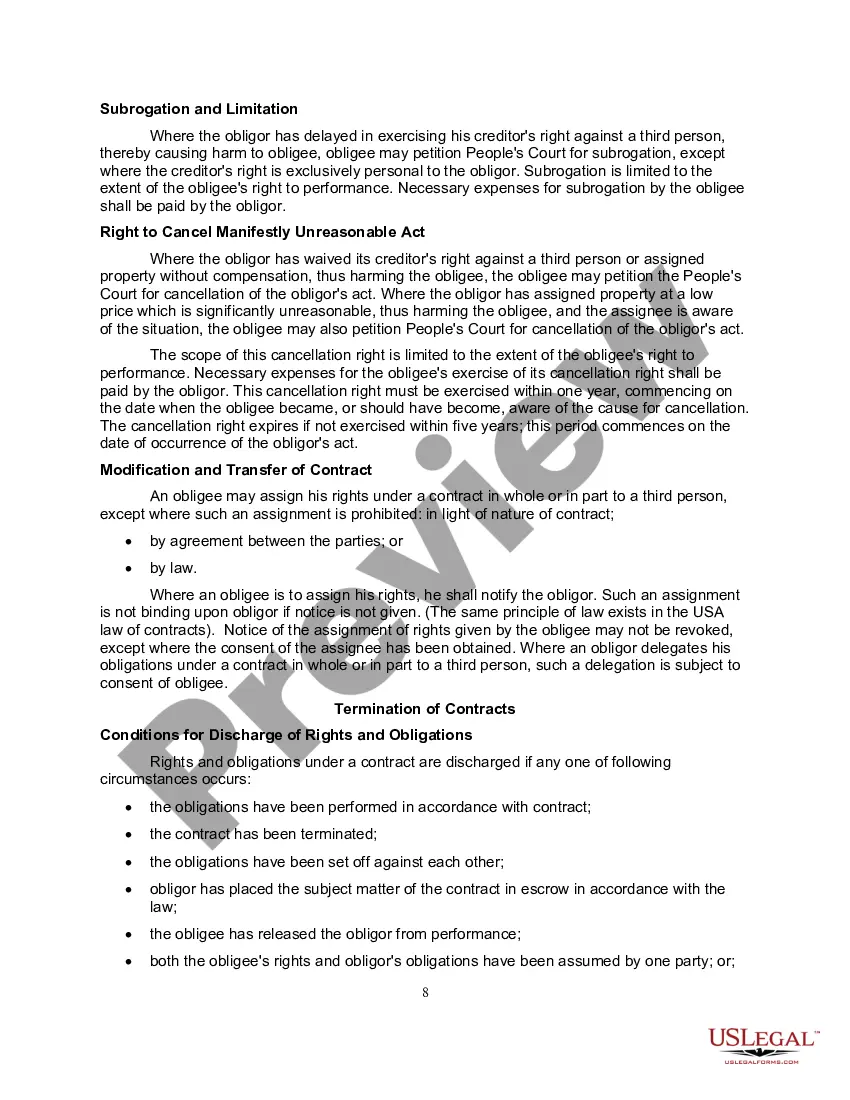
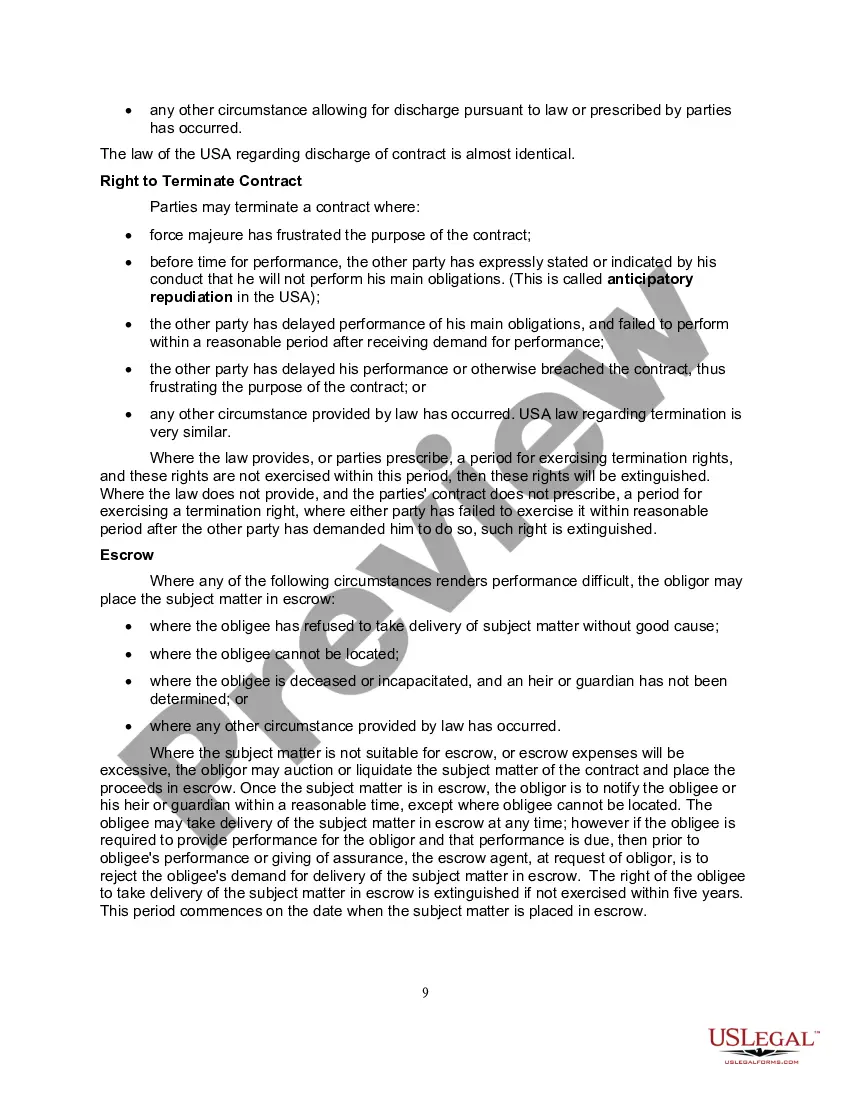


Get your form ready online
Our built-in tools help you complete, sign, share, and store your documents in one place.
Make edits, fill in missing information, and update formatting in US Legal Forms—just like you would in MS Word.
Download a copy, print it, send it by email, or mail it via USPS—whatever works best for your next step.
Sign and collect signatures with our SignNow integration. Send to multiple recipients, set reminders, and more. Go Premium to unlock E-Sign.
If this form requires notarization, complete it online through a secure video call—no need to meet a notary in person or wait for an appointment.
We protect your documents and personal data by following strict security and privacy standards.

Make edits, fill in missing information, and update formatting in US Legal Forms—just like you would in MS Word.

Download a copy, print it, send it by email, or mail it via USPS—whatever works best for your next step.

Sign and collect signatures with our SignNow integration. Send to multiple recipients, set reminders, and more. Go Premium to unlock E-Sign.

If this form requires notarization, complete it online through a secure video call—no need to meet a notary in person or wait for an appointment.

We protect your documents and personal data by following strict security and privacy standards.
Looking for another form?









Form popularity
FAQ
The Fairfax Circuit Court serves the residents of Fairfax County and Fairfax City. The Fairfax Circuit Court (19th Judicial Circuit) is the trial court of general jurisdiction and is the largest trial court in Virginia, composed of fifteen full-time and five retired trial judges.
If you choose to file a lawsuit without an attorney, you first must go to the offices of the Clerk of the GDC in the city or county where: • the defendant lives, is employed or has a regular place of business; • the incident upon which your claim is based took place; or, • if the defendant is a corporation, its ...
Small Claims actions can be filed in the General District Court for disputes involving no more than $5,000.
If a criminal prosecution is commenced and a grand jury indictment is returned or a grand jury indictment is waived after the period within which a civil action arising out of the same set of facts may be brought, a civil action may be brought within one year of the date of the final judgment or order in the trial ...
For a contract to be valid and recognized by the common law, it must include certain elements-- offer, acceptance, consideration, intention to create legal relations, authority and capacity, and certainty. Without these elements, a contract is not legally binding and may not be enforced by the courts.
To wrap up, understanding the 5 elements of contract law—offer, acceptance, consideration, legal capacity, and lawful purpose—is crucial for creating legally binding and enforceable agreements.
Q1: “A person A agrees to sell his house to a person B for 50 lakh.” This is an example of: A contract.
For example, if A offers B that he would sell his car at rupees 10 lakhs then A is called offeror, while B is called offeree. B could accept the offer and form a contract that is legal and could be enforced while he could refuse the offer and in such case he would not be under any legal relation or duty.
Contracts are promises that the law will enforce. Contract law is generally governed by state common law , and while general overall contract law is common throughout the country, some specific court interpretations of a particular element of the contract may vary between the states.
Examples of conditions are a financing clause for the sale of a house, financial credibility (solvency) conditions for (revolving) credit facilities, a required shareholder approval for major (M&A) transactions or clearance by competition law authorities.
