Contract Law For In San Antonio
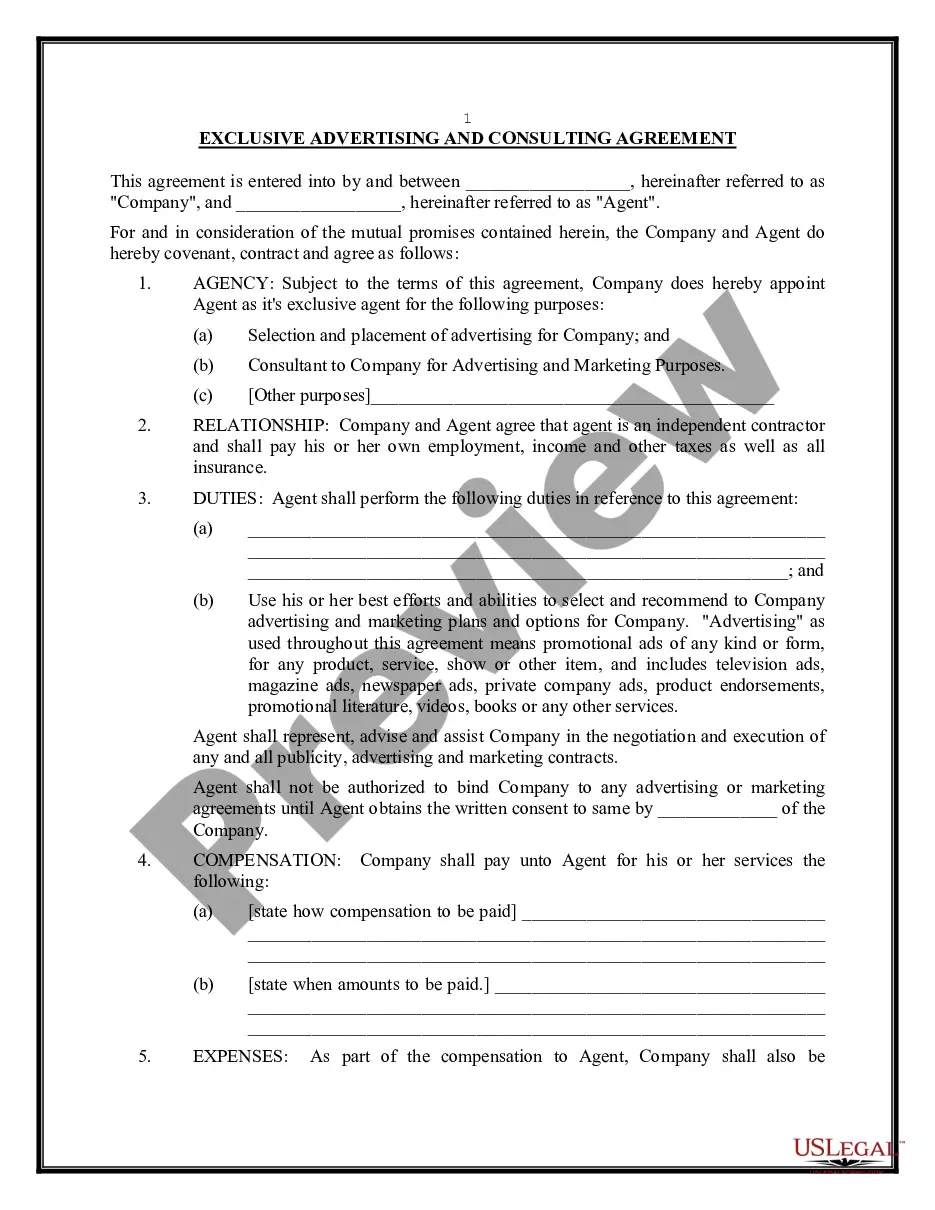
Description












Get your form ready online
Our built-in tools help you complete, sign, share, and store your documents in one place.
Make edits, fill in missing information, and update formatting in US Legal Forms—just like you would in MS Word.
Download a copy, print it, send it by email, or mail it via USPS—whatever works best for your next step.
Sign and collect signatures with our SignNow integration. Send to multiple recipients, set reminders, and more. Go Premium to unlock E-Sign.
If this form requires notarization, complete it online through a secure video call—no need to meet a notary in person or wait for an appointment.
We protect your documents and personal data by following strict security and privacy standards.

Make edits, fill in missing information, and update formatting in US Legal Forms—just like you would in MS Word.

Download a copy, print it, send it by email, or mail it via USPS—whatever works best for your next step.

Sign and collect signatures with our SignNow integration. Send to multiple recipients, set reminders, and more. Go Premium to unlock E-Sign.

If this form requires notarization, complete it online through a secure video call—no need to meet a notary in person or wait for an appointment.

We protect your documents and personal data by following strict security and privacy standards.
Looking for another form?









Form popularity
FAQ
A contract is an agreement between parties, creating mutual obligations that are enforceable by law. The basic elements required for the agreement to be a legally enforceable contract are: mutual assent, expressed by a valid offer and acceptance; adequate consideration; capacity; and legality.
Contracts are made up of three basic parts – an offer, an acceptance and consideration. The offer and acceptance are what the purpose of the agreement is between the parties. A public relations firm offers to provide its services to a potential client.
With that in mind, let's consider the basic legal elements of a contract. Under Texas law, a binding contract typically consists of six essential elements. Offer and Acceptance. Legal Purpose. Mutual Assent. Sufficiently Defined Terms. Consideration. Competent Parties. Protect your interests by getting legal advice.
Sources of contract law are grouped into four: the Constitution, federal and state statutes, federal and state case law, and administrative law. There are different elements of contract law, namely certainty, offer consideration, Mutuality, signatures, Capacity, and legally accepted terms.
Typically, contract terms can be defined into three categories: conditions, warranties, or innominate terms. By categorising contract terms into categories, it determines the available remedies if either party is ever in breach of the contract.
While the 3 elements of contract law—offer, acceptance, and consideration—are crucial, there are additional elements that ensure a contract is valid and enforceable. These include capacity, legality, and awareness.
There are four essential elements of forming a contract: offer, acceptance, consideration, and intention to create legal relations. Beyond this, the terms of the contract must also be unambiguous, and the parties must have the mental capacity to agree.
Discover the 3 elements of contract law: offer, acceptance, and consideration. Ensure legal protection and clarity in your agreements. Understanding the 3 elements of contract law is crucial for anyone involved in business transactions.
Texas law requires the following elements to establish a breach of contract: (1) a valid contract exists; (2) the plaintiff performed or tendered performance as contractually required; (3) the defendant breached the contract by failing to perform or tender performance as required; and (4) the plaintiff sustained ...
You can file a lawsuit to recover your damages. You begin by filing a complaint in the appropriate civil court. A complaint is a technical legal document that describes the problem and explains the case to the judge and the other party. The complaint must then be served, i.e., delivered to the defendant.
