Construction Law And Contract In Pima
Description












Get your form ready online
Our built-in tools help you complete, sign, share, and store your documents in one place.
Make edits, fill in missing information, and update formatting in US Legal Forms—just like you would in MS Word.
Download a copy, print it, send it by email, or mail it via USPS—whatever works best for your next step.
Sign and collect signatures with our SignNow integration. Send to multiple recipients, set reminders, and more. Go Premium to unlock E-Sign.
If this form requires notarization, complete it online through a secure video call—no need to meet a notary in person or wait for an appointment.
We protect your documents and personal data by following strict security and privacy standards.
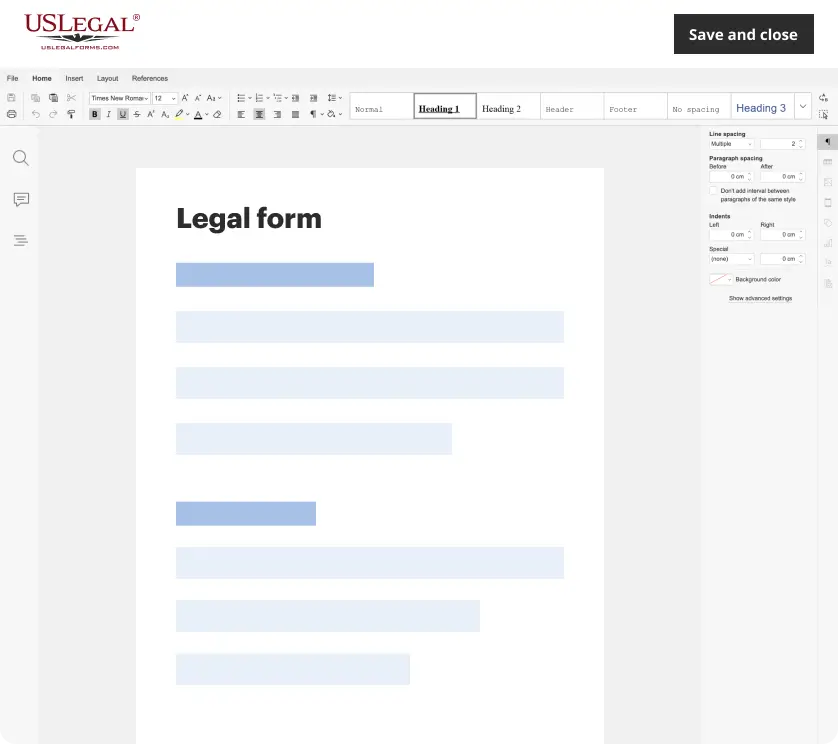
Make edits, fill in missing information, and update formatting in US Legal Forms—just like you would in MS Word.
Download a copy, print it, send it by email, or mail it via USPS—whatever works best for your next step.
Sign and collect signatures with our SignNow integration. Send to multiple recipients, set reminders, and more. Go Premium to unlock E-Sign.
If this form requires notarization, complete it online through a secure video call—no need to meet a notary in person or wait for an appointment.
We protect your documents and personal data by following strict security and privacy standards.
Looking for another form?









Form popularity
FAQ
Other type construction (commercial and industrial zones): Construction and repair work in commercial and industrial zones, not within five hundred (500) feet of a residential property, shall not begin prior to a.m. and must stop by p.m. or at such other times as authorized by permit.
In Arizona, contractors are liable for their work for up to eight years from the project's completion date. The statute of limitations for filing a claim against a contractor in Arizona is two years from the discovery of the defect.
California's contractor warranty requirements, spanning from one to ten years, underscore a commitment to excellence and trust in the construction realm. These warranties protect homeowners from potential defects and elevate the standards by which contractors operate.
These also vary by state. In California, the statute of repose is four years for most defects, but 10 years for latent defects (those that aren't observable right away, such as a faulty foundation). In Georgia, the statute of repose is eight years for all claims related to design or construction of the building.
That contract must include specific information about your rights and responsibilities. In addition, any changes made to that contract must be in writing, be legible, be easy to understand, and inform you of your rights to cancel or rescind the contract.
Every such contract requires: The name of the contractor, the contractor's business address and license number. The name and mailing address of the owner and the jobsite address or legal description. The date the parties entered into the contract.
A civil action against the contractor must be brought in a civil court of competent jurisdiction. The lawsuit must be filed with the court within two years from the date of the commission of the act by the contractor that is the cause of the injury or two years from the date of occupancy.
The primary cause of action used in residential construction defect cases is a breach of the implied warranty of habitability. This cause of action allows a homeowner to sue the builder or vendor for construction defects for up to eight years (nine years if the defect is found in the eighth year).
The qualifying party must possess at least four years of contracting experience and sit for two major trade examinations when applying for a general contractor license in Arizona. The state requires contractors to ace the AZ Statutes and Rules Training Course and Exam (SRE) and Trade exam in their specialty areas.
When is a contract legally binding? Typically, a document that includes an offer, acceptance, and appropriate consideration will be considered legally binding. In most cases, a contract is binding in Arizona even if the parties signed it in another state.
