Requesting Discovery Form With Court In Virginia
Description
Get your form ready online
Our built-in tools help you complete, sign, share, and store your documents in one place.
Make edits, fill in missing information, and update formatting in US Legal Forms—just like you would in MS Word.
Download a copy, print it, send it by email, or mail it via USPS—whatever works best for your next step.
Sign and collect signatures with our SignNow integration. Send to multiple recipients, set reminders, and more. Go Premium to unlock E-Sign.
If this form requires notarization, complete it online through a secure video call—no need to meet a notary in person or wait for an appointment.
We protect your documents and personal data by following strict security and privacy standards.

Make edits, fill in missing information, and update formatting in US Legal Forms—just like you would in MS Word.

Download a copy, print it, send it by email, or mail it via USPS—whatever works best for your next step.

Sign and collect signatures with our SignNow integration. Send to multiple recipients, set reminders, and more. Go Premium to unlock E-Sign.

If this form requires notarization, complete it online through a secure video call—no need to meet a notary in person or wait for an appointment.

We protect your documents and personal data by following strict security and privacy standards.
Looking for another form?


Form popularity
FAQ
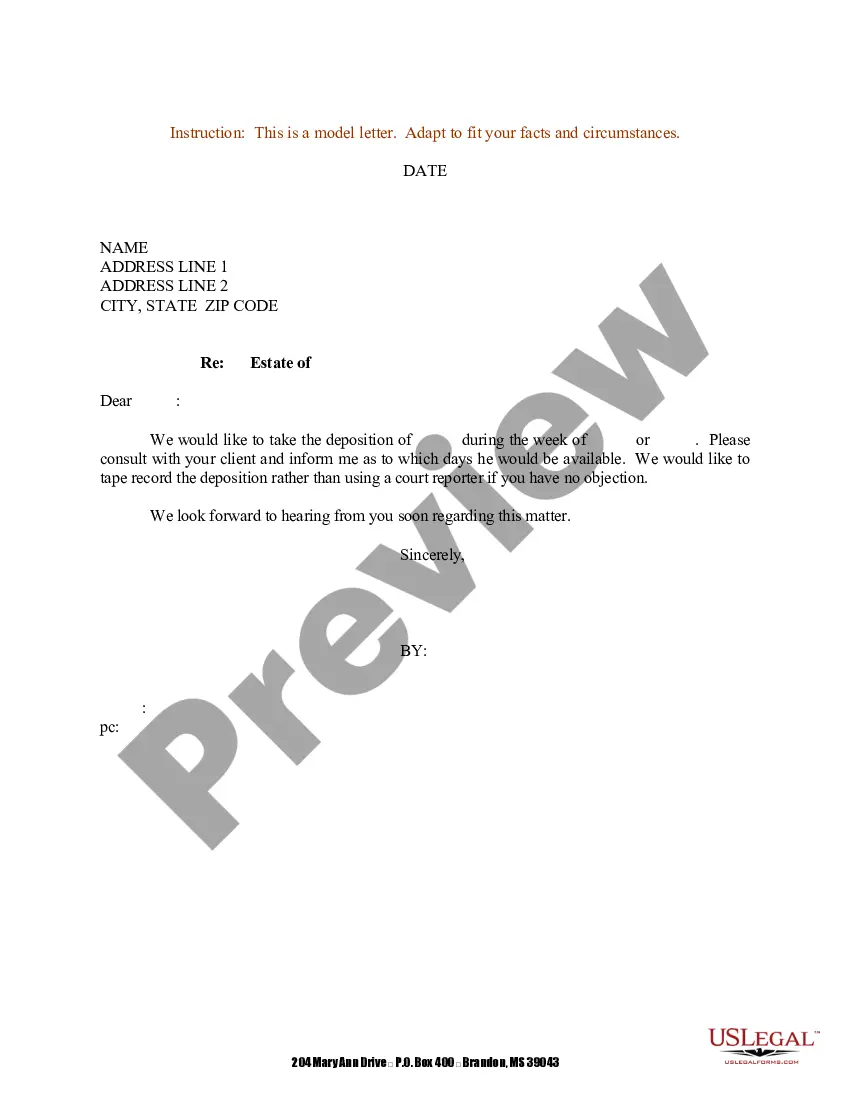
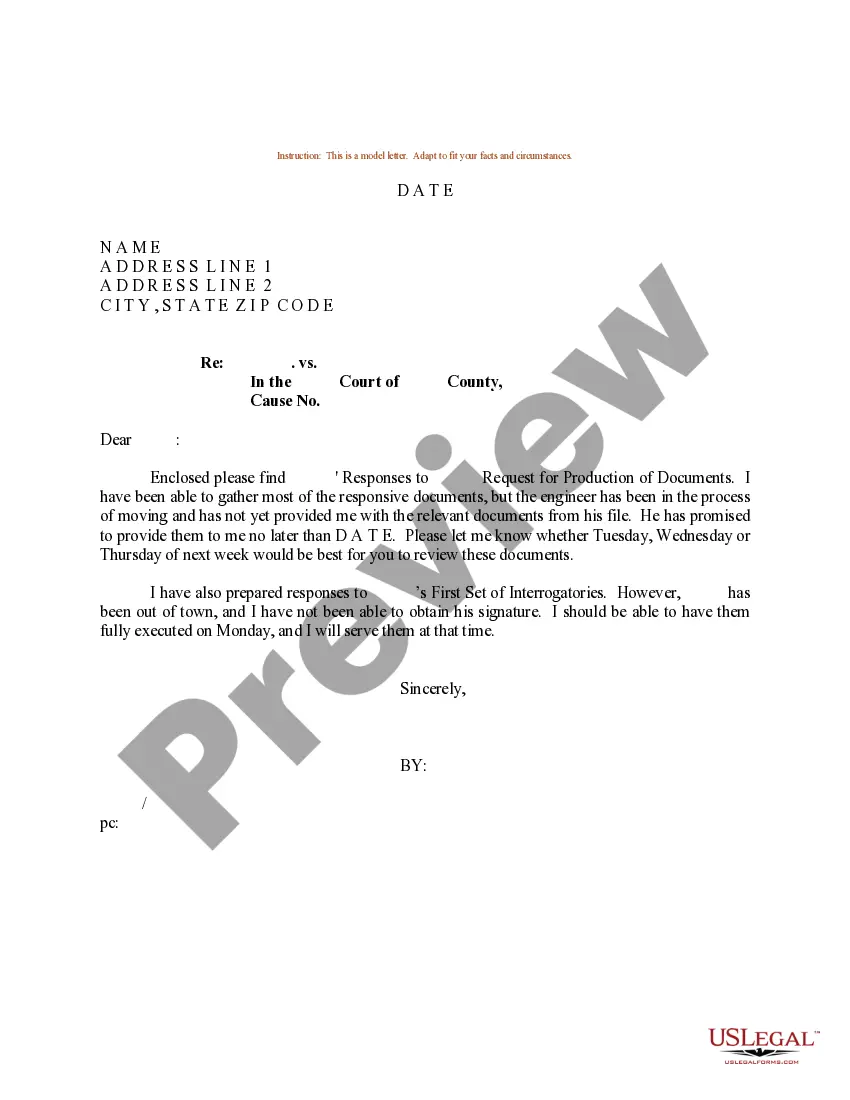
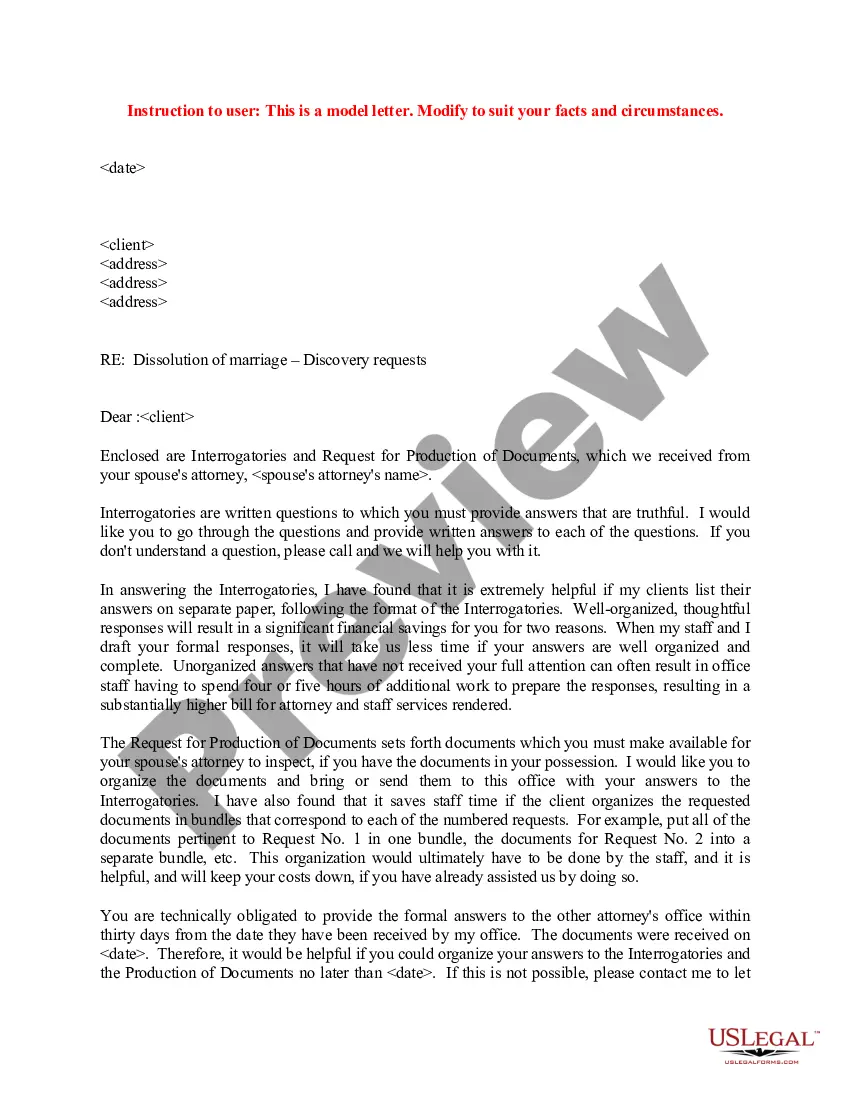
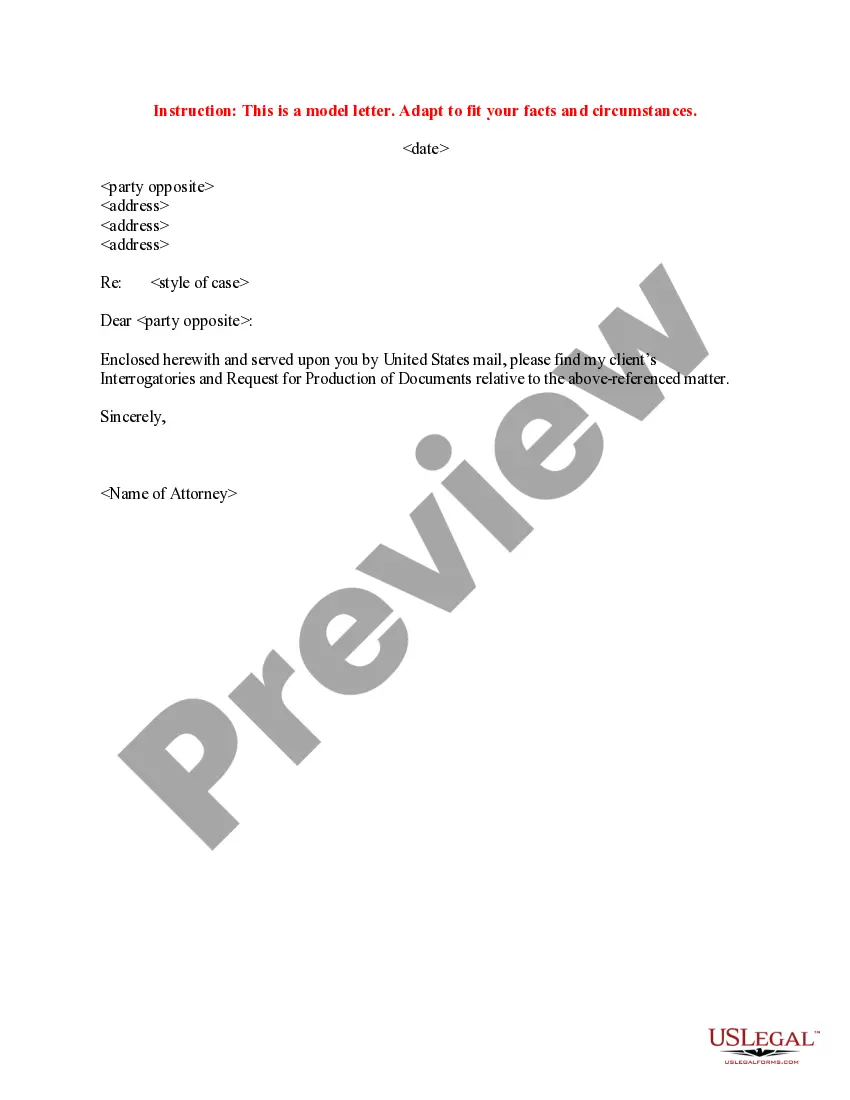
In the United States, there are five basic forms of discovery: depositions, interrogatories, requests for production of documents (or permission to inspect), physical and mental examinations, and requests for admission.
The purpose of a Discovery Document is to gather and document essential information to ensure that the project team, stakeholders, and relevant parties have a clear and common understanding of what needs to be accomplished and how to achieve it.
How Does Discovery Work? There are four main types of discovery requests: (1) depositions; (2) interrogatories; (3) requests for admissions; and (4) requests for the production of documents. Depositions are formal witness interviews.
(1) A party is under a duty promptly to amend and/or supplement all responses to discovery requests directly addressed to (A) the identity and location of persons having knowledge of discoverable matters, and (B) the identity of each person expected to be called as an expert witness at trial, the subject matter on ...
Steps Of The Discovery Process. There are four key actions in the discovery process which include interrogatories, request for documents, request for admissions, and depositions.
Under the Rules, a written motion must be filed to ask for discovery. It must be filed at least 10 days before trial. What Information Must the Prosecutor Provide? In general, discovery is limited to information that the prosecutor or local law enforcement has.
In general, discovery is limited to information that the prosecutor or local law enforcement has. This is described as information “known to” or “in the possession of” the Commonwealth. The rules sometimes have added requirements such as showing the information is material (relevant to the case).
The parties shall complete discovery, including depositions, by 30 days before trial; however, depositions taken in lieu of live testimony at trial will be permitted until 15 days before trial.
Rule . — All final judgments, orders, and decrees, irrespective of terms of court, remain under the control of the trial court and may be modified, vacated, or suspended for twenty-one days after the date of entry, and no longer.
A party producing a witness shall not be allowed to impeach his credit by general evidence of bad character, but he may, in case the witness shall in the opinion of the court prove adverse, by leave of the court, prove that he has made at other times a statement inconsistent with his present testimony; but before such ...

