Requesting Discovery Form Without A Lawyer In Cuyahoga
Description
Get your form ready online
Our built-in tools help you complete, sign, share, and store your documents in one place.
Make edits, fill in missing information, and update formatting in US Legal Forms—just like you would in MS Word.
Download a copy, print it, send it by email, or mail it via USPS—whatever works best for your next step.
Sign and collect signatures with our SignNow integration. Send to multiple recipients, set reminders, and more. Go Premium to unlock E-Sign.
If this form requires notarization, complete it online through a secure video call—no need to meet a notary in person or wait for an appointment.
We protect your documents and personal data by following strict security and privacy standards.

Make edits, fill in missing information, and update formatting in US Legal Forms—just like you would in MS Word.

Download a copy, print it, send it by email, or mail it via USPS—whatever works best for your next step.

Sign and collect signatures with our SignNow integration. Send to multiple recipients, set reminders, and more. Go Premium to unlock E-Sign.

If this form requires notarization, complete it online through a secure video call—no need to meet a notary in person or wait for an appointment.

We protect your documents and personal data by following strict security and privacy standards.
Looking for another form?









Form popularity
FAQ
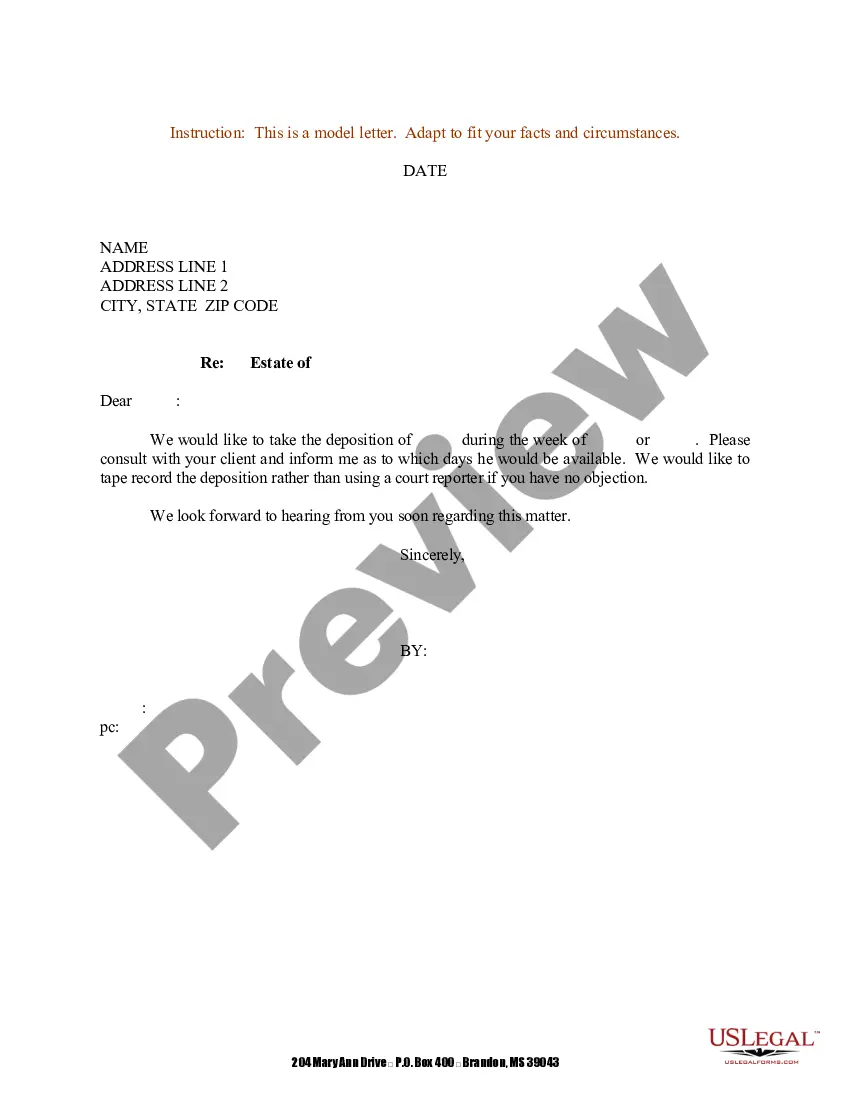
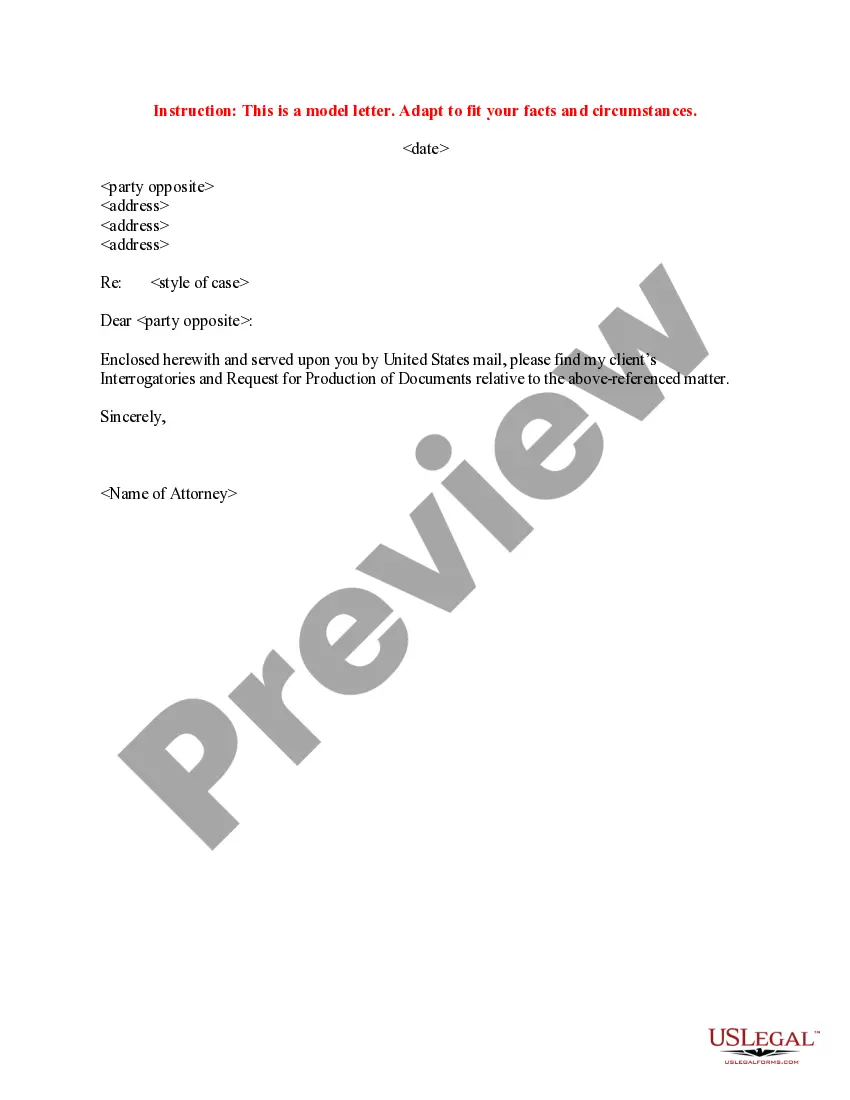
In certain cases, you might be able to write a letter to the other side and request the documents that you need. However, in more formal cases, you will likely have to draft more formal discovery demands. There are usually forms available for this in local law libraries, from the court clerk's office, or online.
Discovery is the formal process by which the parties to a case in court exchange information about the case. This includes information about the witnesses and evidence to be presented at trial. Its purpose is to make the parties aware of the evidence which may be presented at trial.
Discovery is the formal process by which the parties to a case in court exchange information about the case. This includes information about the witnesses and evidence to be presented at trial. Its purpose is to make the parties aware of the evidence which may be presented at trial.
However, most personal injury cases settle before trial. Instead, they may offer the settlement well after the trial starts. This typically happens after discovery, but it may even happen after the jury reaches a verdict.
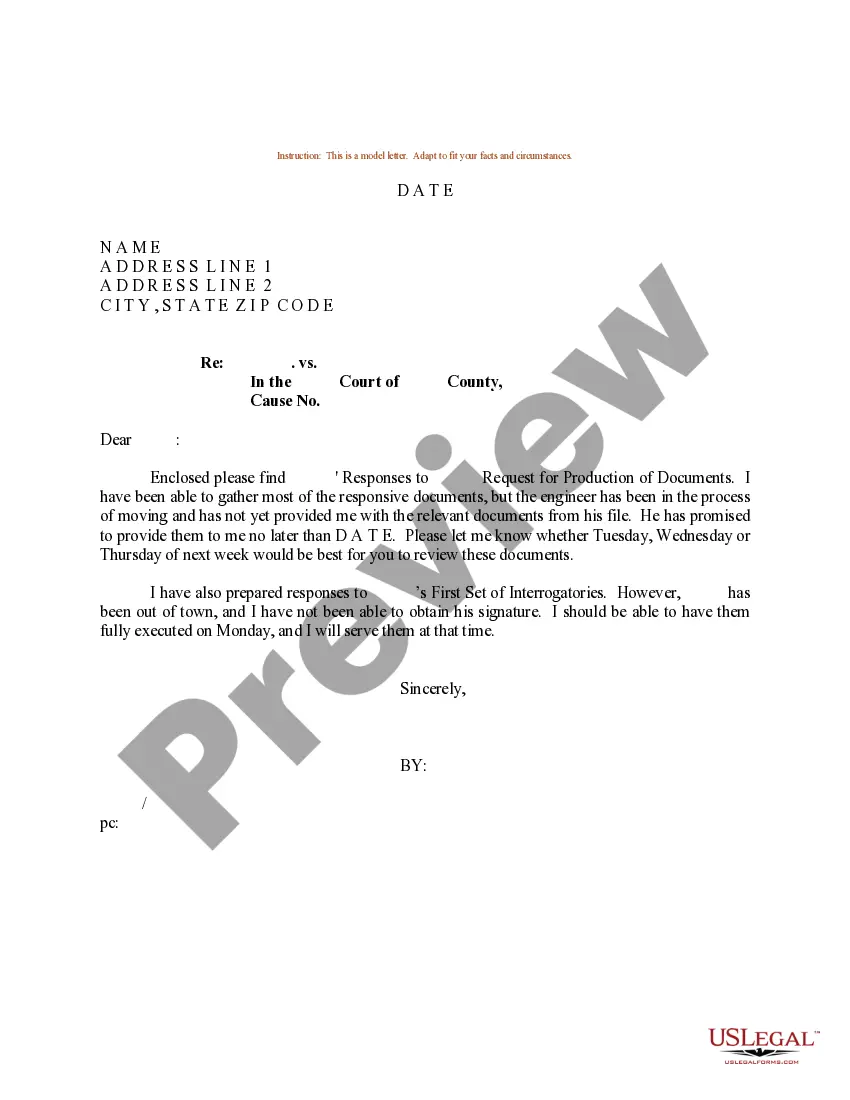
You must complete discovery 30 days before your trial Since the other side has 30 days to respond, you typically need to send any requests at least several months before this date to make sure the response date falls before the cutoff date, and you have time to file a motion if there is a discovery dispute.
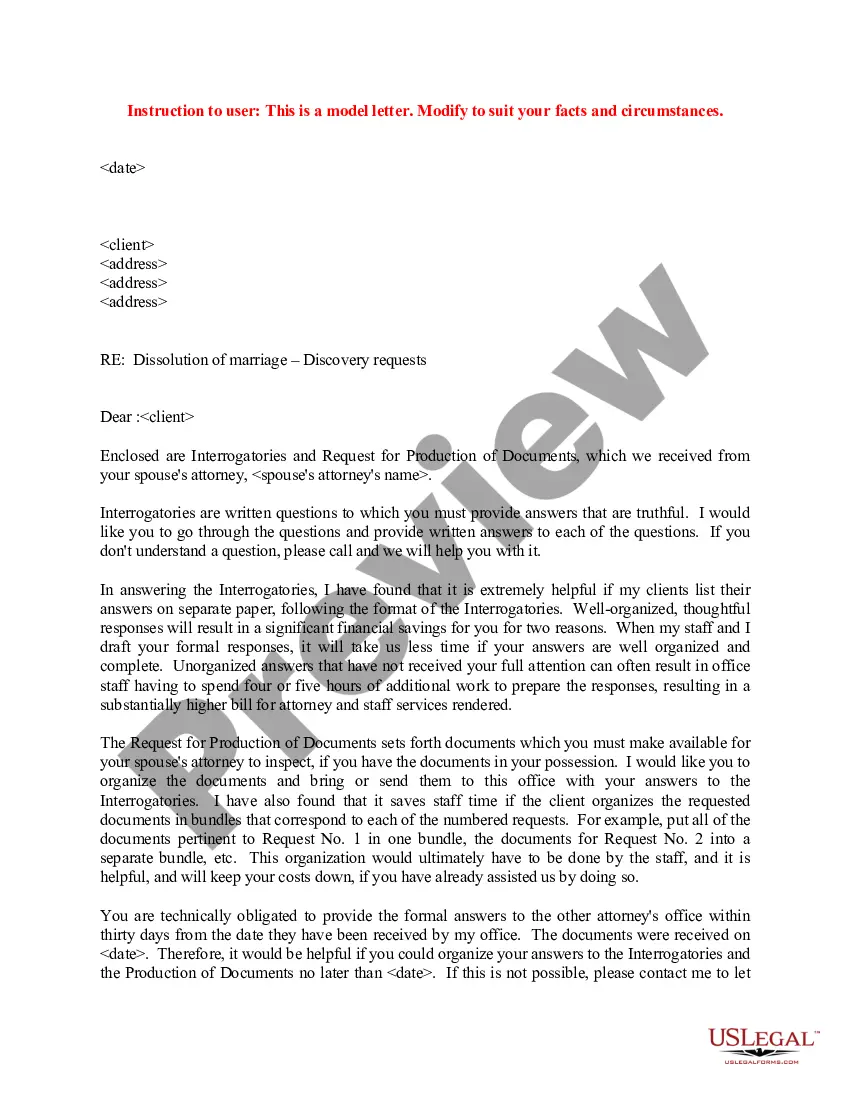
How Does Discovery Work? There are four main types of discovery requests: (1) depositions; (2) interrogatories; (3) requests for admissions; and (4) requests for the production of documents. Depositions are formal witness interviews.
Once the discovery phase is complete, the parties better understand the strengths and weaknesses of their respective cases. With this information, they can engage in settlement negotiations to resolve the dispute without going to trial.
Parties in a case are required to participate in the discovery process, meaning they must hand over information and evidence about a claim so all participants can know what they are facing at trial.
Failure to comply with discovery obligations may result in sanctions. Sanctions are actions taken by the Administrative Judge to penalize a party that fails to comply with their orders or other legal obligations.

