Resignation Letter With Acknowledgement In Arizona
Description

Get your form ready online
Our built-in tools help you complete, sign, share, and store your documents in one place.
Make edits, fill in missing information, and update formatting in US Legal Forms—just like you would in MS Word.
Download a copy, print it, send it by email, or mail it via USPS—whatever works best for your next step.
Sign and collect signatures with our SignNow integration. Send to multiple recipients, set reminders, and more. Go Premium to unlock E-Sign.
If this form requires notarization, complete it online through a secure video call—no need to meet a notary in person or wait for an appointment.
We protect your documents and personal data by following strict security and privacy standards.

Make edits, fill in missing information, and update formatting in US Legal Forms—just like you would in MS Word.

Download a copy, print it, send it by email, or mail it via USPS—whatever works best for your next step.

Sign and collect signatures with our SignNow integration. Send to multiple recipients, set reminders, and more. Go Premium to unlock E-Sign.

If this form requires notarization, complete it online through a secure video call—no need to meet a notary in person or wait for an appointment.

We protect your documents and personal data by following strict security and privacy standards.
Looking for another form?








Form popularity
FAQ
It is a common misconception that an employee's notice of resignation is not valid unless it has been "accepted" by the employer. The position at common law is that a notice, once validly given, is effective and can neither be "refused" by the employer or "withdrawn" by the employee, without the other's agreement.
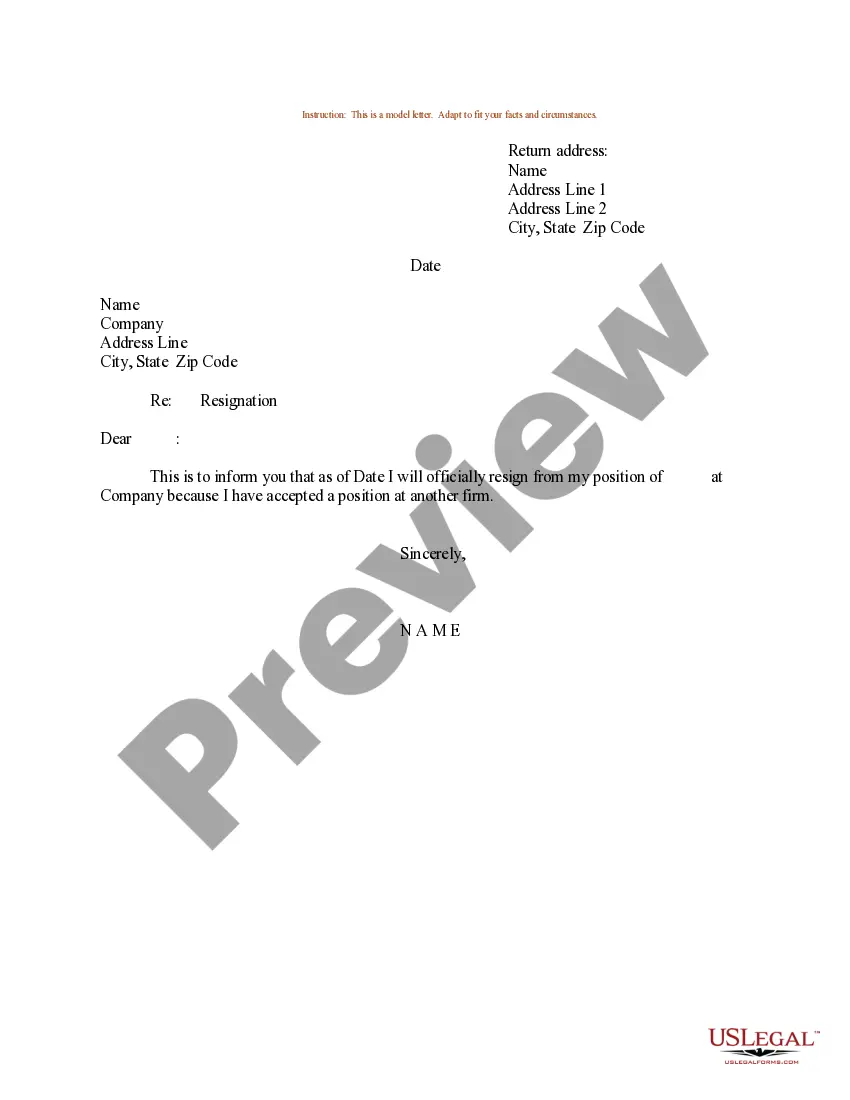
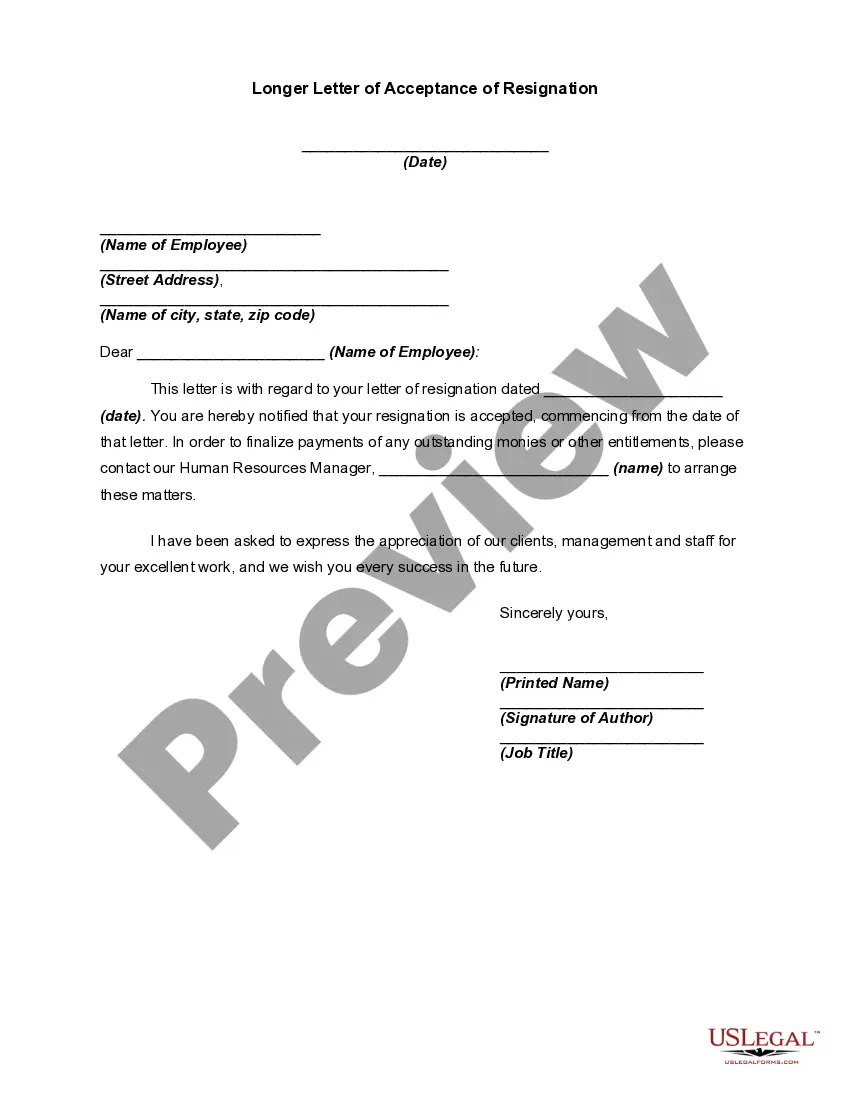
Dear Employee Name, This letter acknowledges receipt of your resignation letter dated Date of Resignation Letter for your position as Job Title at Company Name. We accept your resignation. While we are sorry to see you leave, we understand that you are facing personal circumstances that require your attention.
It is a common misconception that an employee's notice of resignation is not valid unless it has been "accepted" by the employer. The position at common law is that a notice, once validly given, is effective and can neither be "refused" by the employer or "withdrawn" by the employee, without the other's agreement.
An employer cannot refuse to accept someone's resignation and they must follow certain procedures. When a member of staff resigns you must: get them to confirm their resignation in writing. tell them what their notice period is.
You do not have to respond formally when someone tells you they're resigning. But it's good practice to respond in writing. Your response should include: that you've received the employee's resignation.
You do not have to respond formally when someone tells you they're resigning. But it's good practice to respond in writing. Your response should include: that you've received the employee's resignation.
If the employer has not formally (in writing) accepted the resignation, the employee could argue that the resignation was never accepted, or that the resignation never happened. The employee could even argue that the resignation was actually a termination and then file for unemployment.
Acceptance of a resignation tendered by an employee is necessary to make the resignation effective.

