Agreement Arbitrate Document With Insurance In San Bernardino
Description

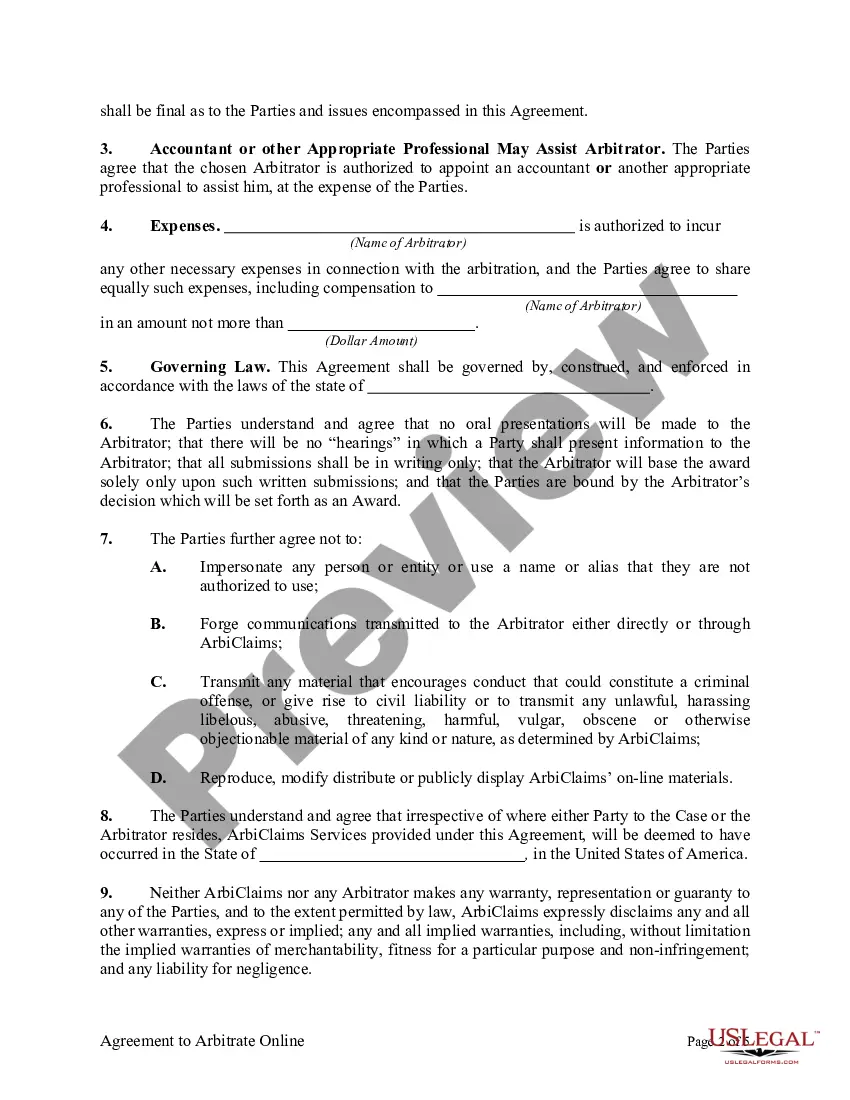
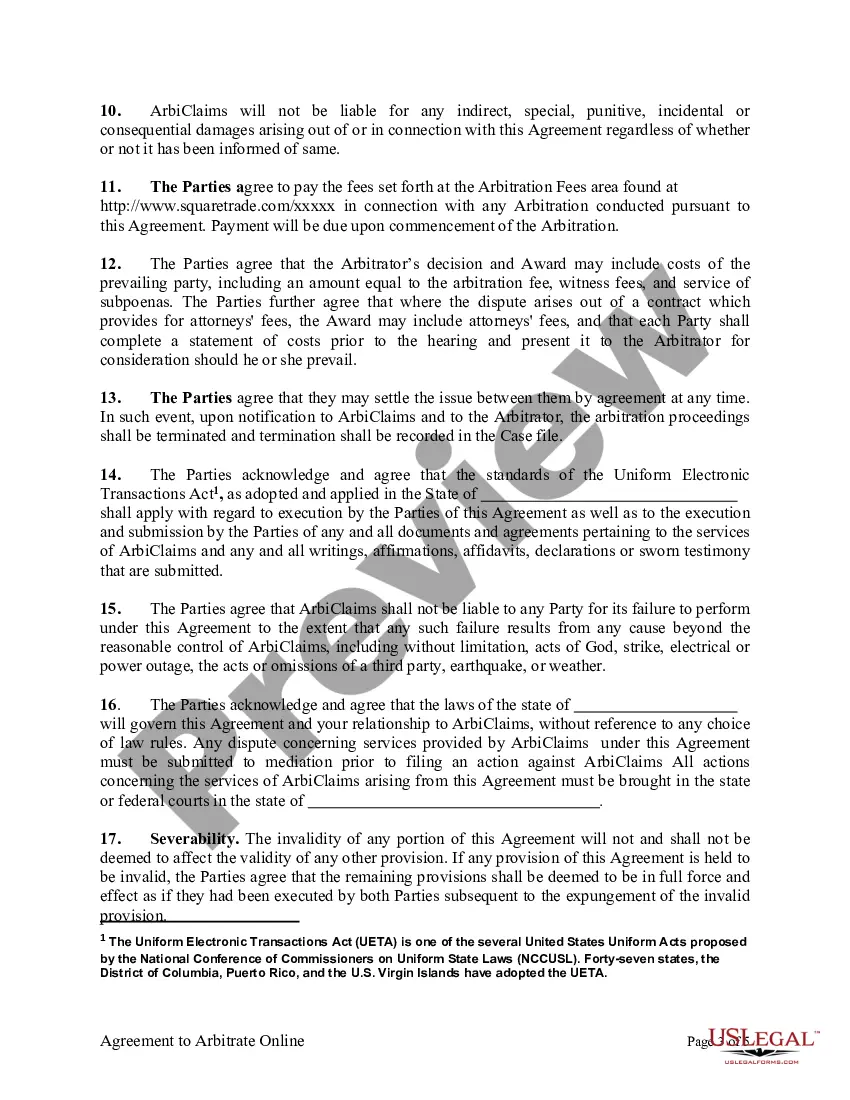

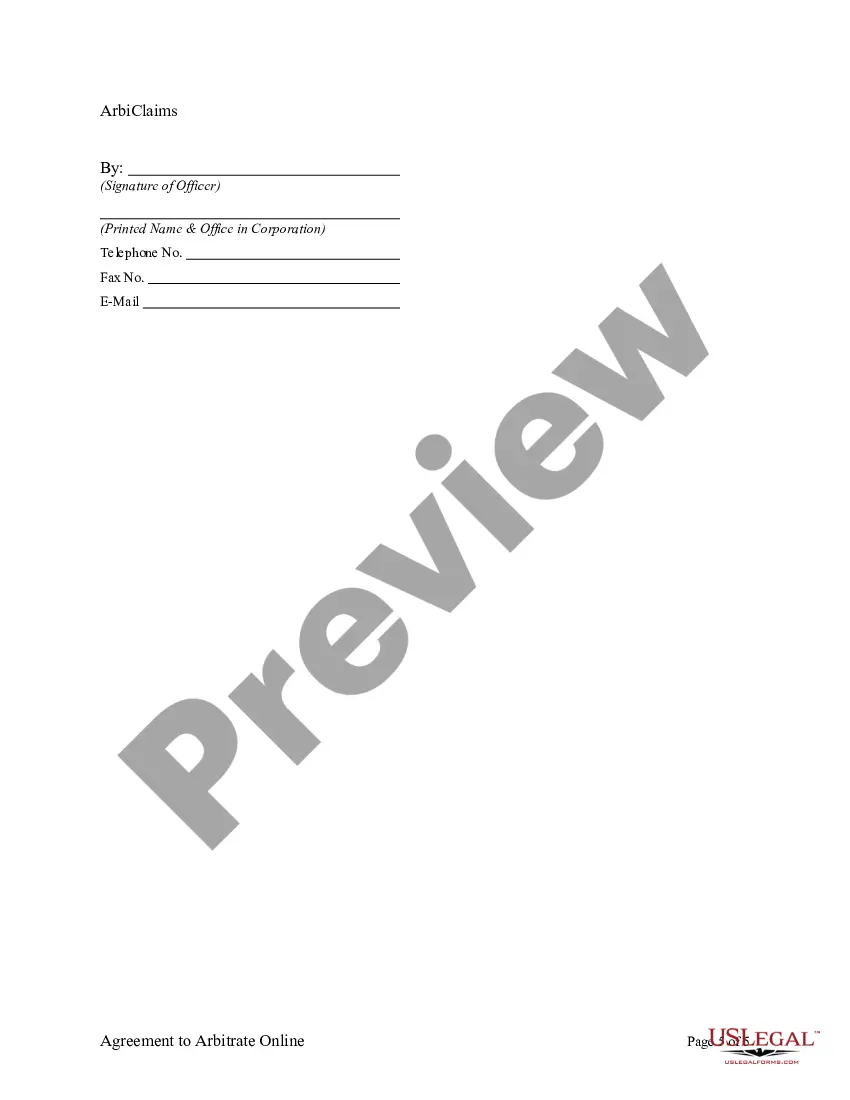



Get your form ready online
Our built-in tools help you complete, sign, share, and store your documents in one place.
Make edits, fill in missing information, and update formatting in US Legal Forms—just like you would in MS Word.
Download a copy, print it, send it by email, or mail it via USPS—whatever works best for your next step.
Sign and collect signatures with our SignNow integration. Send to multiple recipients, set reminders, and more. Go Premium to unlock E-Sign.
If this form requires notarization, complete it online through a secure video call—no need to meet a notary in person or wait for an appointment.
We protect your documents and personal data by following strict security and privacy standards.

Make edits, fill in missing information, and update formatting in US Legal Forms—just like you would in MS Word.

Download a copy, print it, send it by email, or mail it via USPS—whatever works best for your next step.

Sign and collect signatures with our SignNow integration. Send to multiple recipients, set reminders, and more. Go Premium to unlock E-Sign.

If this form requires notarization, complete it online through a secure video call—no need to meet a notary in person or wait for an appointment.

We protect your documents and personal data by following strict security and privacy standards.
Looking for another form?










Form popularity
FAQ
Arbitration agreements require that persons who signed them resolve any disputes by binding arbitration, rather than in court before a judge and/or jury. What is binding arbitration? Binding arbitration involves the submission of a dispute to a neutral party who hears the case and makes a decision.
In voluntary or non-binding arbitration, the insurer and the policyholder agree to meet with an arbitrator to review the claim. Once the arbitrator makes their decision on the claim, both parties then have the option to accept or reject it. If the decision is ultimately denied, the case can then be appealed.
A claimant will typically start arbitration by sending a document known as a “request for arbitration” or a “notice to arbitrate” to its opponent.
A claimant will typically start arbitration by sending a document known as a “request for arbitration” or a “notice to arbitrate” to its opponent.
The Scope of the Clause. This section of the clause is critical; it sets the boundaries for which disputes the tribunal is authorised to determine. Choice of Rules. The Number of Arbitrators. Appointing Authority. Choice of Venue. The language of the proceedings. Finality. Exclusion of the right of appeal.
In some instances, you may be able to sue if you signed a valid arbitration agreement. While courts generally favor arbitration agreements, they will allow you to file a lawsuit if either you didn't understand your rights or your claims fall outside the arbitration provision's scope.
You will need to research and write (1) an “Ex Parte Application,” stating what you are requesting and when the hearing will be; (2) a “Memorandum of Points and Authorities,” explaining the relevant laws and how they apply to your facts; (3) a “Declaration” under penalty of perjury explaining the facts of the case, and ...
A request for ex parte relief must be in writing and include all of the following: (1) An application containing the case caption and stating the relief requested; (2) A declaration in support of the application making the required factual showing; > > Read More..
A request for ex parte relief must be in writing and include all of the following: (1) An application containing the case caption and stating the relief requested; (2) A declaration in support of the application making the required factual showing; > > Read More..
