Agreement Arbitration Sample With Employer In San Antonio
Description

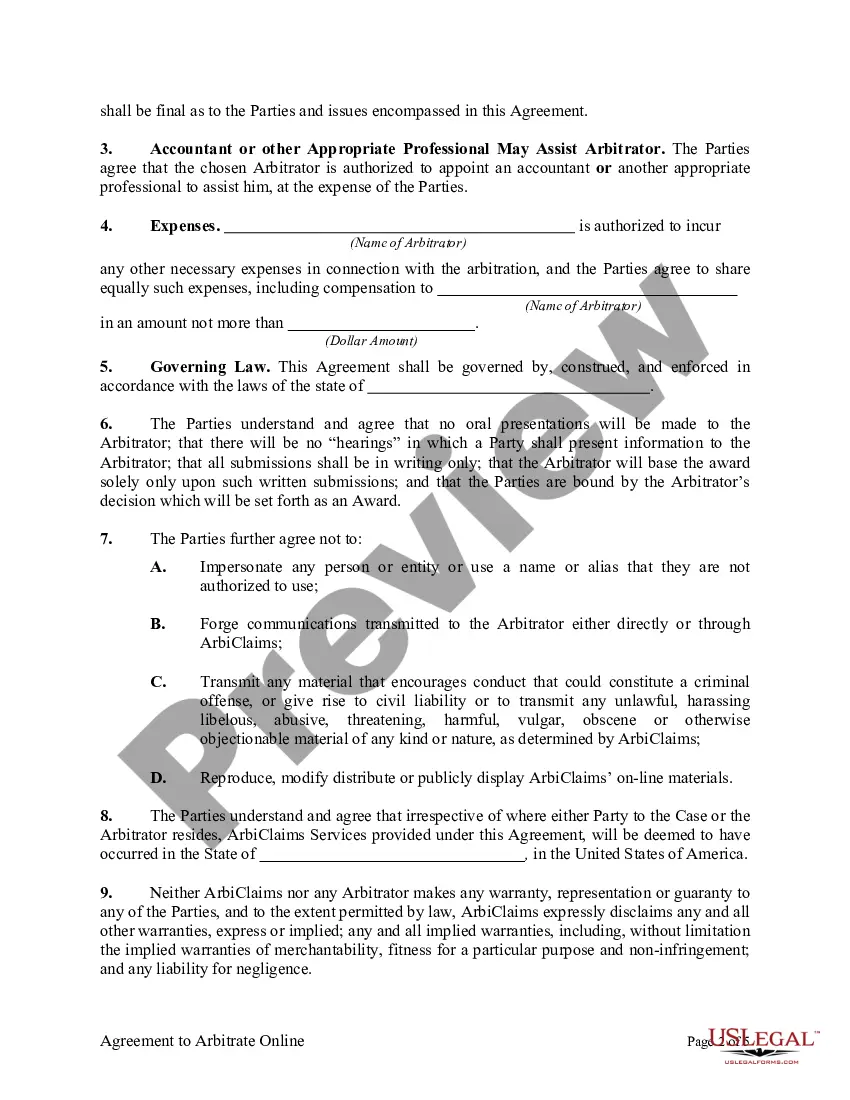
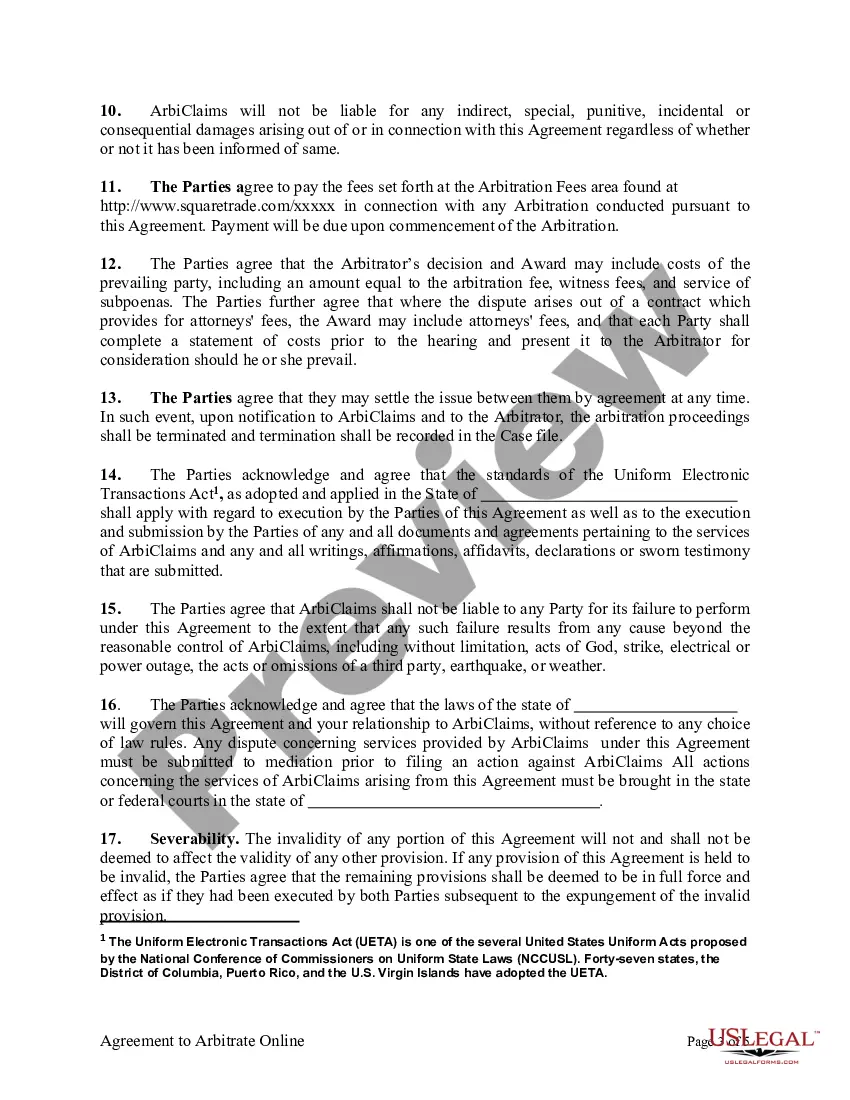




Get your form ready online
Our built-in tools help you complete, sign, share, and store your documents in one place.
Make edits, fill in missing information, and update formatting in US Legal Forms—just like you would in MS Word.
Download a copy, print it, send it by email, or mail it via USPS—whatever works best for your next step.
Sign and collect signatures with our SignNow integration. Send to multiple recipients, set reminders, and more. Go Premium to unlock E-Sign.
If this form requires notarization, complete it online through a secure video call—no need to meet a notary in person or wait for an appointment.
We protect your documents and personal data by following strict security and privacy standards.

Make edits, fill in missing information, and update formatting in US Legal Forms—just like you would in MS Word.

Download a copy, print it, send it by email, or mail it via USPS—whatever works best for your next step.

Sign and collect signatures with our SignNow integration. Send to multiple recipients, set reminders, and more. Go Premium to unlock E-Sign.

If this form requires notarization, complete it online through a secure video call—no need to meet a notary in person or wait for an appointment.

We protect your documents and personal data by following strict security and privacy standards.
Looking for another form?

Form popularity
FAQ
The Scope of the Clause. This section of the clause is critical; it sets the boundaries for which disputes the tribunal is authorised to determine. Choice of Rules. The Number of Arbitrators. Appointing Authority. Choice of Venue. The language of the proceedings. Finality. Exclusion of the right of appeal.
The Scope of the Clause. This section of the clause is critical; it sets the boundaries for which disputes the tribunal is authorised to determine. Choice of Rules. The Number of Arbitrators. Appointing Authority. Choice of Venue. The language of the proceedings. Finality. Exclusion of the right of appeal.
An arbitration clause is part of a contract that forbids either of the parties from litigating a claim—i.e., bringing a lawsuit against the other in court. Instead, they “agree” to bring disputes to a private arbitration process, overseen by an arbitrator.
“Any dispute, controversy or claim arising out of or relating to this contract, or the breach, termination or invalidity thereof, shall be settled by arbitration in ance with the UNCITRAL Arbitration Rules as at present in force.”
"A dispute having arisen between the parties concerning , the parties hereby agree that the dispute shall be referred to and finally resolved by arbitration under the LCIA Rules. The number of arbitrators shall be one/three. The seat, or legal place, of arbitration shall be City and/or Country.
Outline a concise factual background and then move on to a discussion of the issues at the heart of the case. Your arguments should flow easily from the relevant facts and applicable law. And, by all means, avoid exaggeration of the strengths of your case as well as disparagement of the opposing side.
A claimant will typically start arbitration by sending a document known as a “request for arbitration” or a “notice to arbitrate” to its opponent.
How do I choose arbitration? All parties must agree to arbitration and complete and sign DWC Form-044, Election to Engage in Arbitration. There is a deadline. The completed form must be filed with DWC by the 20th day after the benefit review conference.
On average, Texas arbitration takes 4–8 months from initiation to resolution. By comparison, litigation in state or federal courts may take years. Understanding arbitration's timeline can help you make informed decisions and shape your expectations from filing to resolution.
Validity of Arbitration Agreements Under Section 171.001 of the TAA, written agreements to arbitrate are generally valid and enforceable in Texas. This section ensures that, barring any specific legal exceptions, parties bound by a written agreement to arbitrate must settle their disputes outside of court.
