Agreement Arbitrate Document With Insurance Company In Sacramento
Description










Form popularity
FAQ
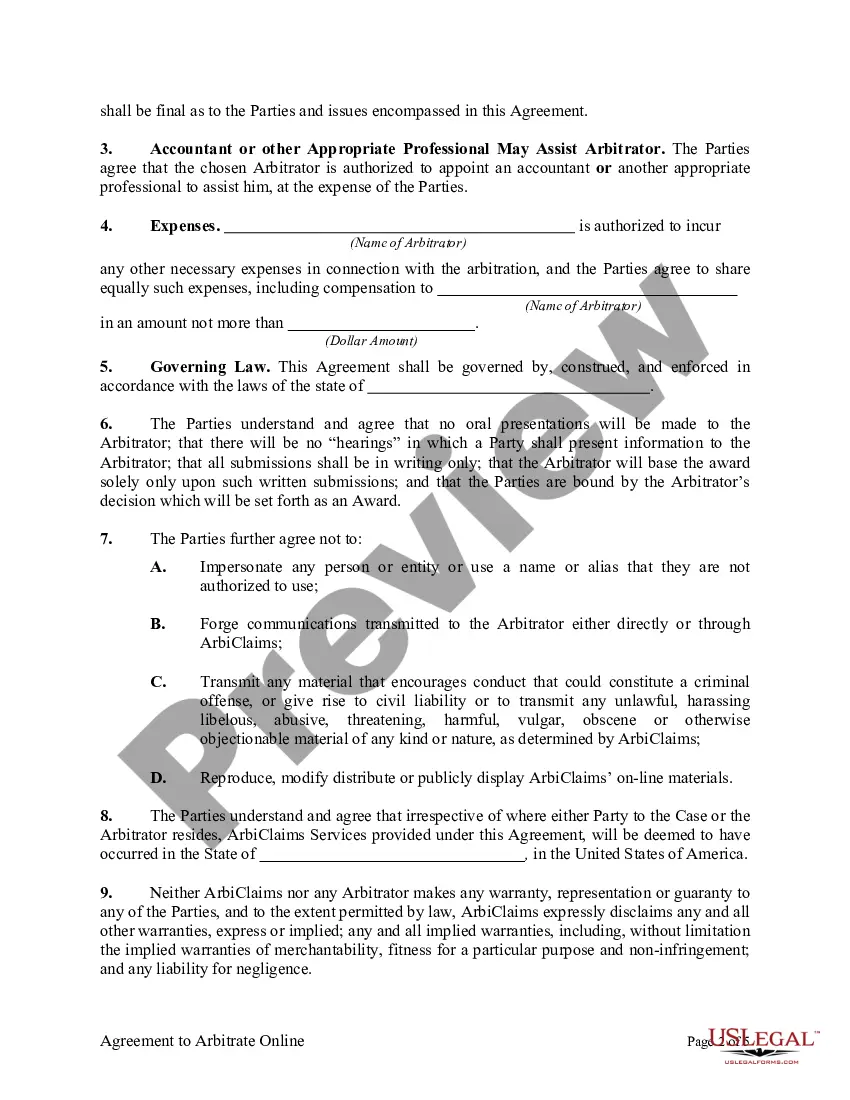
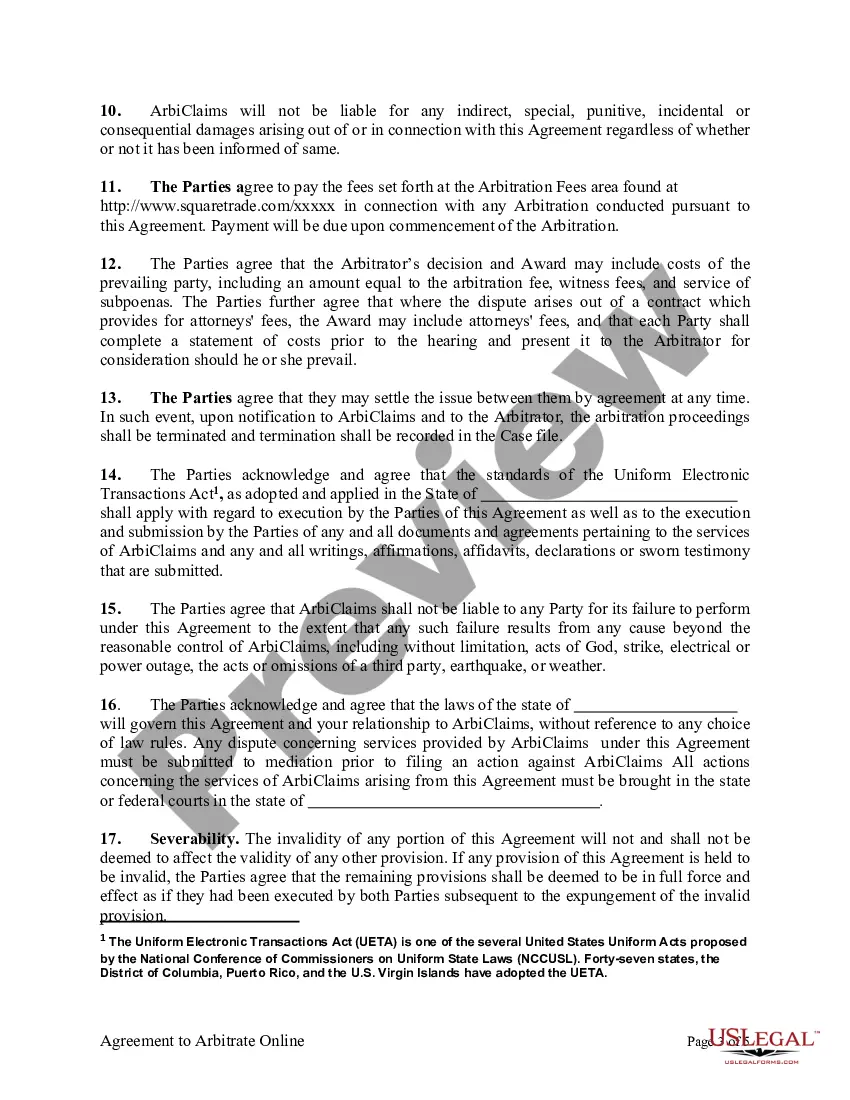
To resolve these disputes, arbitration is a favored medium among insurance companies. While litigation can be effective in certain situations, it may take longer to resolve a claim and it is often more expensive.
In some instances, you may be able to sue if you signed a valid arbitration agreement. While courts generally favor arbitration agreements, they will allow you to file a lawsuit if either you didn't understand your rights or your claims fall outside the arbitration provision's scope.
Insurance arbitration occurs when an arbitrator—either a person or organization—steps in to settle a case and make a decision about how it's going to be resolved. The decision, called the arbitration award, then (typically) rules in one party's favor.
Who must attend the arbitration? Parties must attend the arbitration hearing, and may be represented by an attorney. The arbitration hearing may proceed and an award issued in the absence of a party who, after due notice, fails to be present or to obtain a continuance.
The Arbitration Timeline to Expect 60 to 90 days: During this next three-month period, all parties will exchange information and prepare for a hearing. 91 to 100 days: At this point, the arbitration hearing will take place, which could be just one day or several days.
Even if you don't currently have a dispute with the company, it is a good idea to opt out of the forced arbitration clause to preserve your options. You can always agree later to use an arbitrator to resolve any dispute. Moreover, if you have opted out, you will have more negotiating power if there is a problem.
Sometimes, the insurance companies, despite weighing the evidence, cannot agree on how fault is apportioned. When that happens, they may choose to resolve your case via arbitration, which can provide a fair and equitable solution for both parties.
Insurance arbitration is a way to resolve disputes between you (the policyholder) and your insurance company when you can't agree on a claim settlement.
In general, a Request for Arbitration or a Notice of Arbitration must contain the names of each of the parties, the names of the parties' representatives, a description of the dispute giving rise to claims, a statement of the relief sought, a description of the agreement containing the arbitration clause, the choice of ...
