Arbitration Agreement For Divorce In Philadelphia
Description

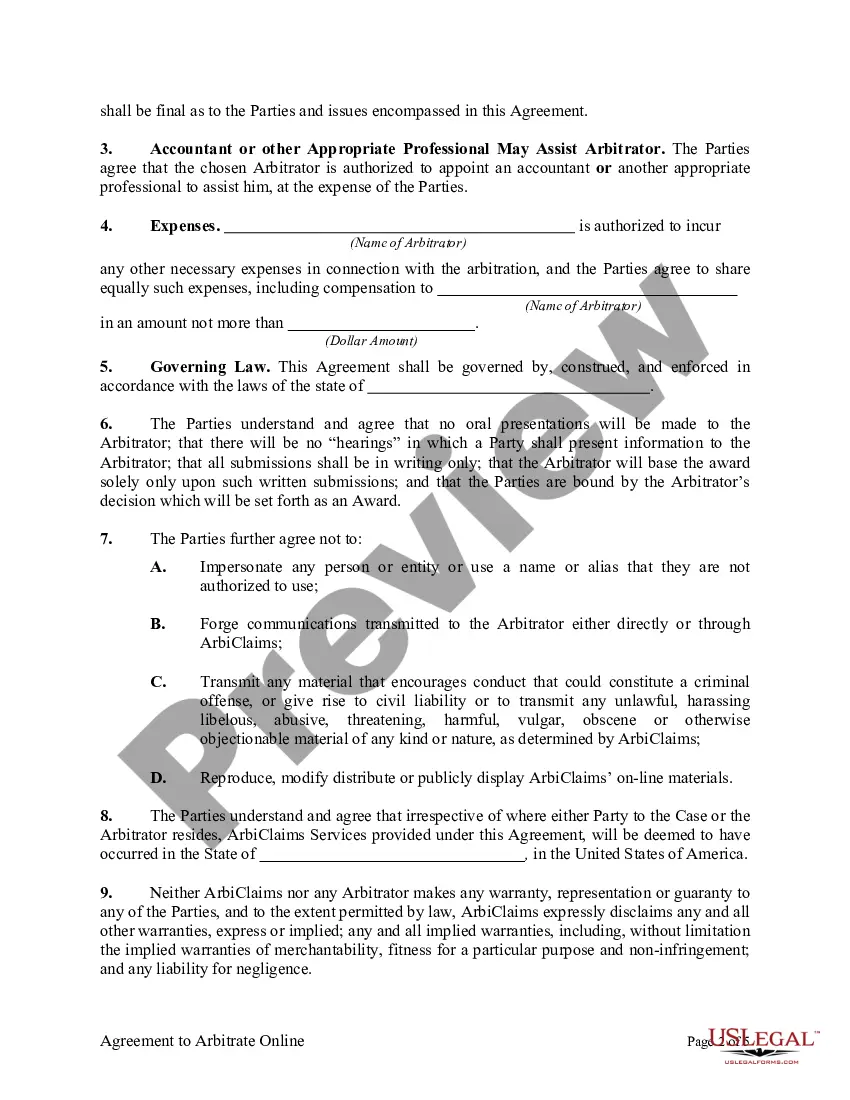
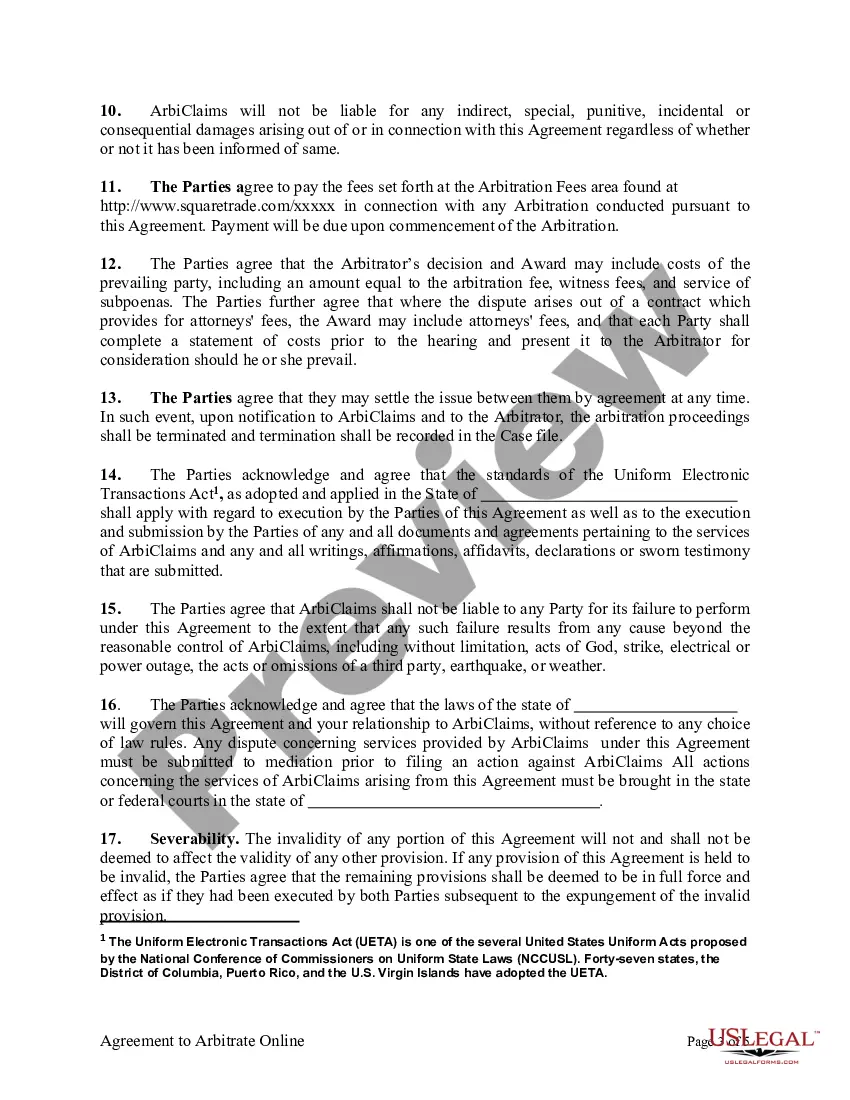




Get your form ready online
Our built-in tools help you complete, sign, share, and store your documents in one place.
Make edits, fill in missing information, and update formatting in US Legal Forms—just like you would in MS Word.
Download a copy, print it, send it by email, or mail it via USPS—whatever works best for your next step.
Sign and collect signatures with our SignNow integration. Send to multiple recipients, set reminders, and more. Go Premium to unlock E-Sign.
If this form requires notarization, complete it online through a secure video call—no need to meet a notary in person or wait for an appointment.
We protect your documents and personal data by following strict security and privacy standards.

Make edits, fill in missing information, and update formatting in US Legal Forms—just like you would in MS Word.

Download a copy, print it, send it by email, or mail it via USPS—whatever works best for your next step.

Sign and collect signatures with our SignNow integration. Send to multiple recipients, set reminders, and more. Go Premium to unlock E-Sign.

If this form requires notarization, complete it online through a secure video call—no need to meet a notary in person or wait for an appointment.

We protect your documents and personal data by following strict security and privacy standards.
Looking for another form?



Form popularity
FAQ
Either Party to a contract in which there is an Arbitration clause can either himself or through an authorised agent may invoke Arbitration so as to refer the dispute to arbitration, as per provisions of the arbitration clause.
Under the Federal Arbitration Act, if a party that has previously signed an agreement containing an arbitration clause attempts to bring a lawsuit in court rather than seeking arbitration, the other party can enforce the arbitration agreement by filing a motion to stay the court proceedings until the arbitration has ...
A claimant will typically start arbitration by sending a document known as a “request for arbitration” or a “notice to arbitrate” to its opponent.
Notably, ing to Section 21 of the Arbitration Act, the arbitration proceedings commence when a notice invoking arbitration is sent by the Claimant to the other party within a maximum period of 3 years from the date of occurrence of cause of action.
Unilateral (also known as “irretrievable breakdown”) no-fault divorce is available if one of the spouses will not agree to the divorce but the parties have been living separate and apart (defined by the statute as “complete cessation of any and all cohabitation, whether living in the same residence or not”) for at ...
The arbitration of claims can take several different forms in Pennsylvania, but can be generally categorized as either compulsory judicial arbitration (mandated by court rules with respect to civil suits in which the damages allegedly at issue are less than a prescribed dollar amount) or contractual arbitration (in ...
Depending on whether you file contested or uncontested, a divorce in Pennsylvania may take between 90 days to a year or longer. Contested divorces take longer due the combative nature and resolving disagreements through litigation and reliance on the court's schedule and both your lawyers' caseloads.
Either Party to a contract in which there is an Arbitration clause can either himself or through an authorised agent may invoke Arbitration so as to refer the dispute to arbitration, as per provisions of the arbitration clause.
All civil suits or actions and landlord tenant disputes, where the amount in controversy is $50,000.00 or less, when at issue, shall first be submitted to arbitration.
In Pennsylvania, the duration of a divorce process can vary significantly, ranging from a minimum of 90 days to over a year, depending on various factors.
