Agreement Arbitration Sample Withdrawal In North Carolina
Description

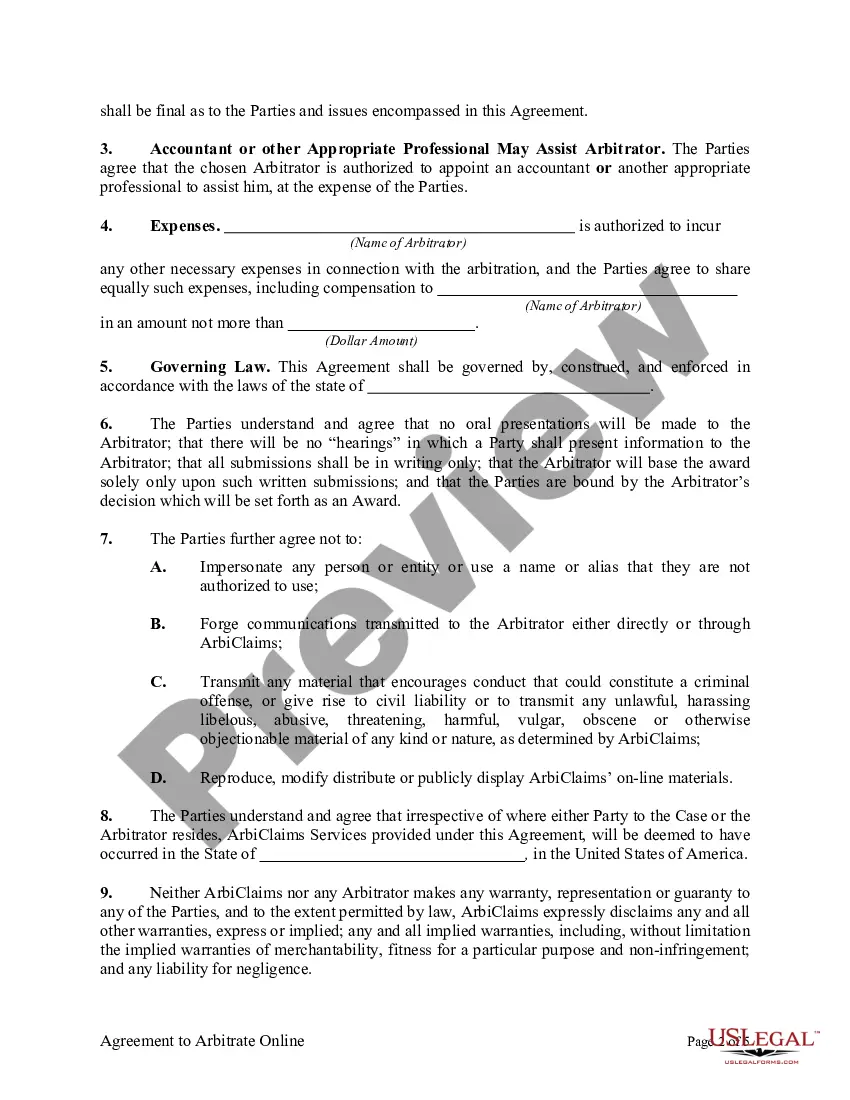
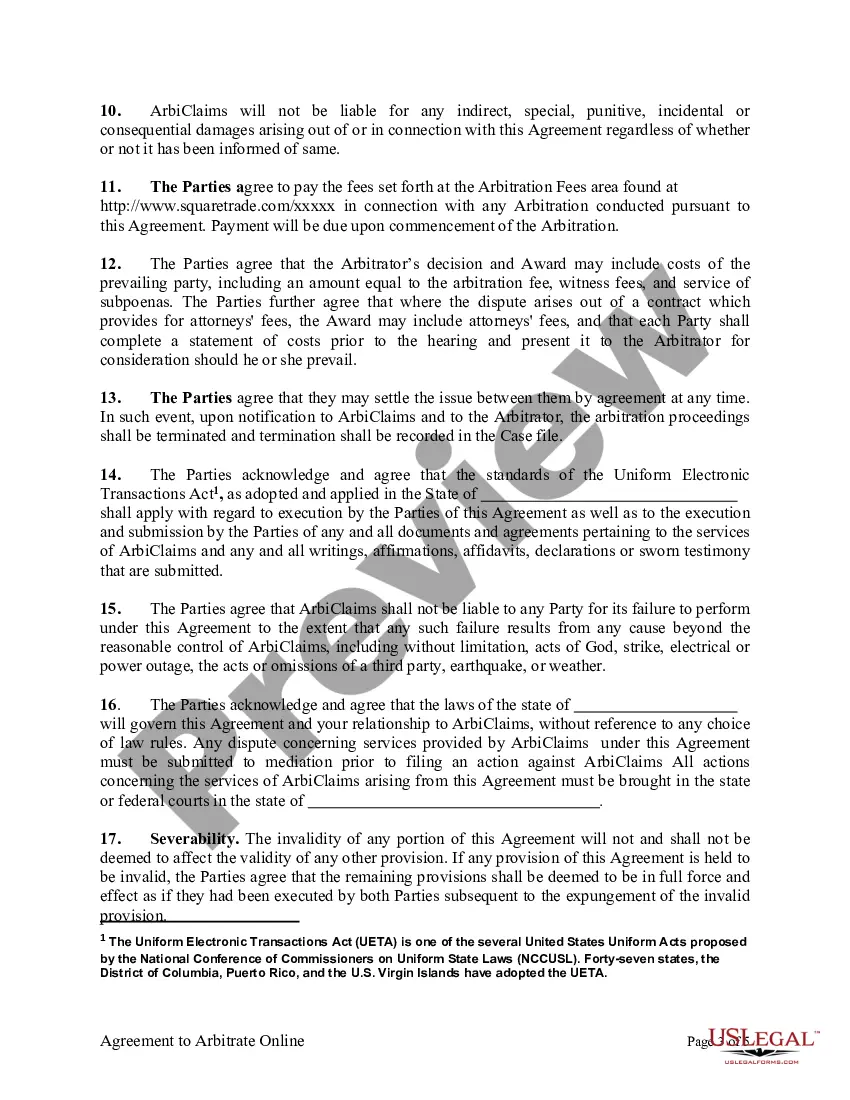




Get your form ready online
Our built-in tools help you complete, sign, share, and store your documents in one place.
Make edits, fill in missing information, and update formatting in US Legal Forms—just like you would in MS Word.
Download a copy, print it, send it by email, or mail it via USPS—whatever works best for your next step.
Sign and collect signatures with our SignNow integration. Send to multiple recipients, set reminders, and more. Go Premium to unlock E-Sign.
If this form requires notarization, complete it online through a secure video call—no need to meet a notary in person or wait for an appointment.
We protect your documents and personal data by following strict security and privacy standards.

Make edits, fill in missing information, and update formatting in US Legal Forms—just like you would in MS Word.

Download a copy, print it, send it by email, or mail it via USPS—whatever works best for your next step.

Sign and collect signatures with our SignNow integration. Send to multiple recipients, set reminders, and more. Go Premium to unlock E-Sign.

If this form requires notarization, complete it online through a secure video call—no need to meet a notary in person or wait for an appointment.

We protect your documents and personal data by following strict security and privacy standards.
Looking for another form?




Form popularity
FAQ
Top 10 tips for drafting arbitration agreements Introduction. Scope of the arbitration agreement. Seat of the arbitration. Governing law of the arbitration agreement. Choice of rules. Language. Number and appointment of arbitrators. Specifying arbitrator characteristics.
For an arbitration agreement to be comprehensive, it must cover the points including a clear reference to arbitration, the seat of arbitration, the scope of dispute, the language of the arbitral tribunal, and the law that will govern the substantive and procedural aspects of the arbitration.
Outline a concise factual background and then move on to a discussion of the issues at the heart of the case. Your arguments should flow easily from the relevant facts and applicable law. And, by all means, avoid exaggeration of the strengths of your case as well as disparagement of the opposing side.
UNCITRAL2 recommended arbitration clause: Any dispute, controversy or claim arising out of or relating to this agreement, or the breach, termination or invalidity thereof, shall be settled by arbitration in ance with the UNCITRAL Arbitration Rules as at present in force.
Some contracts give you the right to opt out of the forced arbitration clause within a certain period of time, often 30 to 60 days, after signing the agreement by notifying the company that you wish to opt out. Check your contract for the deadline and for specific instructions for opting out.
The seat and venue of arbitration should be specifically mentioned. Language of Arbitration: The clause should specify the language in which the arbitration will be conducted if parties speak different languages. This is crucial for ensuring that all parties can effectively participate in the process.
The Arbitration Agreement All and any disputes or differences arising out of or in connection with this Agreement, or the breach, termination or invalidity thereof shall be finally settled by arbitration. In ance with the UNCITRAL Arbitration Rules. The number of arbitrators shall be one/three.
But, in the absence of an agreement between all parties to end the proceedings, can a claimant unilaterally withdraw from an arbitration that it has commenced? The short answer is yes. No set of institutional rules prevents a party from abandoning claims it has raised in an arbitration.
The Federal Arbitration Act (FAA) generally makes covered arbitration agreements “valid, irrevocable, and enforceable,” and it requires federal and state courts to “rigorously” enforce the agreements ing to their terms.
§ 1-569.26. Jurisdiction. (a) A court of this State having jurisdiction over the controversy and the parties to an agreement to arbitrate may enforce the agreement to arbitrate.
