Arbitration Agreement With Employer In Michigan
Description

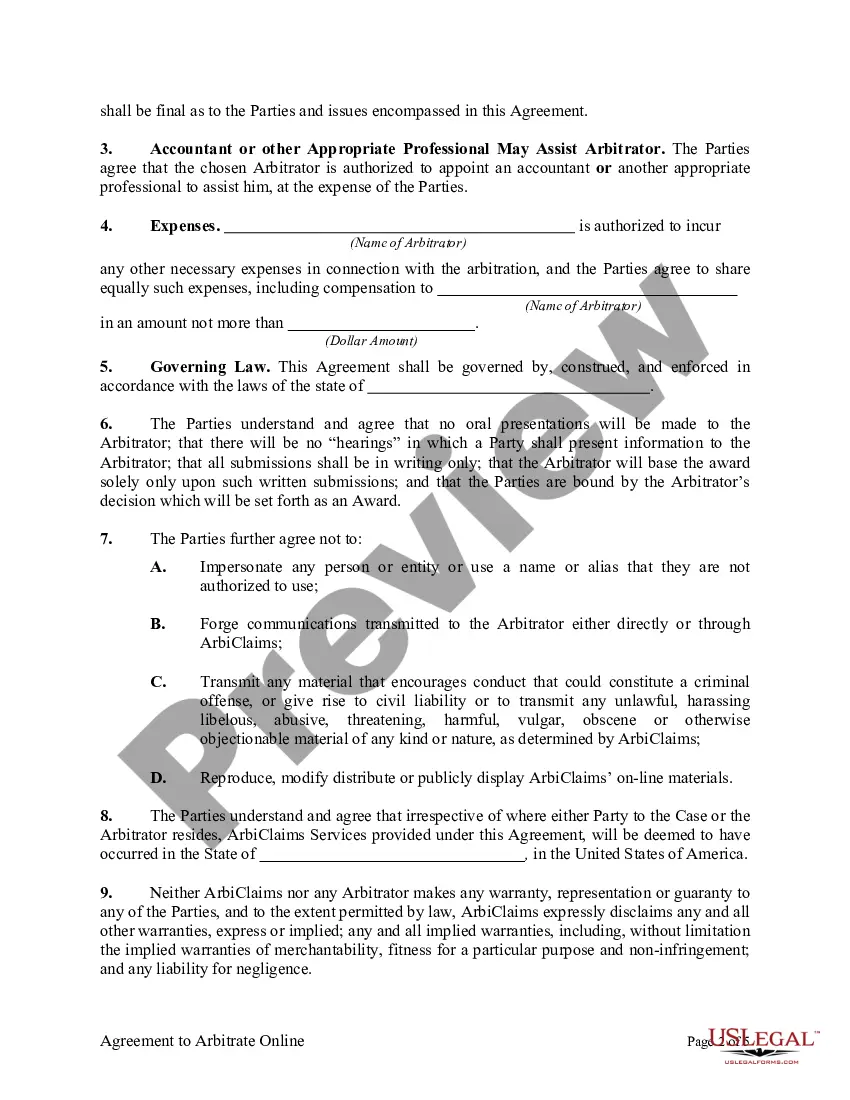
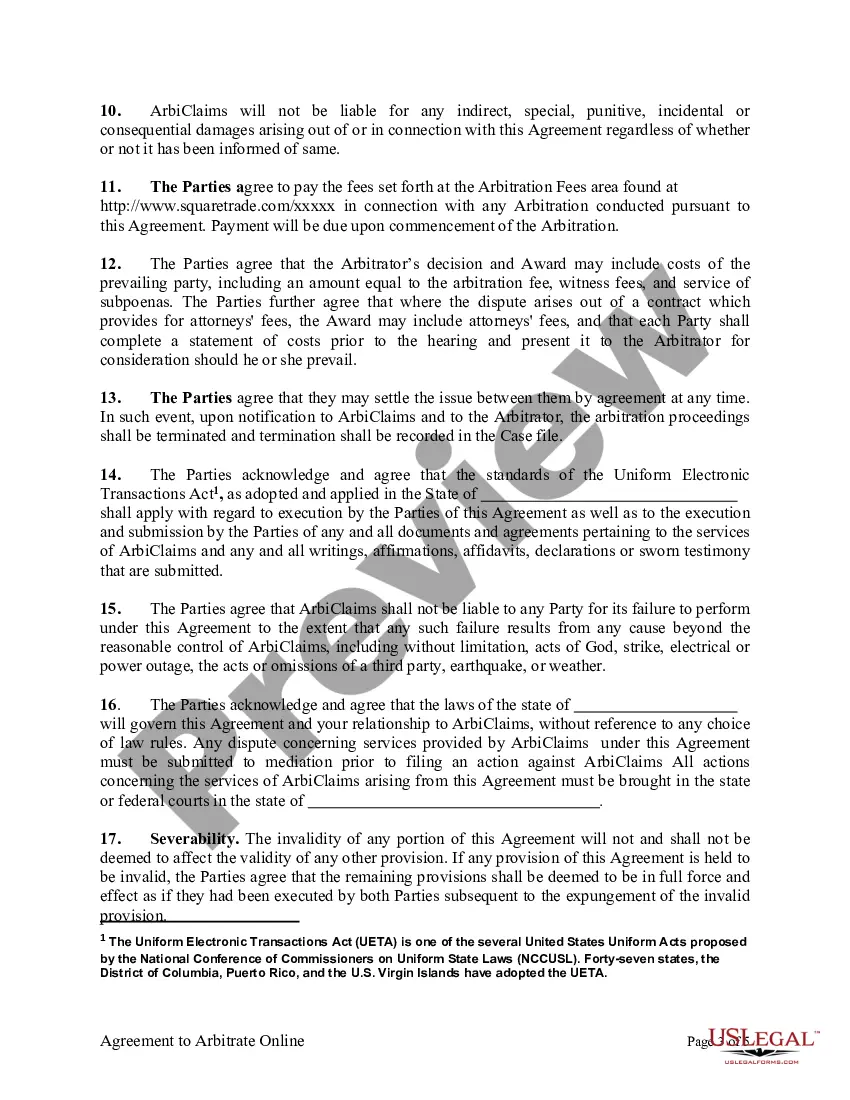



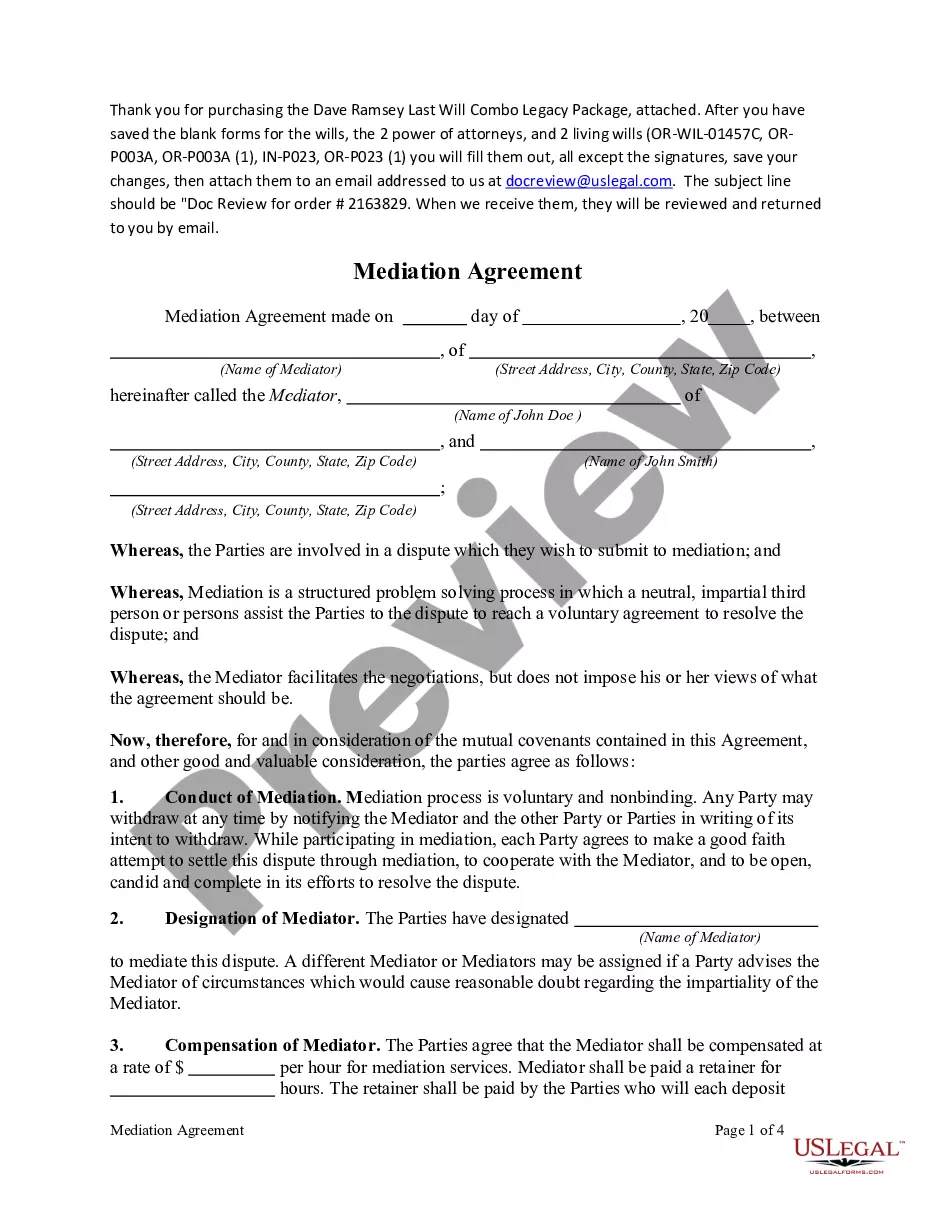
Get your form ready online
Our built-in tools help you complete, sign, share, and store your documents in one place.
Make edits, fill in missing information, and update formatting in US Legal Forms—just like you would in MS Word.
Download a copy, print it, send it by email, or mail it via USPS—whatever works best for your next step.
Sign and collect signatures with our SignNow integration. Send to multiple recipients, set reminders, and more. Go Premium to unlock E-Sign.
If this form requires notarization, complete it online through a secure video call—no need to meet a notary in person or wait for an appointment.
We protect your documents and personal data by following strict security and privacy standards.

Make edits, fill in missing information, and update formatting in US Legal Forms—just like you would in MS Word.

Download a copy, print it, send it by email, or mail it via USPS—whatever works best for your next step.

Sign and collect signatures with our SignNow integration. Send to multiple recipients, set reminders, and more. Go Premium to unlock E-Sign.

If this form requires notarization, complete it online through a secure video call—no need to meet a notary in person or wait for an appointment.

We protect your documents and personal data by following strict security and privacy standards.
Looking for another form?









Form popularity
FAQ
There are some benefits to arbitration if something goes wrong for you alone because it can be easier and faster to navigate than going to court. That being said, if you would prefer to have access to class action lawsuits, then opting out might be the better option for you.
There are some benefits to arbitration if something goes wrong for you alone because it can be easier and faster to navigate than going to court. That being said, if you would prefer to have access to class action lawsuits, then opting out might be the better option for you.
Generally there's no real benefit to the employee for binding arbitration. There's definitely disadvantages. Most tend to include, as yours apparently does, clauses forbidding bringing class actions against the employer.
You have a difficult decision to make, although it may not matter whether you sign the “agreement” or not. If you continue to work after you are informed that a forced arbitration agreement governs your employment, you may be bound by it, even if you refuse to sign it.
And, time and again, the Michigan Court of Appeals has explained that Michigan policy “strongly endorses arbitration as an inexpensive and expeditious alternative to litigation.”1 Indeed, the Michigan Legislature recently adopted the Uniform Arbitration Act, providing further support for judicial enforcement of ...
Settlement by agreement is the cheapest option and gives you the most control. Both mediation and arbitration are expensive, and arbitration is usually binding, so the ultimate decision is out of your control.
Odds of winning in employment arbitration For example, an employee complained that she's been biased and unfair. For example, research by Colvin reveals employees win 36.4 percent of discrimination cases in federal court and 43.8 percent in state court, but only 21.4 percent in arbitration.
Arbitration hearings are generally held in private which may be a positive to many. However, it is possible that this lack of transparency makes the process more likely to be biased, which may be problematic because arbitration decisions are also infrequently reviewed by the courts.
Arbitration might be the right choice for some cases. Limited discovery rights and costs might be useful when less is at stake. Arbitration might feel less adversarial, which could be an advantage where ongoing relationships are hoped to be preserved. Arbitration lends some confidentiality.
