Arbitration Agreement For Divorce In Michigan
Description

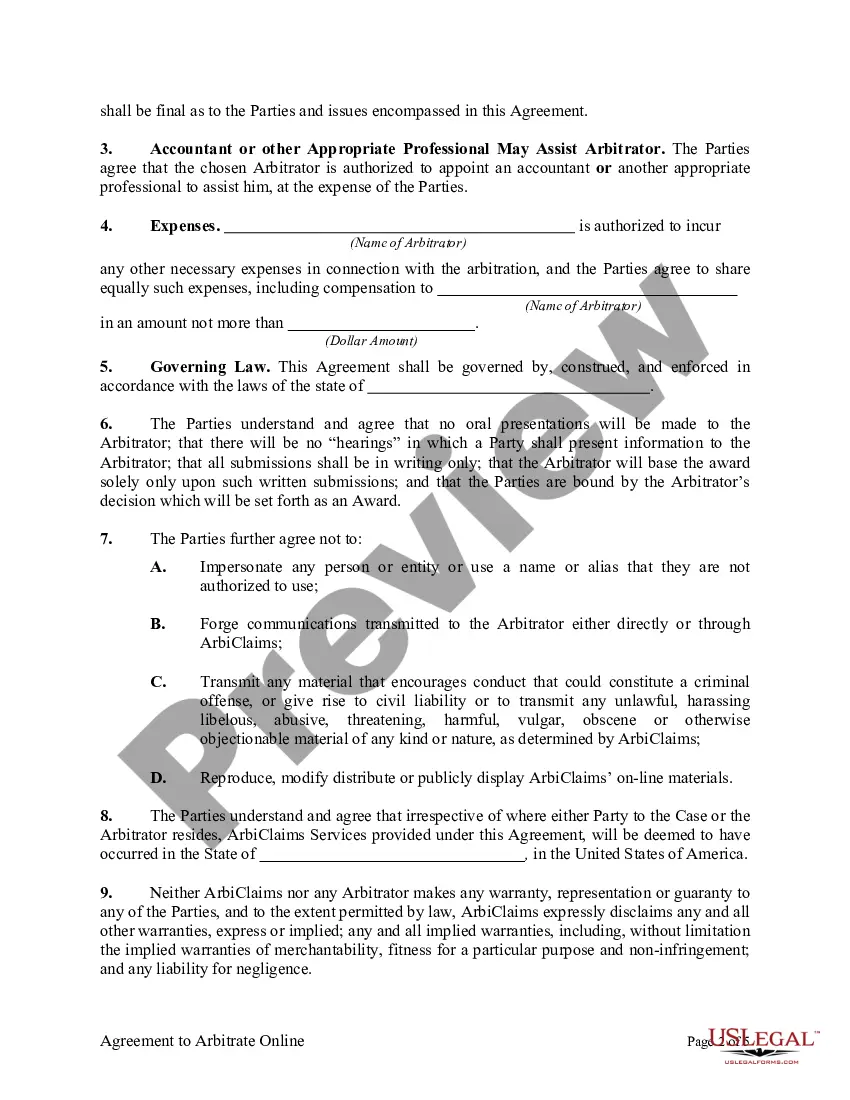
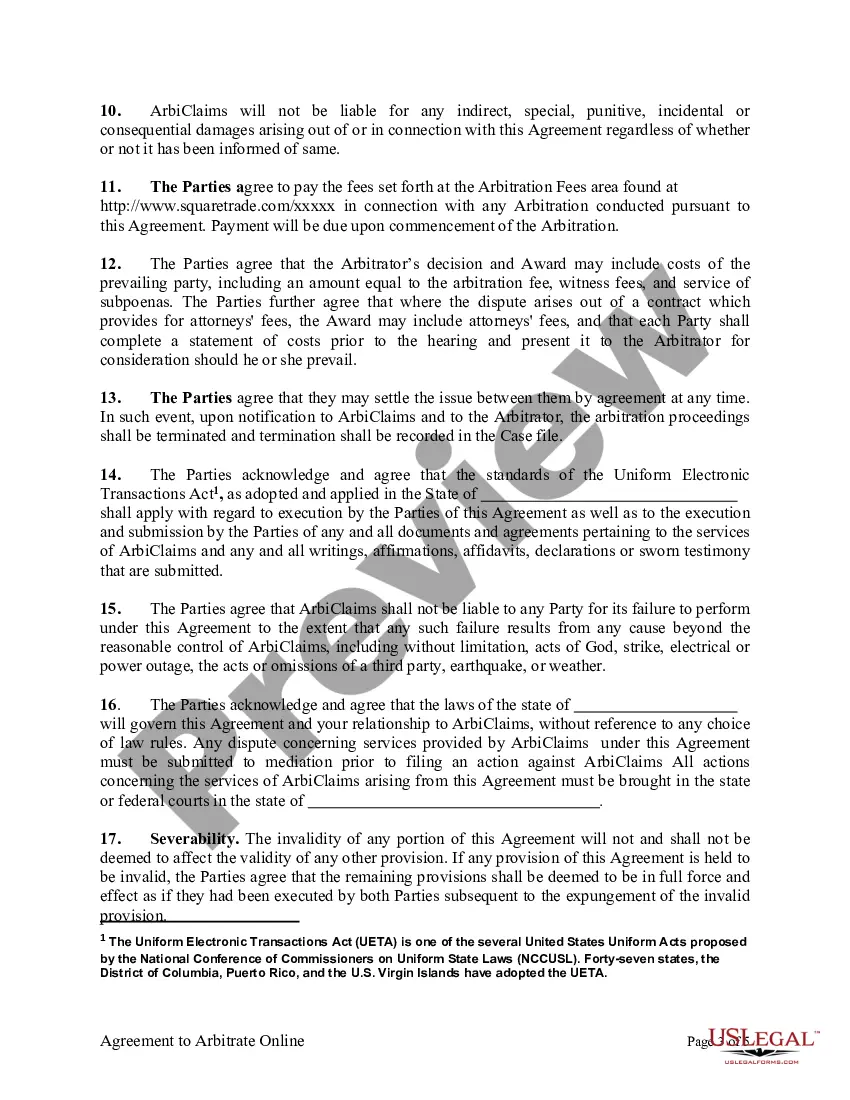




Get your form ready online
Our built-in tools help you complete, sign, share, and store your documents in one place.
Make edits, fill in missing information, and update formatting in US Legal Forms—just like you would in MS Word.
Download a copy, print it, send it by email, or mail it via USPS—whatever works best for your next step.
Sign and collect signatures with our SignNow integration. Send to multiple recipients, set reminders, and more. Go Premium to unlock E-Sign.
If this form requires notarization, complete it online through a secure video call—no need to meet a notary in person or wait for an appointment.
We protect your documents and personal data by following strict security and privacy standards.

Make edits, fill in missing information, and update formatting in US Legal Forms—just like you would in MS Word.

Download a copy, print it, send it by email, or mail it via USPS—whatever works best for your next step.

Sign and collect signatures with our SignNow integration. Send to multiple recipients, set reminders, and more. Go Premium to unlock E-Sign.

If this form requires notarization, complete it online through a secure video call—no need to meet a notary in person or wait for an appointment.

We protect your documents and personal data by following strict security and privacy standards.
Looking for another form?







Form popularity
FAQ
Settlement by agreement is the cheapest option and gives you the most control. Both mediation and arbitration are expensive, and arbitration is usually binding, so the ultimate decision is out of your control.
During arbitration, you and your spouse will each state your cases, with or without legal representatives, along with evidence to support your argument. The panel of judges will listen to both sides and decide things such as asset division, spousal support, child custody and child support.
Below are five tips you should follow to win your case if you're going through a divorce. Hire a Lawyer. You might not realize the profound effect a divorce will have on your life and future. Create a List of Your Assets. Remain in the Marital Home. Avoid Digital Communication. Be Respectful of Your Spouse. Contact Us.
In instances of divorce after 10 years of marriage in Michigan, an ex-spouse has the right to claim up to half of the other's workers' compensation benefits, Social Security benefits, and military pension benefits.
Cons: Limited Appeal Options: One of the most significant downsides of arbitration is that it offers very limited options for appeal. Once the arbitrator makes a decision, it's usually final unless there was a substantial legal oversight.
Disadvantages Questionable Fairness. Mandatory arbitration. Finality: No appeals. While this may be a positive if you find the arbitration decision favorable, you should be aware that if arbitration is binding, both sides give up their right to an appeal. Can be more expensive. Unpredictability: Unconventional outcomes.
Necessary Elements Details of the Parties. Details of the relationship between the parties. Demand for Arbitration. The mention of agreement/contract (if any). The mention of already existing arbitration agreement between the parties pursuant to which the concerned notice of arbitration has been sent (if any).
Understanding Divorce Arbitration in Michigan In divorce arbitration, the couple and their respective attorneys select and must agree upon an arbitrator, who is then presented with the problematic issues that are preventing a tidy resolution.
