Agreement Arbitration Document For Employment In Dallas
Description

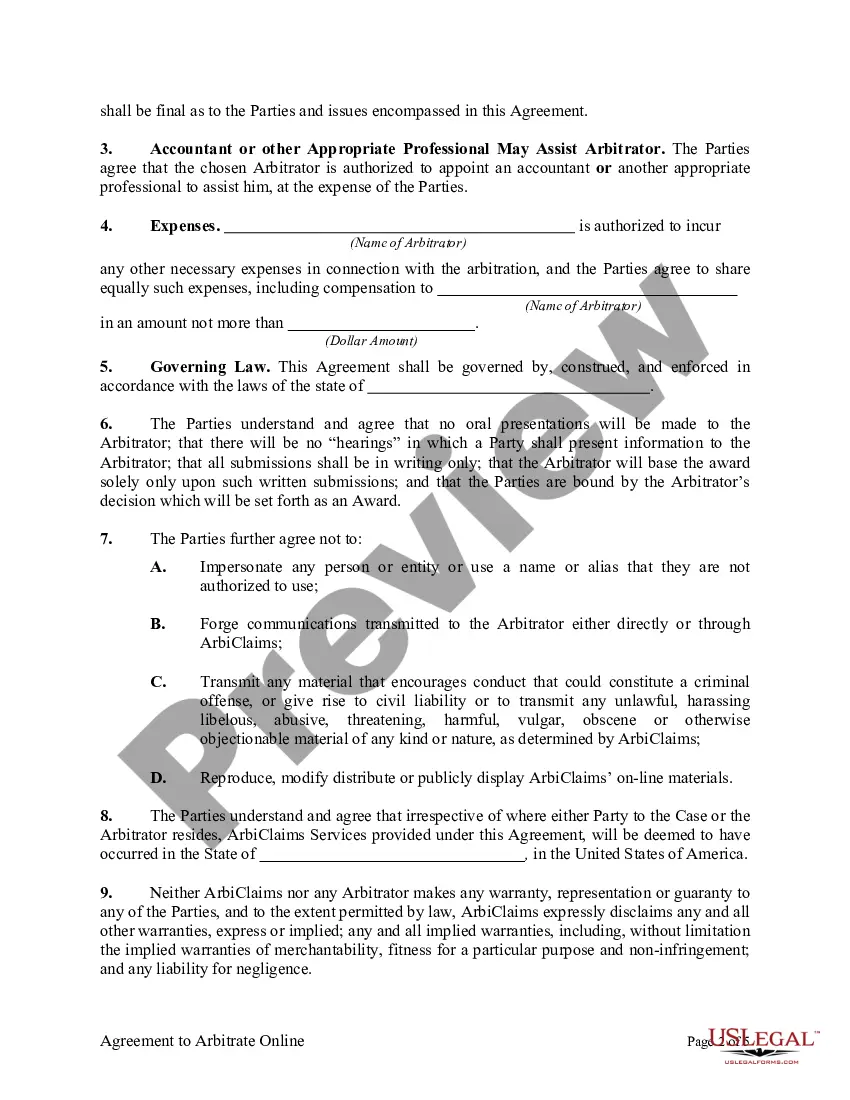
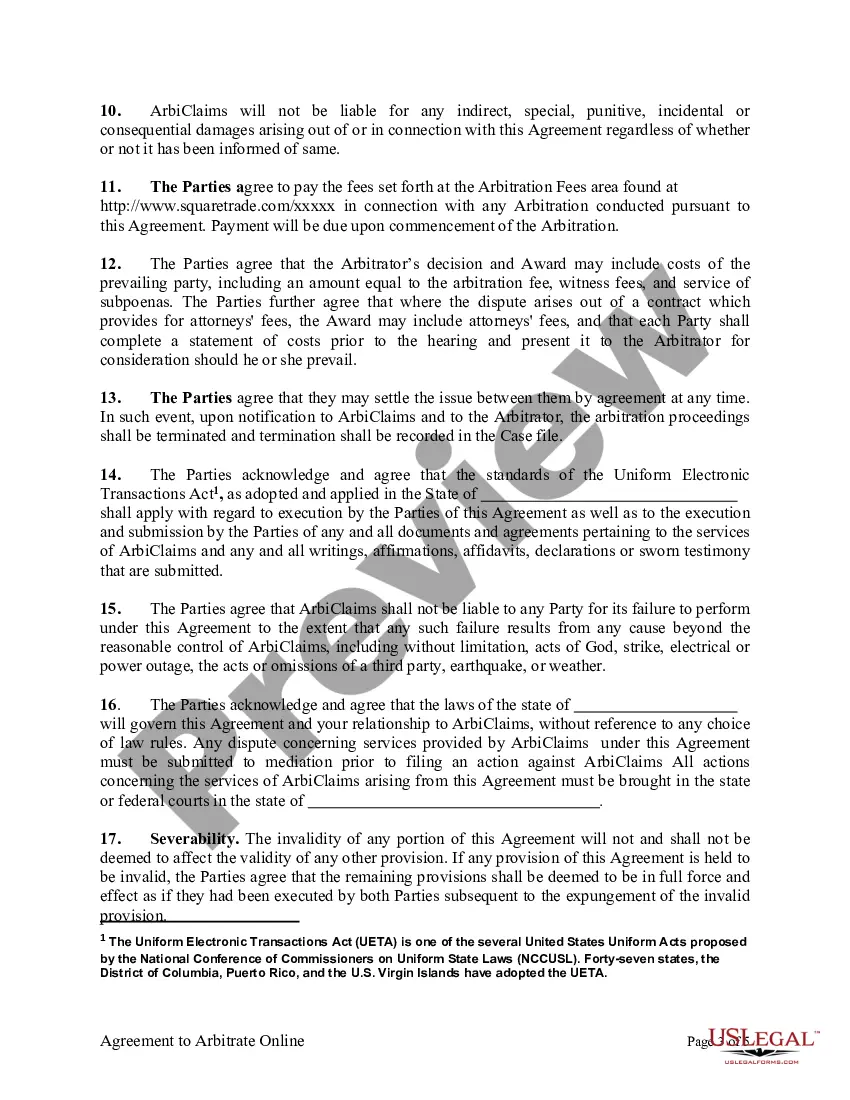




Get your form ready online
Our built-in tools help you complete, sign, share, and store your documents in one place.
Make edits, fill in missing information, and update formatting in US Legal Forms—just like you would in MS Word.
Download a copy, print it, send it by email, or mail it via USPS—whatever works best for your next step.
Sign and collect signatures with our SignNow integration. Send to multiple recipients, set reminders, and more. Go Premium to unlock E-Sign.
If this form requires notarization, complete it online through a secure video call—no need to meet a notary in person or wait for an appointment.
We protect your documents and personal data by following strict security and privacy standards.

Make edits, fill in missing information, and update formatting in US Legal Forms—just like you would in MS Word.

Download a copy, print it, send it by email, or mail it via USPS—whatever works best for your next step.

Sign and collect signatures with our SignNow integration. Send to multiple recipients, set reminders, and more. Go Premium to unlock E-Sign.

If this form requires notarization, complete it online through a secure video call—no need to meet a notary in person or wait for an appointment.

We protect your documents and personal data by following strict security and privacy standards.
Looking for another form?







Form popularity
FAQ
Validity of Arbitration Agreements Under Section 171.001 of the TAA, written agreements to arbitrate are generally valid and enforceable in Texas. This section ensures that, barring any specific legal exceptions, parties bound by a written agreement to arbitrate must settle their disputes outside of court.
The brief should include identification of the parties, a concise description of the facts, and applicable case law and statutes. The briefs should be submitted to the arbitrator at least 2 days prior to the arbitration hearing.
Contact the Texas Comptroller's Arbitration team at 800-252-9121 or ptad.arbitration@cpa.texas. You have certain rights under Government Code Chapters 552 and 559 to review, request and correct information we have on file about you. Contact us at the email address or phone number listed in these instructions.
Arbitration is where you resolve differences in front of a private arbitrator rather than a lawsuit in a civil court. Arbitration agreements are typically found in your employment contract when you first get hired.
An employment arbitration agreement typically asks employees to agree that any disputes will be resolved through arbitration. It can be a standalone document, but it's most often part of a broader employment contract.
By agreeing to arbitrate, you give up certain rights while also gaining some benefits. For that reason, it's vital to understand the pros and cons ahead of time so that you can make an informed decision when you're asked to sign. Arbitration is a way of resolving a dispute without filing a lawsuit and going to court.
There are some benefits to arbitration if something goes wrong for you alone because it can be easier and faster to navigate than going to court. That being said, if you would prefer to have access to class action lawsuits, then opting out might be the better option for you.
Arbitration agreements require that persons who signed them resolve any disputes by binding arbitration, rather than in court before a judge and/or jury. What is binding arbitration? Binding arbitration involves the submission of a dispute to a neutral party who hears the case and makes a decision.
