Agreement Arbitrate Document With Insurance In Cook
Description

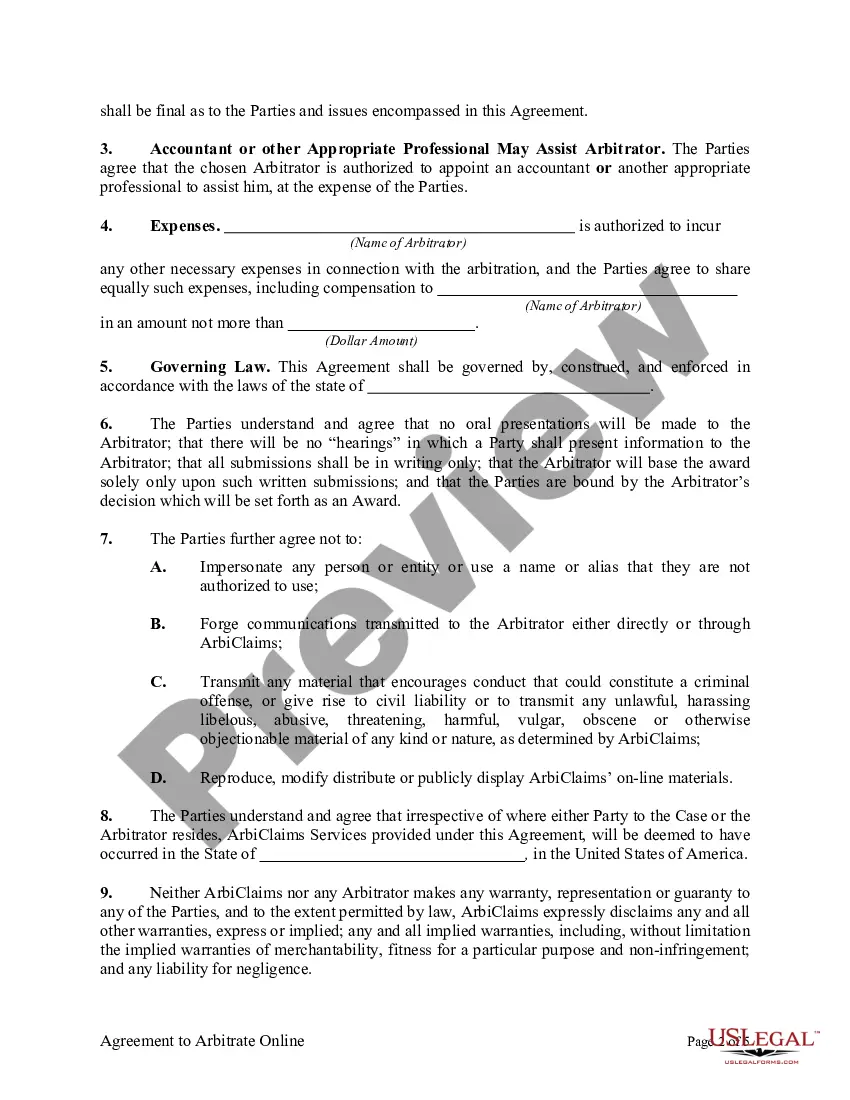
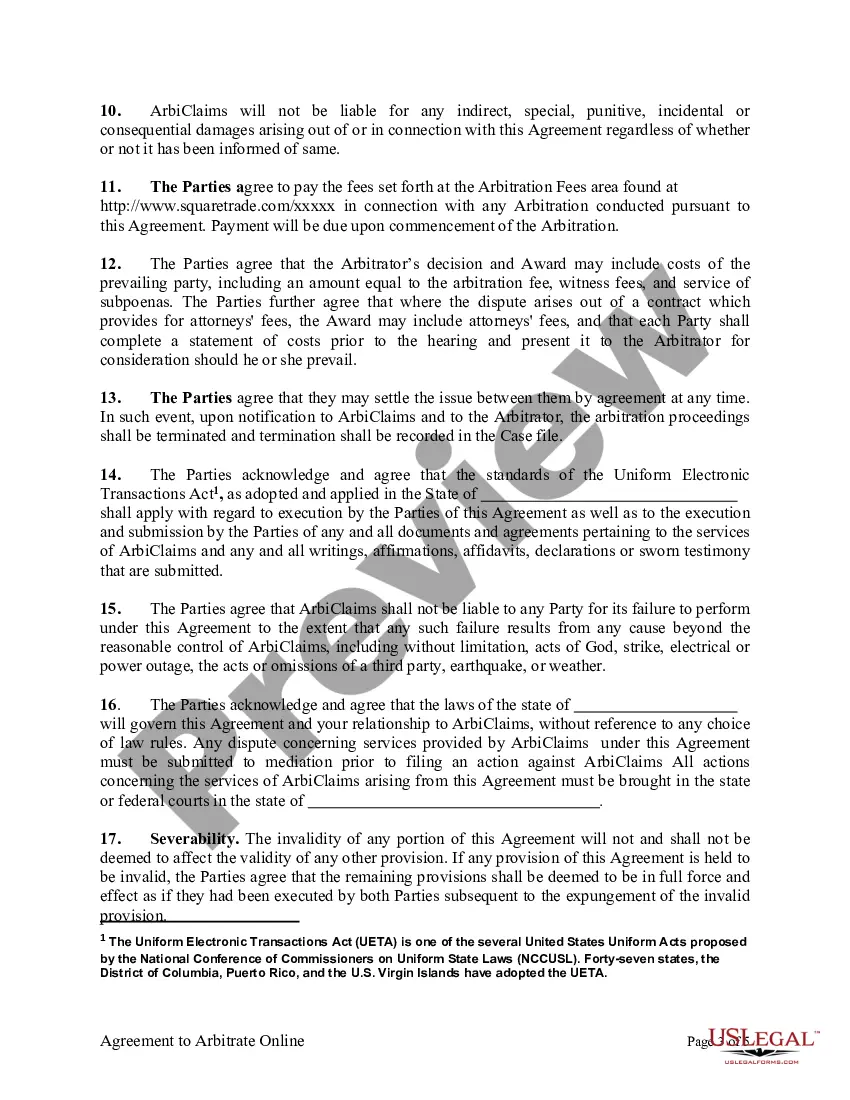




Get your form ready online
Our built-in tools help you complete, sign, share, and store your documents in one place.
Make edits, fill in missing information, and update formatting in US Legal Forms—just like you would in MS Word.
Download a copy, print it, send it by email, or mail it via USPS—whatever works best for your next step.
Sign and collect signatures with our SignNow integration. Send to multiple recipients, set reminders, and more. Go Premium to unlock E-Sign.
If this form requires notarization, complete it online through a secure video call—no need to meet a notary in person or wait for an appointment.
We protect your documents and personal data by following strict security and privacy standards.

Make edits, fill in missing information, and update formatting in US Legal Forms—just like you would in MS Word.

Download a copy, print it, send it by email, or mail it via USPS—whatever works best for your next step.

Sign and collect signatures with our SignNow integration. Send to multiple recipients, set reminders, and more. Go Premium to unlock E-Sign.

If this form requires notarization, complete it online through a secure video call—no need to meet a notary in person or wait for an appointment.

We protect your documents and personal data by following strict security and privacy standards.
Looking for another form?










Form popularity
FAQ
"A dispute having arisen between the parties concerning , the parties hereby agree that the dispute shall be referred to and finally resolved by arbitration under the LCIA Rules. The number of arbitrators shall be one/three. The seat, or legal place, of arbitration shall be City and/or Country.
In voluntary or non-binding arbitration, the insurer and the policyholder agree to meet with an arbitrator to review the claim. Once the arbitrator makes their decision on the claim, both parties then have the option to accept or reject it. If the decision is ultimately denied, the case can then be appealed.
"A dispute having arisen between the parties concerning , the parties hereby agree that the dispute shall be referred to and finally resolved by arbitration under the LCIA Rules. The number of arbitrators shall be one/three. The seat, or legal place, of arbitration shall be City and/or Country.
“Any dispute arising out of or incidental or in connection with this Contract / Agreement, including any question regarding its existence, operation, termination, validity or breach thereof, shall be referred to and finally resolved by Arbitration administered by 'Hyderabad Arbitration Centre' (HAC), in ance with ...
An example of a mandatory arbitration clause UberEATS imposes on its delivery workers: “This Arbitration Provision requires all such claims to be resolved only by an arbitrator through final and binding individual arbitration and not by way of court or jury trial.”
Under Rule 25, commercial and personal injury cases with damages valued at less than $50,000 and that do not involve claims of medical malpractice, asbestos, construction, nursing home, and product liability are automatically referred to mandatory arbitration.
An arbitration clause should clearly set forth (1) whether the submission of a dispute to arbitration is mandatory or optional, (2) what disputes will be arbitrated, (3) whether a court or arbitrator will decide whether the arbitration agreement is enforceable, (4) the rules that will govern the arbitration, (5) ...
The Scope of the Clause. This section of the clause is critical; it sets the boundaries for which disputes the tribunal is authorised to determine. Choice of Rules. The Number of Arbitrators. Appointing Authority. Choice of Venue. The language of the proceedings. Finality. Exclusion of the right of appeal.
What is an arbitration agreement? It's typically a clause in a broader contract in which you agree to settle out of court, through arbitration cases, any dispute that arises with your counterpart.
Arbitration agreements require that persons who signed them resolve any disputes by binding arbitration, rather than in court before a judge and/or jury. What is binding arbitration? Binding arbitration involves the submission of a dispute to a neutral party who hears the case and makes a decision.
