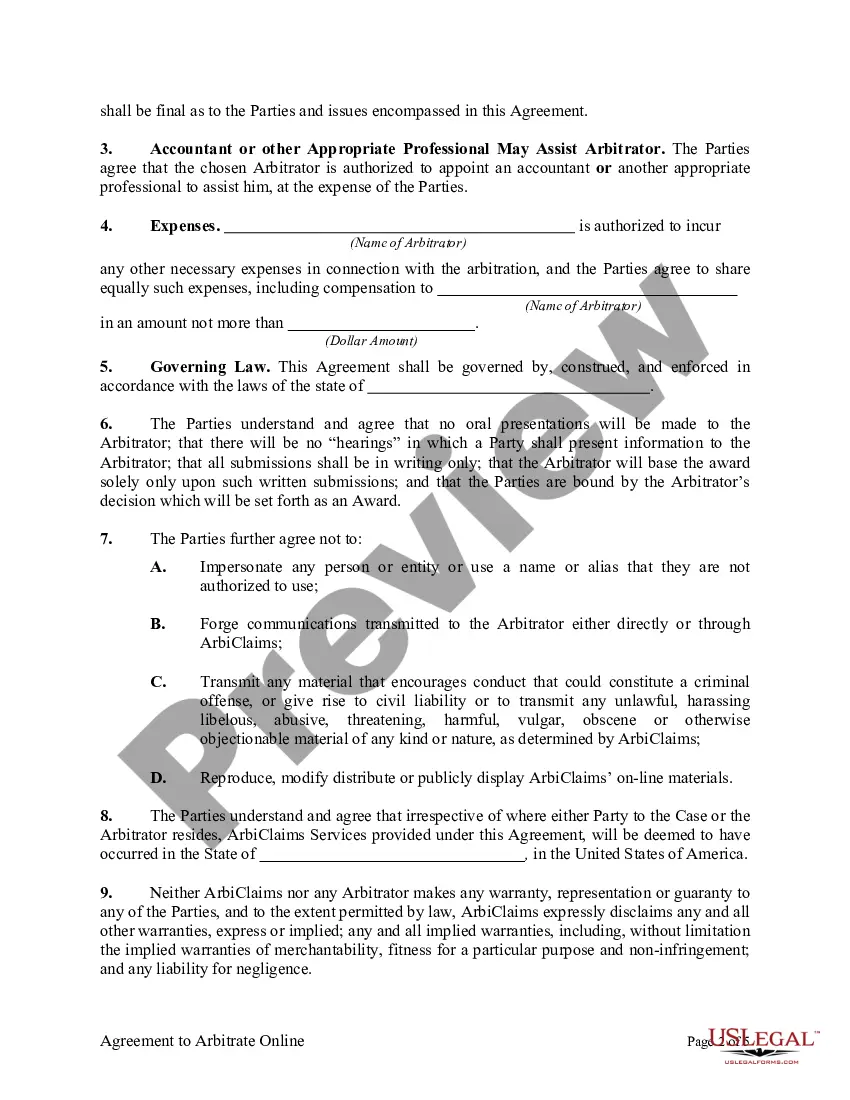
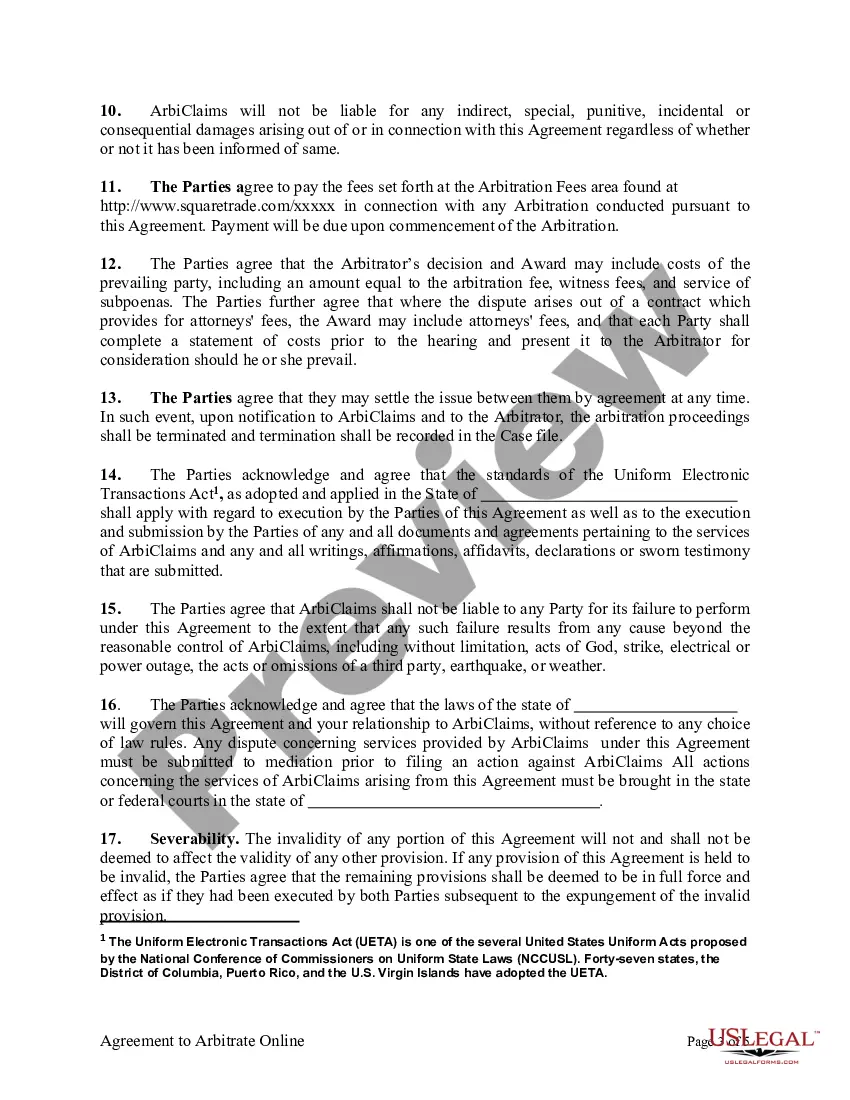
Arbitration Agreement For Divorce In Clark
Description





Get your form ready online
Our built-in tools help you complete, sign, share, and store your documents in one place.
Make edits, fill in missing information, and update formatting in US Legal Forms—just like you would in MS Word.
Download a copy, print it, send it by email, or mail it via USPS—whatever works best for your next step.
Sign and collect signatures with our SignNow integration. Send to multiple recipients, set reminders, and more. Go Premium to unlock E-Sign.
If this form requires notarization, complete it online through a secure video call—no need to meet a notary in person or wait for an appointment.
We protect your documents and personal data by following strict security and privacy standards.

Make edits, fill in missing information, and update formatting in US Legal Forms—just like you would in MS Word.

Download a copy, print it, send it by email, or mail it via USPS—whatever works best for your next step.

Sign and collect signatures with our SignNow integration. Send to multiple recipients, set reminders, and more. Go Premium to unlock E-Sign.

If this form requires notarization, complete it online through a secure video call—no need to meet a notary in person or wait for an appointment.

We protect your documents and personal data by following strict security and privacy standards.
Looking for another form?







Form popularity
FAQ
Settlement by agreement is the cheapest option and gives you the most control. Both mediation and arbitration are expensive, and arbitration is usually binding, so the ultimate decision is out of your control.
Necessary Elements Details of the Parties. Details of the relationship between the parties. Demand for Arbitration. The mention of agreement/contract (if any). The mention of already existing arbitration agreement between the parties pursuant to which the concerned notice of arbitration has been sent (if any).
The arbitrator will explain the process. Each side may present an uninterrupted opening statement setting forth its position as to the facts and the law. After opening statements, the parties present their evidence and witnesses. The arbitrator swears in the witnesses and makes rulings on the admissibility of evidence.
A claimant will typically start arbitration by sending a document known as a “request for arbitration” or a “notice to arbitrate” to its opponent.
Cases in Civil Arbitration are tried before an arbitrator. Arbitrators are randomly selected from a list maintained by the court. The list is comprised of practicing lawyers and retired judges. Cases in Civil Arbitration have streamlined procedures that limit the activity before the arbitration hearing.
Attorneys are Optional Parties may represent themselves at the arbitration hearing. Often they seek prior consultations with attorneys in order to develop a strategy for their presentation or a review of their legal position.
During arbitration, you and your spouse will each state your cases, with or without legal representatives, along with evidence to support your argument. The panel of judges will listen to both sides and decide things such as asset division, spousal support, child custody and child support.
