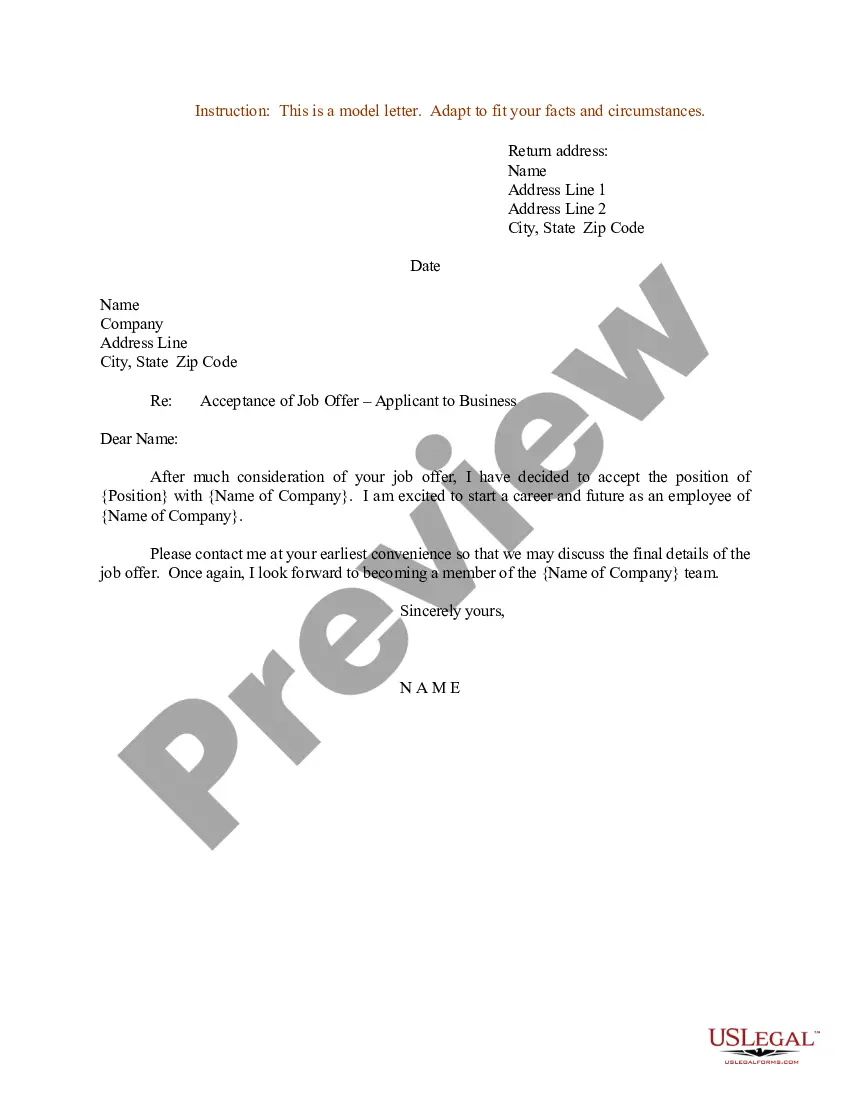
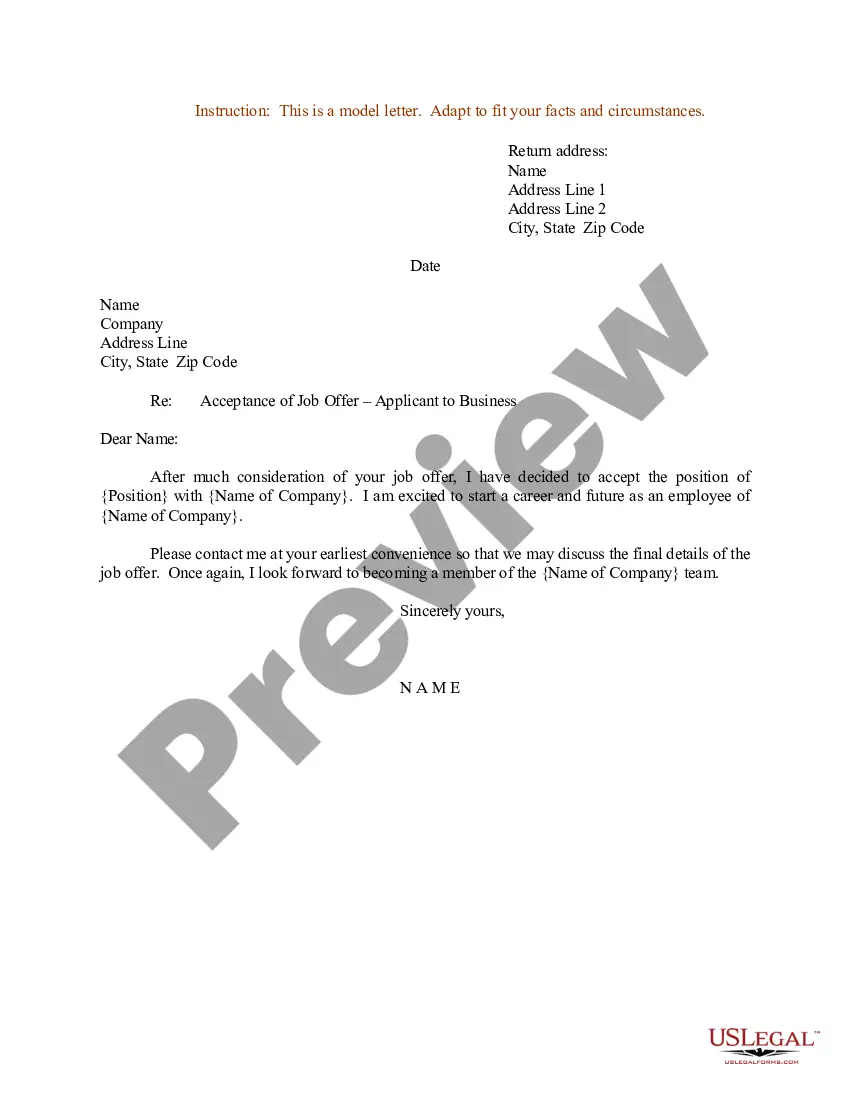
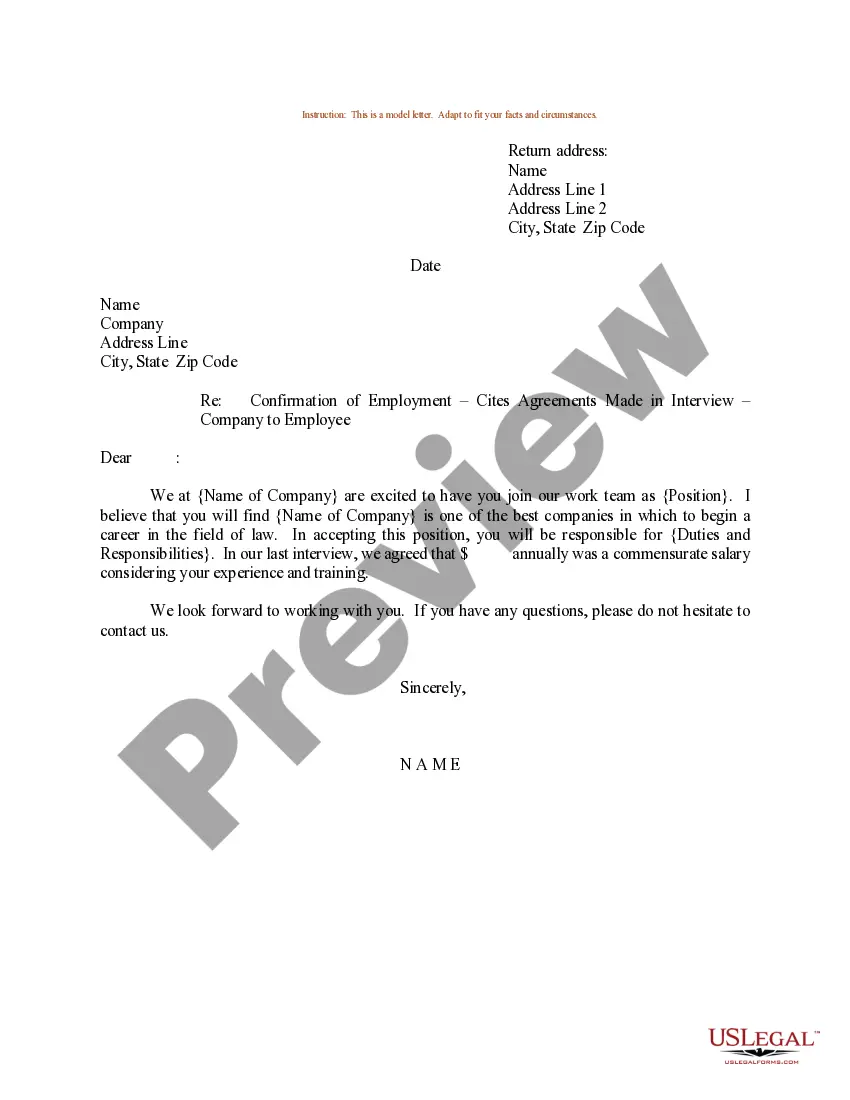
Letter Acceptance Document With Name And Address In Texas
Description

Get your form ready online
Our built-in tools help you complete, sign, share, and store your documents in one place.
Make edits, fill in missing information, and update formatting in US Legal Forms—just like you would in MS Word.
Download a copy, print it, send it by email, or mail it via USPS—whatever works best for your next step.
Sign and collect signatures with our SignNow integration. Send to multiple recipients, set reminders, and more. Go Premium to unlock E-Sign.
If this form requires notarization, complete it online through a secure video call—no need to meet a notary in person or wait for an appointment.
We protect your documents and personal data by following strict security and privacy standards.

Make edits, fill in missing information, and update formatting in US Legal Forms—just like you would in MS Word.

Download a copy, print it, send it by email, or mail it via USPS—whatever works best for your next step.

Sign and collect signatures with our SignNow integration. Send to multiple recipients, set reminders, and more. Go Premium to unlock E-Sign.

If this form requires notarization, complete it online through a secure video call—no need to meet a notary in person or wait for an appointment.

We protect your documents and personal data by following strict security and privacy standards.
Looking for another form?








Form popularity
FAQ
A proof of address is a document that confirms where you live. It typically includes your full name and residential address and can come in various forms, such as utility bills, bank statements, rental agreements, or official government correspondence.
How to Get Proof of Address Without Bills Landlord Letter: Ask your landlord for a signed letter confirming your residency. Social Service Agency: Seek a letter from a local social service agency. Bank Statement or Official Mail: Request a bank statement or use official mail with your address.
Writing one involves including the resident's name, address, move-in date, and a statement of residency. The letter should be clear, concise, and may need to be notarized in some cases.
Writing one involves including the resident's name, address, move-in date, and a statement of residency. The letter should be clear, concise, and may need to be notarized in some cases.
Utility Bills: These include various things such as electricity, gas, water, or internet bills. They usually show your name and address, but make sure the bills are recent and clear. Bank Statements: Banking documents are valid and can be used as proof of address, especially if they show your address.
Additionally, a proof of residency letter can serve as a sworn statement, often required by various entities such as government agencies and financial institutions, and it is suggested to have it notarized to enhance its credibility.
Normal processing: 1-2 business days, plus additional time for mailing. Expedited processing: same business day, plus additional time for mailing. Expedited Counter Service: within 2-3 hours (in person only).
Certificate of Filing means the disclosure acknowledgement issued by the Texas Ethics Commission to the filing Business Entity.
A "certificate of fact - status" is a certificate issued by the Secretary of State that serves as official evidence of an entity's existence or authority to transact business in Texas.
Certificate of Filing means the disclosure acknowledgement issued by the Texas Ethics Commission to the filing Business Entity.

