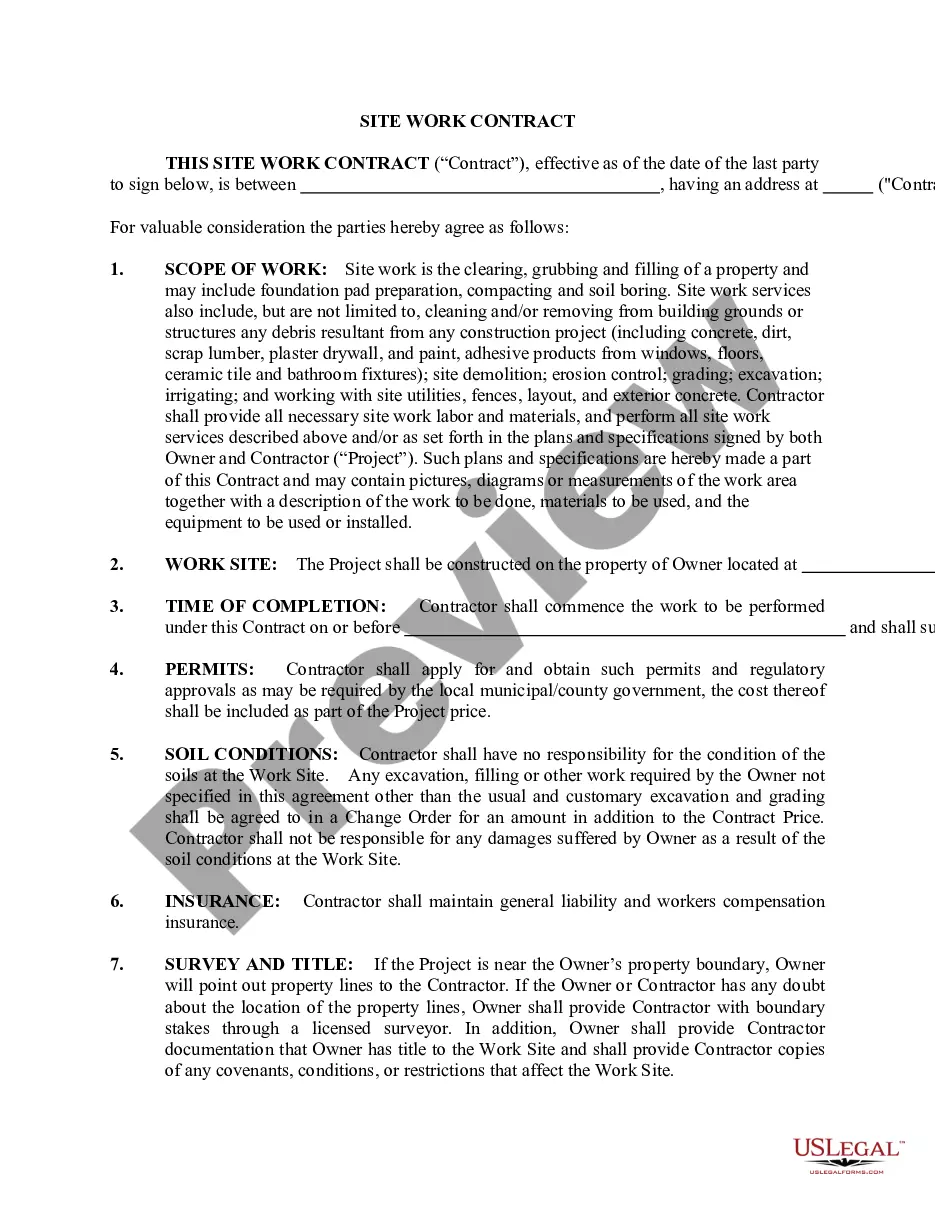
Contract Between Radio Station and Station Representative with Representative to Solicit Advertising Contract for Station
What this document covers
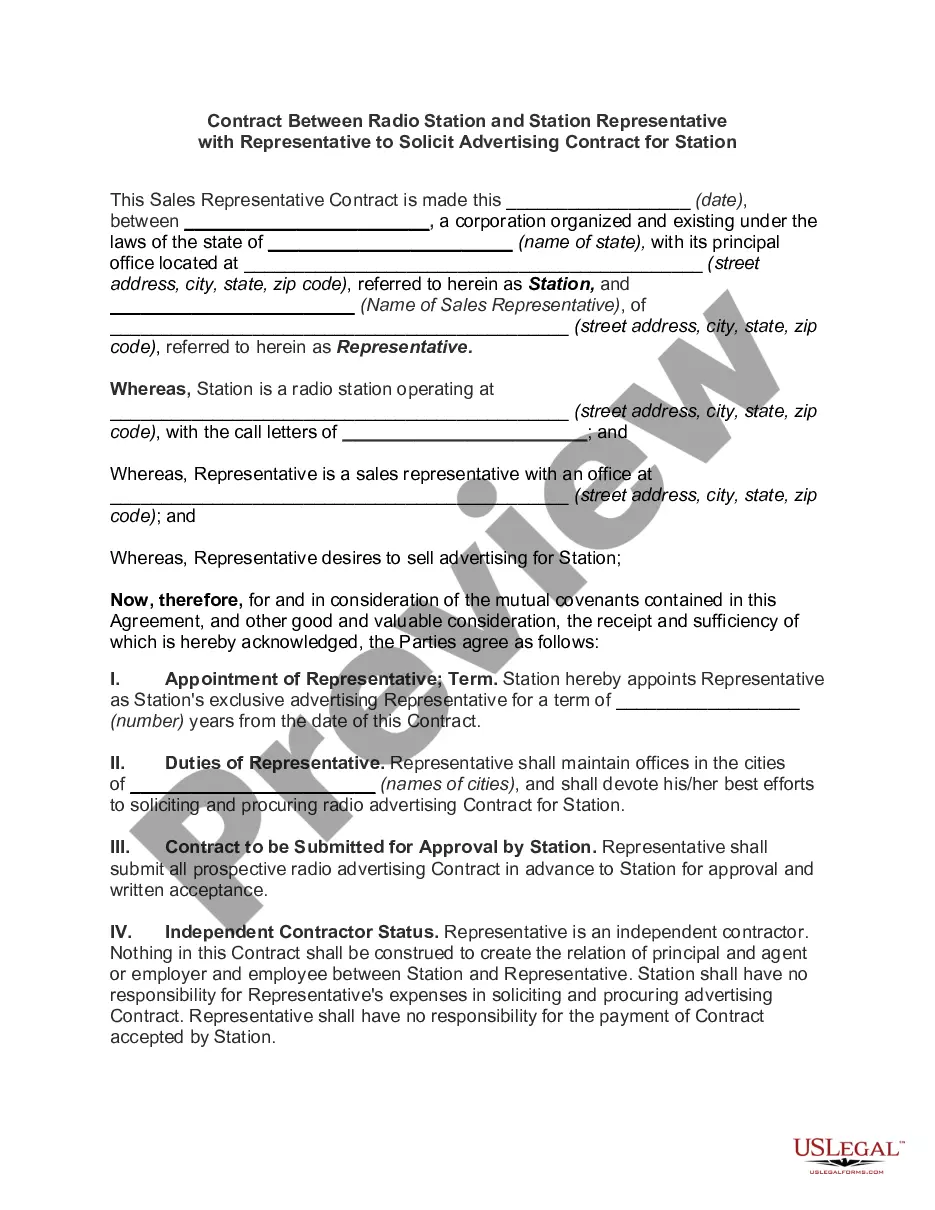
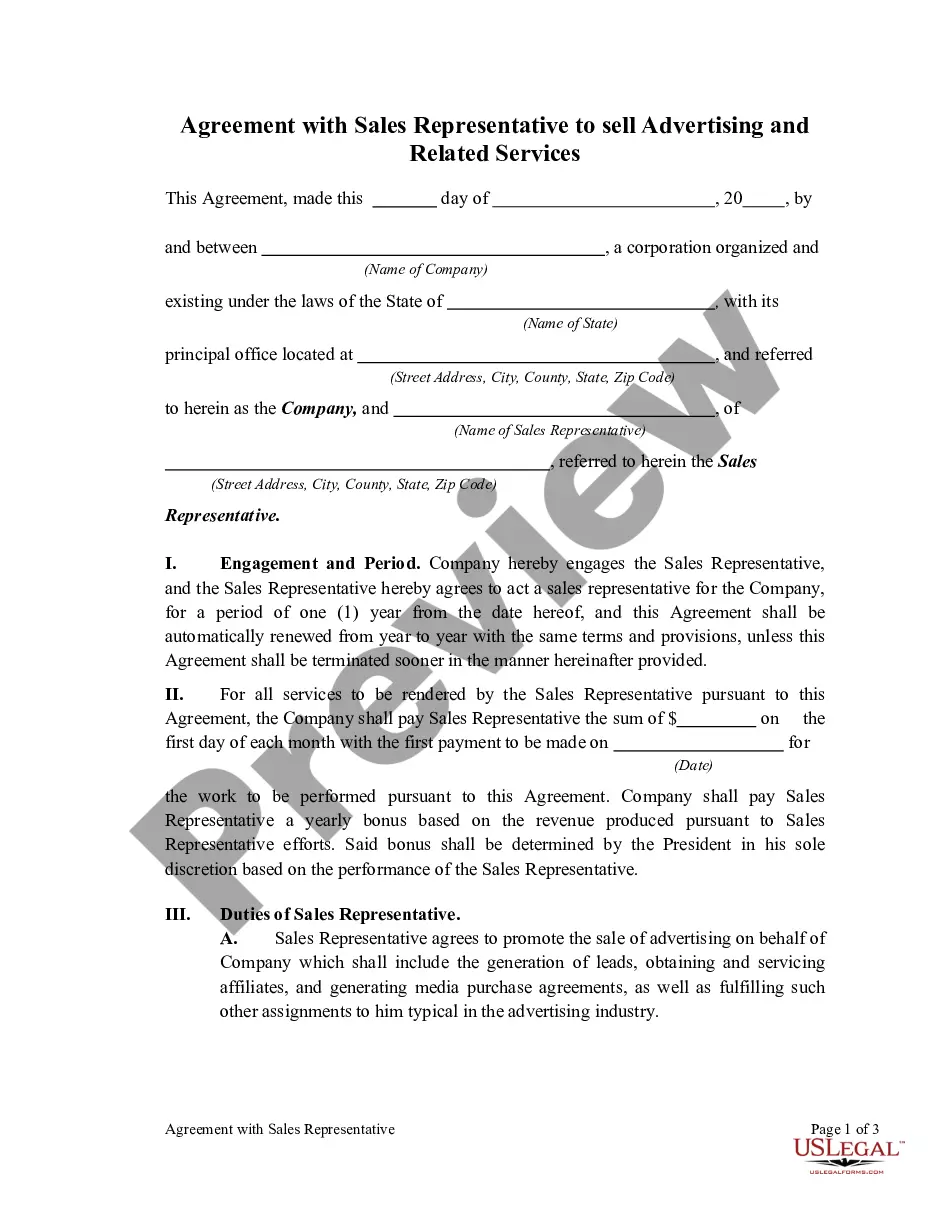
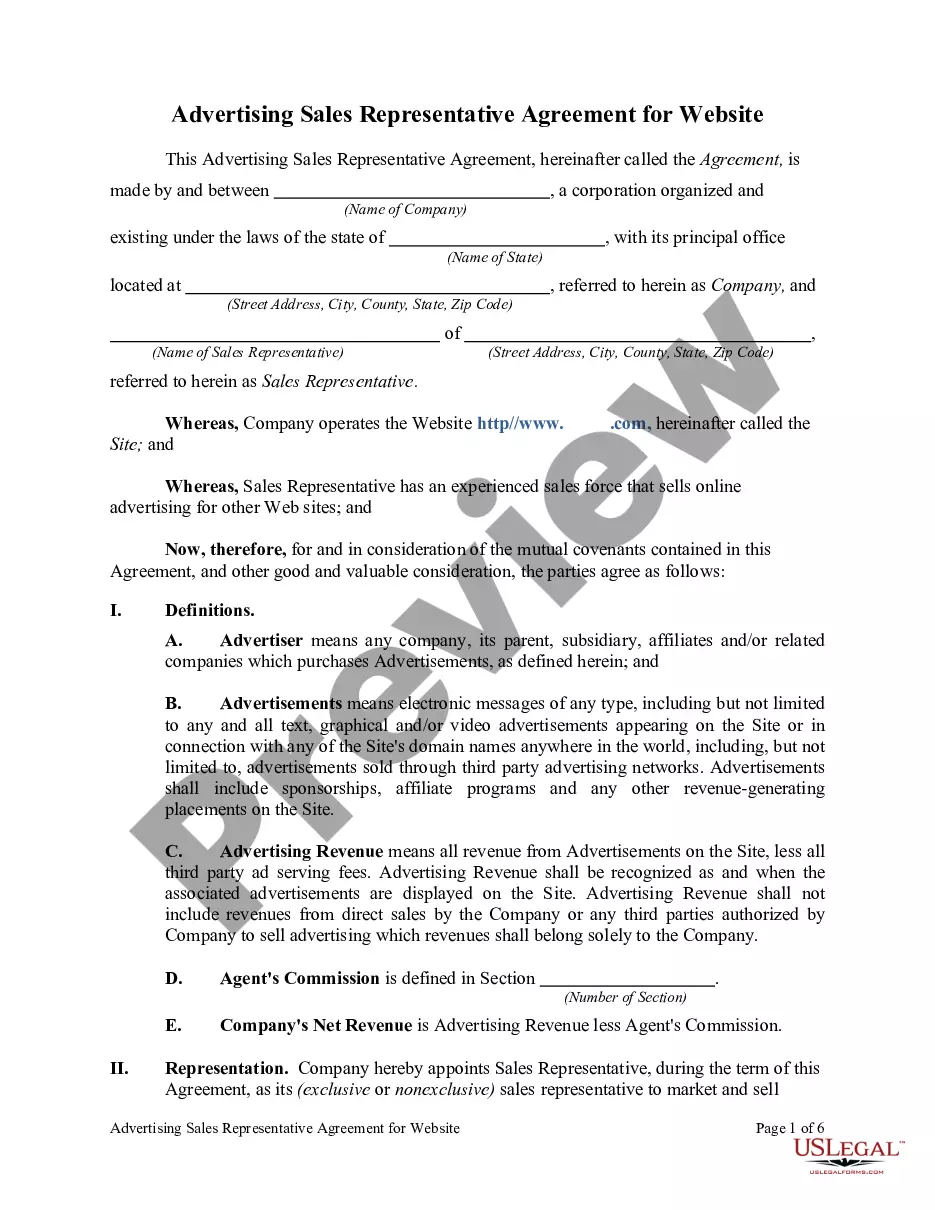
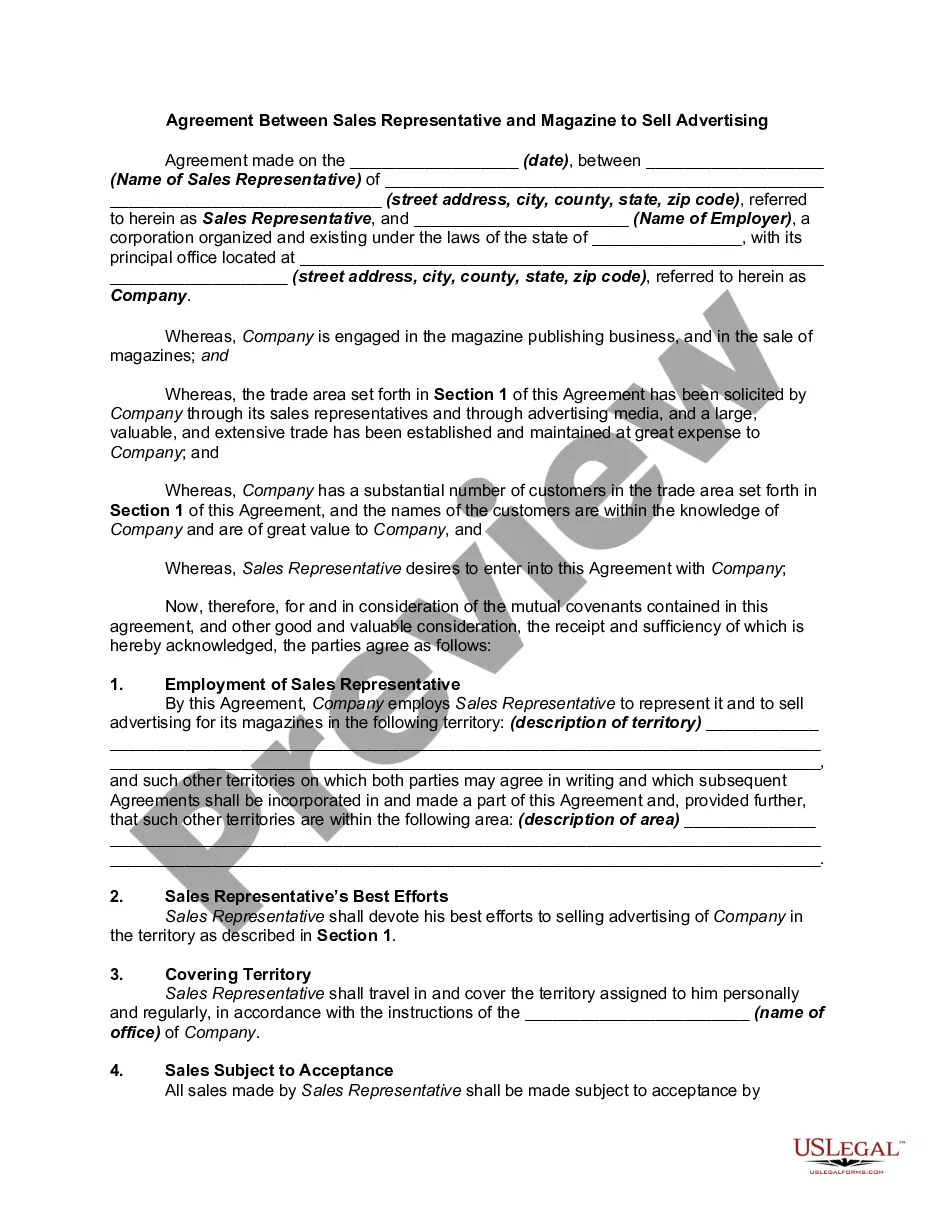
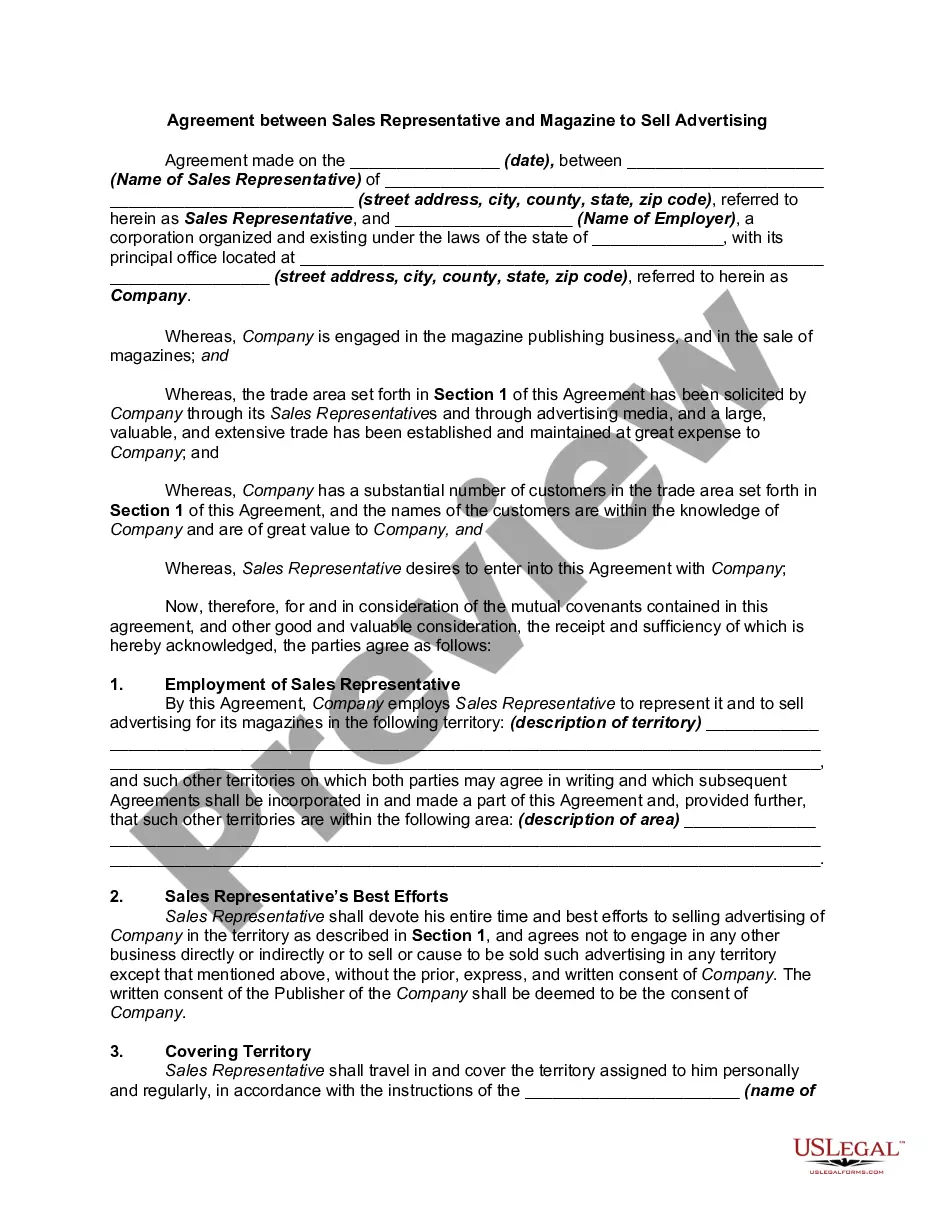
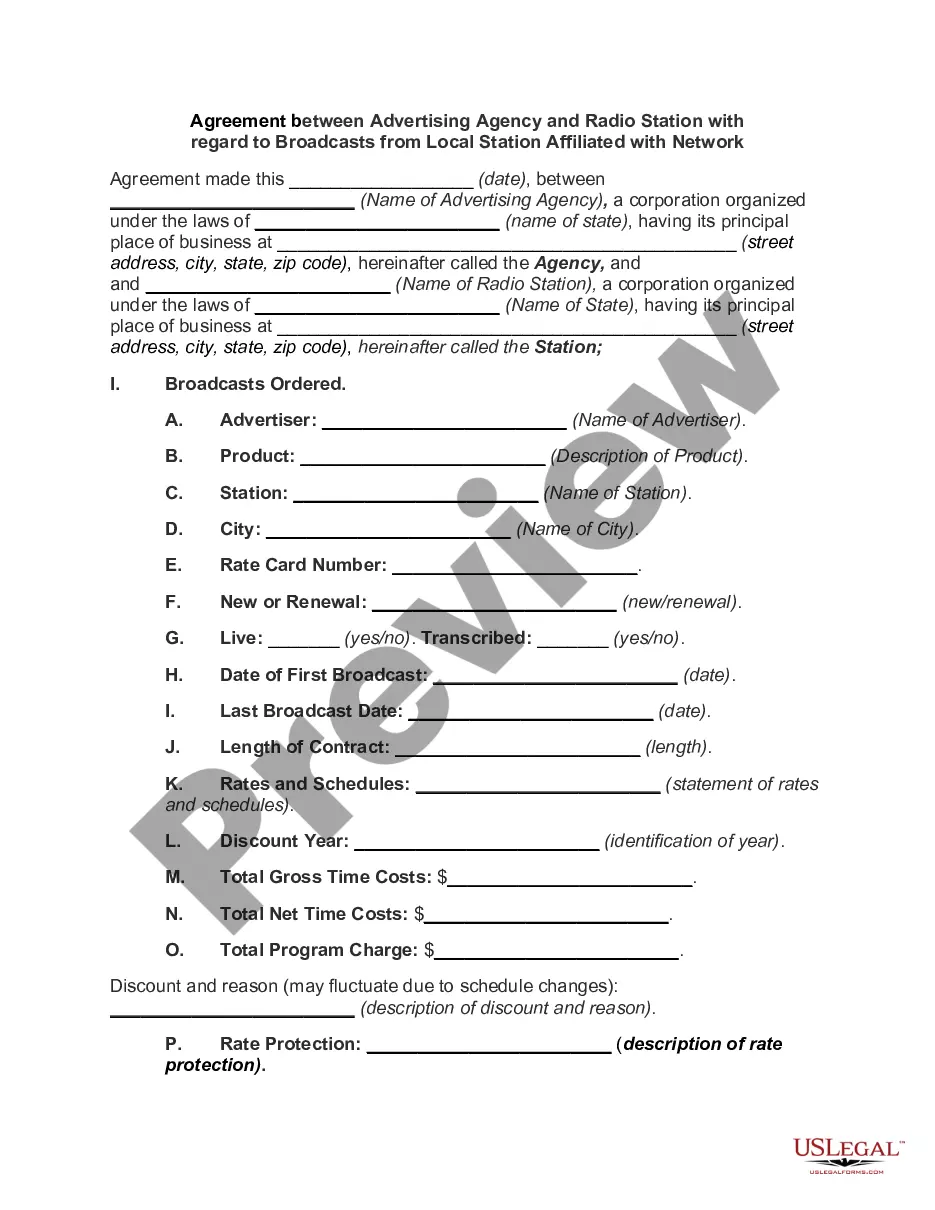
This form is a Contract Between a Radio Station and a Station Representative with the purpose of outlining the relationship and responsibilities of the independent contractor seeking to solicit advertising contracts for the station. This contract clarifies that the representative is not an employee, and thus, the station is not responsible for any expenses incurred by the representative during their efforts to solicit advertising contracts. It is specifically designed for radio stations that want to outline the terms of their advertising sales process clearly and legally.
Key parts of this document
- Appointment of Representative; defines the term and exclusivity of the representative's role.
- Duties of Representative; outlines the responsibilities expected of the representative, including solicitation efforts.
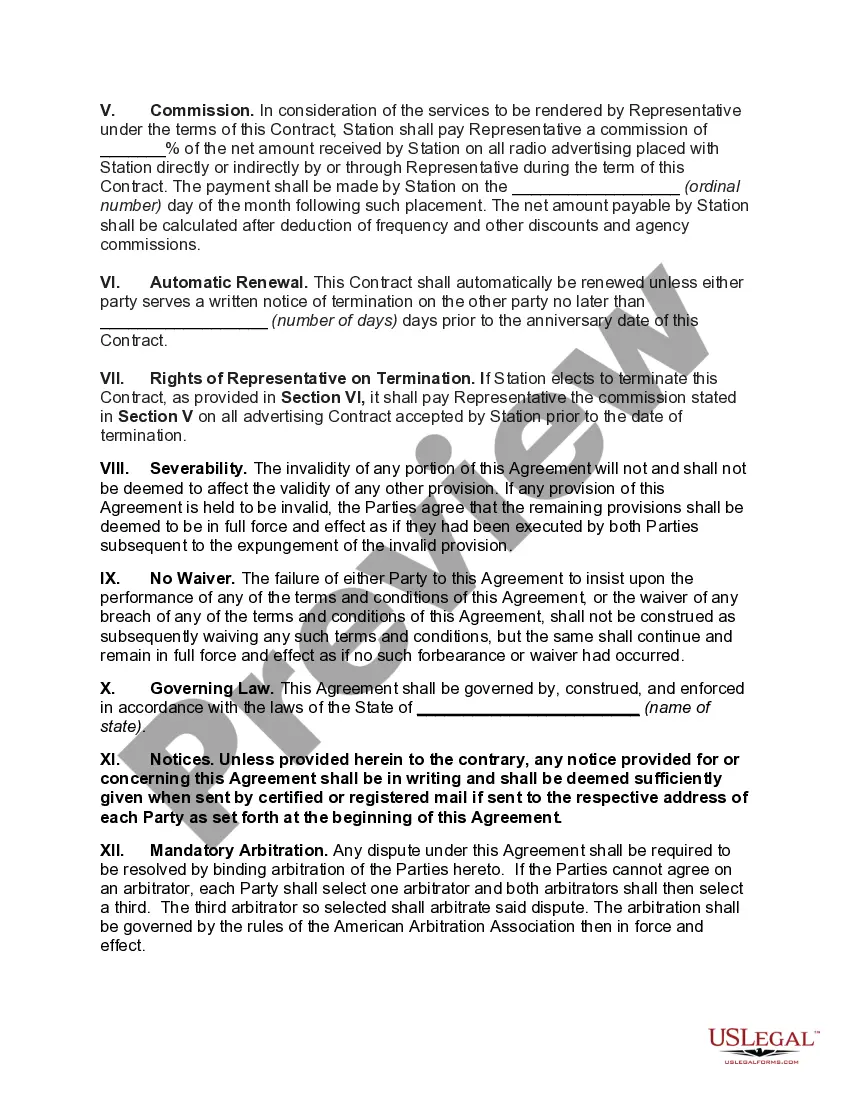
- Commission; specifies the commission rate on the net amount received from contracts secured by the representative.
- Independent Contractor Status; confirms that the representative is not an employee and the station bears no responsibility for their expenses.
- Termination and Renewal; details the conditions for automatic renewal and termination of the contract.
- Mandatory Arbitration; provides a process for resolving disputes arising from the contract.
When to use this document
This form should be used when a radio station wishes to engage an independent sales representative to solicit advertising contracts. It is ideal for situations where the station seeks to expand its advertising revenue through outside sales efforts while maintaining clear legal protections. Use this form to formalize expectations, responsibilities, and compensation structures between both parties involved in the advertising solicitation process.
Intended users of this form
This Contract is appropriate for:
- Radio stations looking to hire independent sales representatives.
- Independent sales representatives seeking to establish a formal agreement with a radio station.
- Business owners wanting to clarify the terms of advertising sales and commission structures.
How to prepare this document
- Identify the parties; enter the names and addresses of the radio station and the sales representative.
- Specify the term; indicate the number of years for which the representative is appointed.
- Detail the commission rate; insert the percentage that the representative will earn on secured contracts.
- Include dates; provide the date when the contract is signed and any relevant deadlines for termination notices.
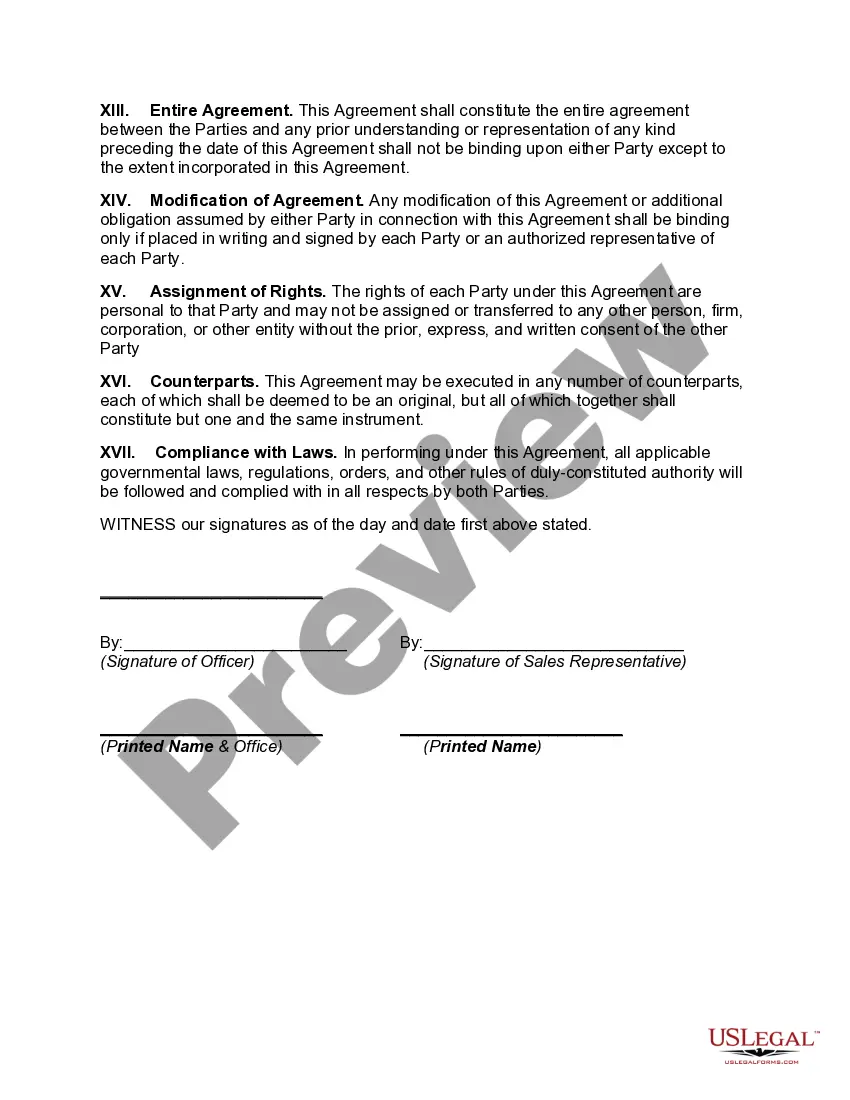
- Obtain signatures; both parties must sign and date the contract to make it legally binding.
Is notarization required?
This form does not typically require notarization unless specified by local law. It is advisable to check specific state requirements to ensure compliance with any additional regulations.
Get your form ready online
Our built-in tools help you complete, sign, share, and store your documents in one place.
Make edits, fill in missing information, and update formatting in US Legal Forms—just like you would in MS Word.
Download a copy, print it, send it by email, or mail it via USPS—whatever works best for your next step.
Sign and collect signatures with our SignNow integration. Send to multiple recipients, set reminders, and more. Go Premium to unlock E-Sign.
If this form requires notarization, complete it online through a secure video call—no need to meet a notary in person or wait for an appointment.
We protect your documents and personal data by following strict security and privacy standards.

Make edits, fill in missing information, and update formatting in US Legal Forms—just like you would in MS Word.

Download a copy, print it, send it by email, or mail it via USPS—whatever works best for your next step.

Sign and collect signatures with our SignNow integration. Send to multiple recipients, set reminders, and more. Go Premium to unlock E-Sign.

If this form requires notarization, complete it online through a secure video call—no need to meet a notary in person or wait for an appointment.

We protect your documents and personal data by following strict security and privacy standards.
Mistakes to watch out for
- Failing to specify the commission percentage clearly.
- Not outlining the representative's duties sufficiently.
- Missing signatures or dates, which can lead to disputes about the contract's validity.
- Neglecting to include provisions for termination or renewal.
Benefits of completing this form online
- Convenient access; download and complete the form at any time.
- Editability; easily modify the template to fit specific needs.
- Reliability; receive a contract drafted with the assistance of licensed attorneys.
Main things to remember
- This contract clarifies the independent contractor relationship between a radio station and a sales representative.
- Clear commission structures and responsibilities are essential to prevent misunderstandings.
- The form is adaptable for use in various states, adhering to localized regulations as necessary.
- Online access allows for increased flexibility and ease of use when completing this important legal document.
Looking for another form?
Form popularity
FAQ
Choose a Location. One of the papers you have to file with the FCC is a construction permit for your new station. Find a Frequency. Once you select a tentative site for your station, enter the longitude and latitude into the FCC's FM allotment finder. Filing the Paperwork. The Auction Process. Build, Equip and Broadcast.
What are three options for advertising on radio? Local radio stations, worldwide radio stations, and internet radio stations.
An organisation must have a minimum capital amount of Rs 5,00,000/- to set up a Community Radio Station.
Radio advertising is buying commercials to promote products or services. Advertisers pay commercial radio stations for airtime and, in exchange, the radio station broadcasts the advertiser's commercial to its listening audience.
Radio advertising costs range from $200 to $5,000 per week, on average, depending on location and the size of the listening audience. The cost of producing the commercial is $1,000 to $2,500 depending on what is included, like music, voice actors, and editing.
Broadcasting obscene content is prohibited by law at all times of the day. Indecent and profane content are prohibited on broadcast TV and radio between 6 a.m. and 10 p.m., when there is a reasonable risk that children may be in the audience.
Apply for a frequency. It may take a long time before you're assigned a frequency source FCC. Apply for a license. It's illegal to operate an unlicensed radio station, even at extremely low power source: FCC. Establish a source of funding. Remember, you'll need to pay for studio space and power, among other things.
The Licensing of TV and Radio Stations. Commercial and Noncommercial Educational Stations. The FCC licenses FM radio and full power TV stations as either commercial or noncommercial educational (NCE). (Most AM radio stations are licensed as commercial facilities.)
Terrestrial radio stations do not charge their listeners for the product they create and distribute. Instead, they make a profit from the ads they sell, the special events they hold, the syndication of their most popular shows and in some cases the special services they can provide to other radio stations.