Acceptance Letter For Agreement In Pennsylvania
Description
Get your form ready online
Our built-in tools help you complete, sign, share, and store your documents in one place.
Make edits, fill in missing information, and update formatting in US Legal Forms—just like you would in MS Word.
Download a copy, print it, send it by email, or mail it via USPS—whatever works best for your next step.
Sign and collect signatures with our SignNow integration. Send to multiple recipients, set reminders, and more. Go Premium to unlock E-Sign.
If this form requires notarization, complete it online through a secure video call—no need to meet a notary in person or wait for an appointment.
We protect your documents and personal data by following strict security and privacy standards.

Make edits, fill in missing information, and update formatting in US Legal Forms—just like you would in MS Word.

Download a copy, print it, send it by email, or mail it via USPS—whatever works best for your next step.

Sign and collect signatures with our SignNow integration. Send to multiple recipients, set reminders, and more. Go Premium to unlock E-Sign.

If this form requires notarization, complete it online through a secure video call—no need to meet a notary in person or wait for an appointment.

We protect your documents and personal data by following strict security and privacy standards.
Looking for another form?



Form popularity
FAQ
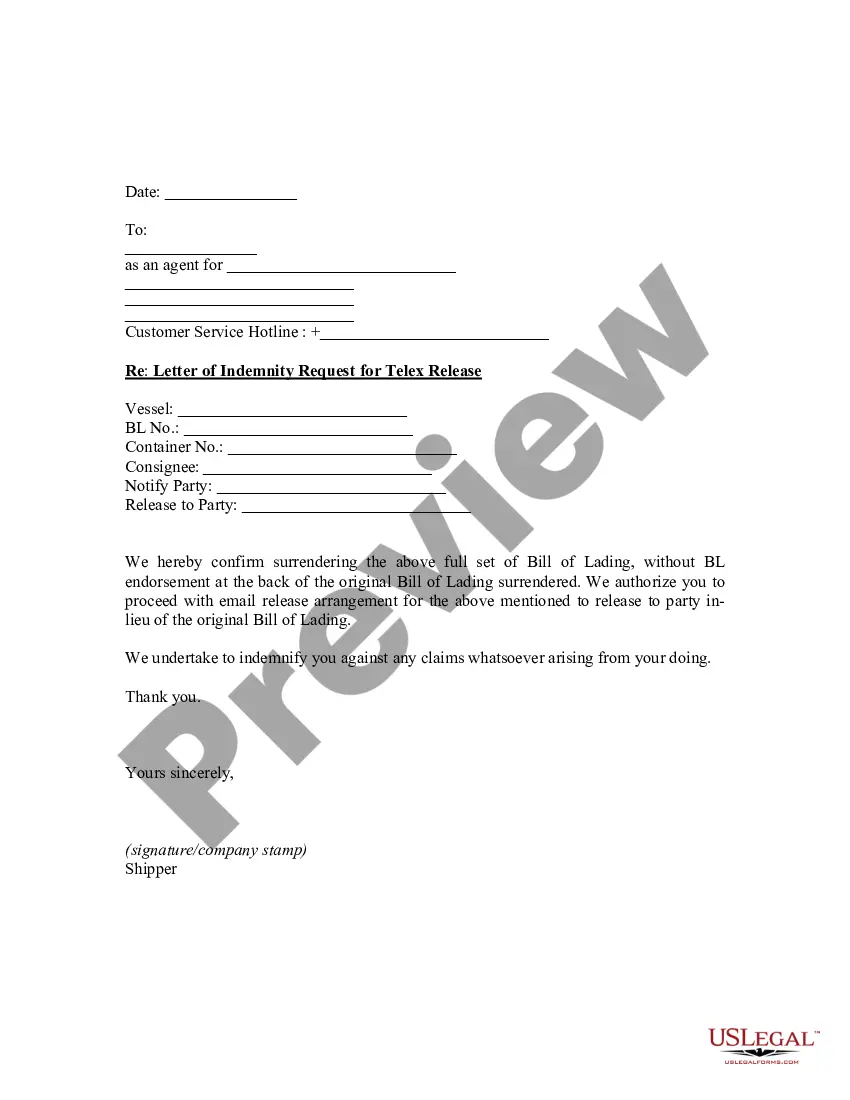
A letter of acceptance (LOA) is a legal document that allows a party to accept the terms and conditions of another party's offer. It becomes the basis of a legally binding contract. Letters of acceptance are used in many different circumstances.
Unless you're signing a contract of employment or are being given some kind of sign on bonus that needs to be repaid, there is nothing to stop you from accepting a job offer and then backing out.
A Letter of Acceptance (LOA) is a formal document that indicates the agreement between parties on the terms and conditions of a contract. Its issuance is a significant step in contract management as it symbolizes a binding contract and confirms both parties' commitment to abide by the agreed contract terms.
How to write a proposal acceptance letter Format your letter. Your letter appears most professional if sent on your organization's letterhead. Specify sender, recipient and date. The top of your letter should detail your contact information. Accept the proposal. Clarify next steps. Offer thanks. Sign and send.
Yes, it is generally acceptable to decline a job offer after initially accepting it, but it should be done thoughtfully and professionally. Here's a brief template for an email if you decide to decline: This approach helps you to leave the door open for future opportunities while maintaining professionalism.
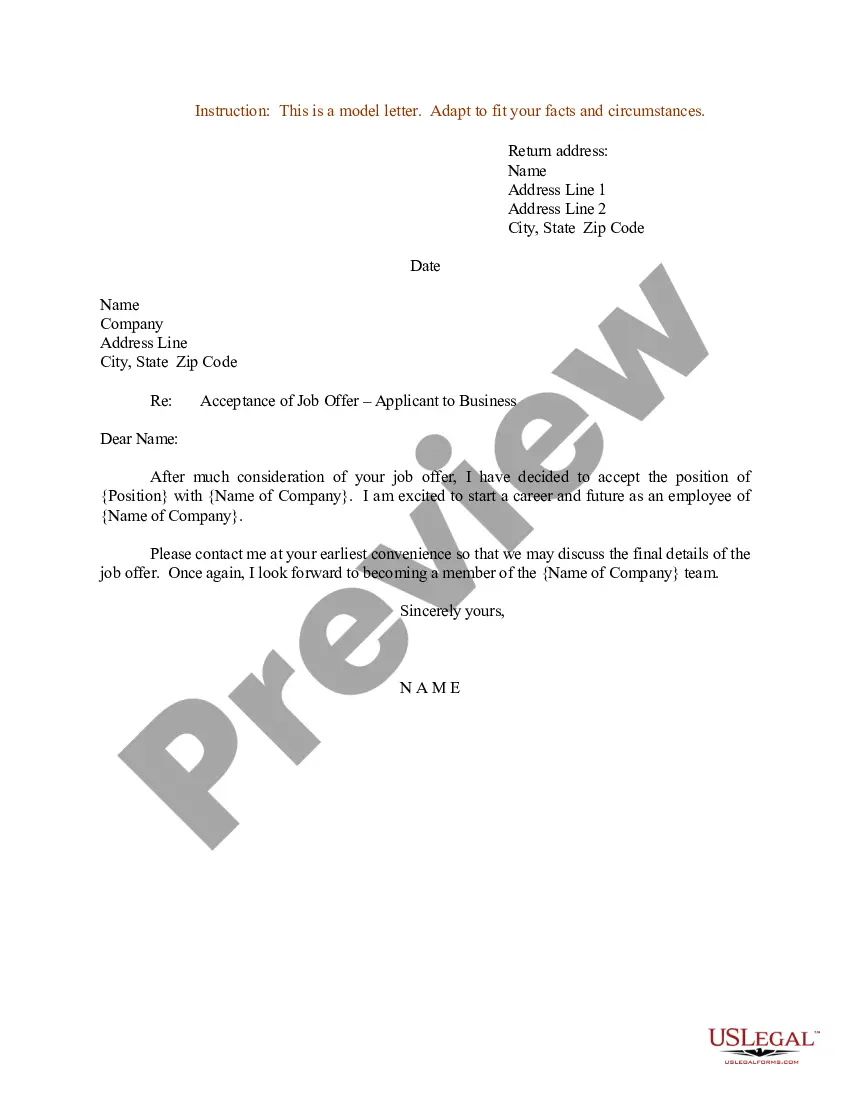
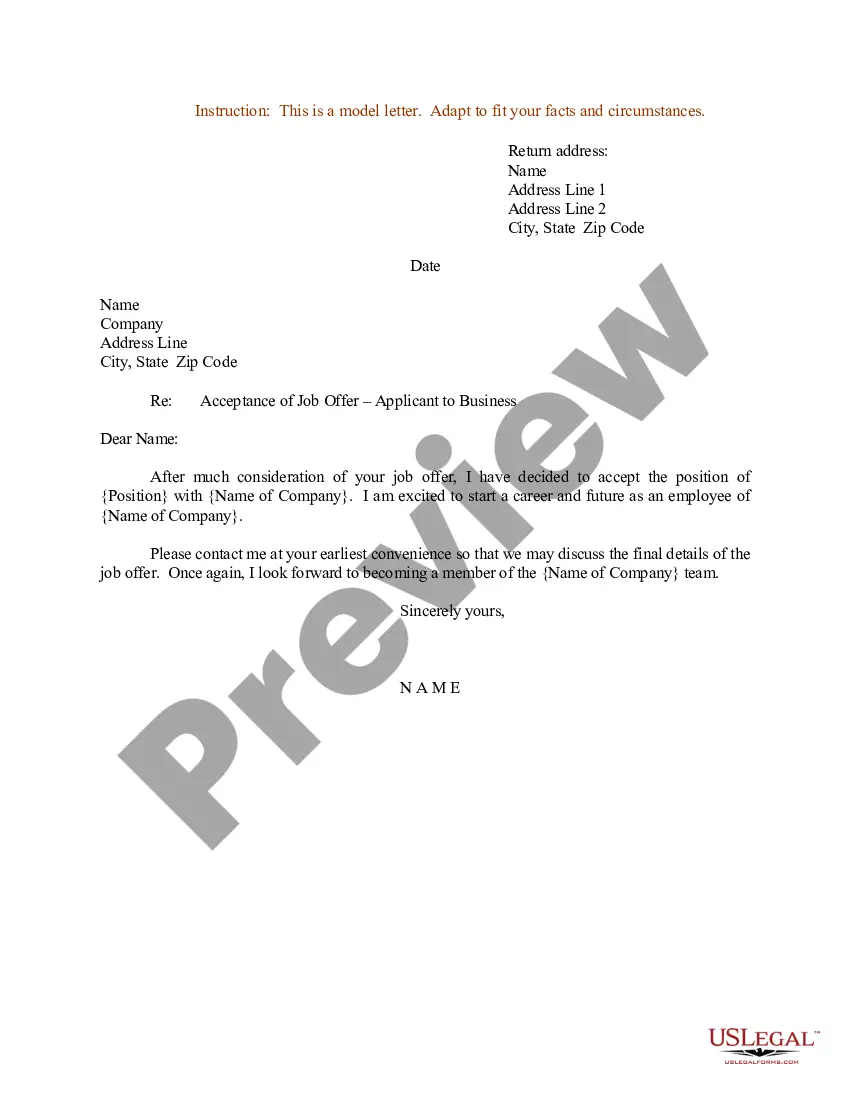
How to write a letter of acceptance Address the letter to the recruiter. Express your gratitude for the offer. Confirm the terms of employment. Format your letter appropriately. Proofread your letter. Send your letter and follow up with the recruiter.
Acceptance Letter Format I am writing to confirm my acceptance of your employment offer from April 1. I am delighted to be joining International Engineering Corporation as a Project Manager. The work is exactly what I have prepared for and hoped to do.
What To Include In An Offer Letter Acceptance Email Your enthusiasm to join the company. The full job title of the position. Thanks to the employer for giving you an opportunity to serve the company. A formal statement that you accept the offer. A confirmation that you will be reporting to work on the stated joining date.
Acceptance Letter Format I am delighted to be joining International Engineering Corporation as a Project Manager. The work is exactly what I have prepared for and hoped to do. I feel confident that I can make a significant contribution to the organization, and am grateful for the opportunity you have given me.
How To Write An Offer Letter Acceptance Email Review your job offer. Read your job offer carefully. Start drafting your email. Write a concise subject line. Address your email to the right person. Express gratitude. Make a formal statement of acceptance. Conclude and sign. Format your email.

