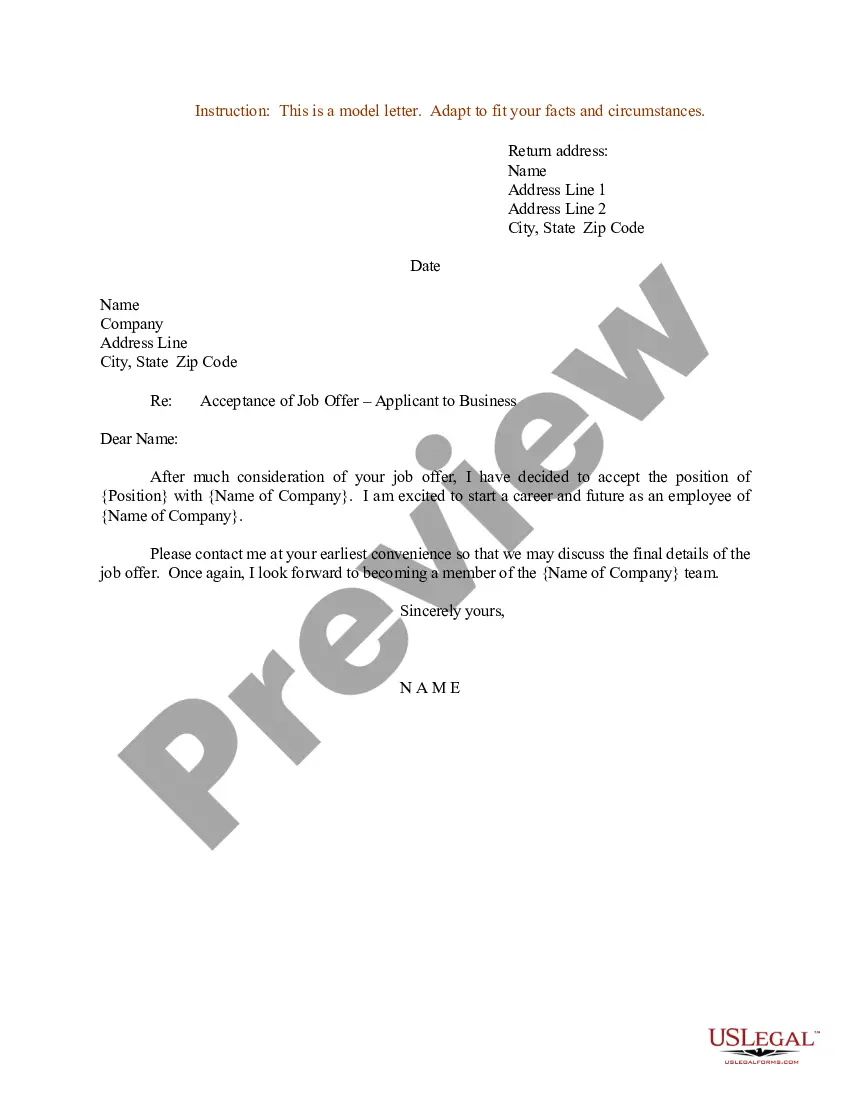
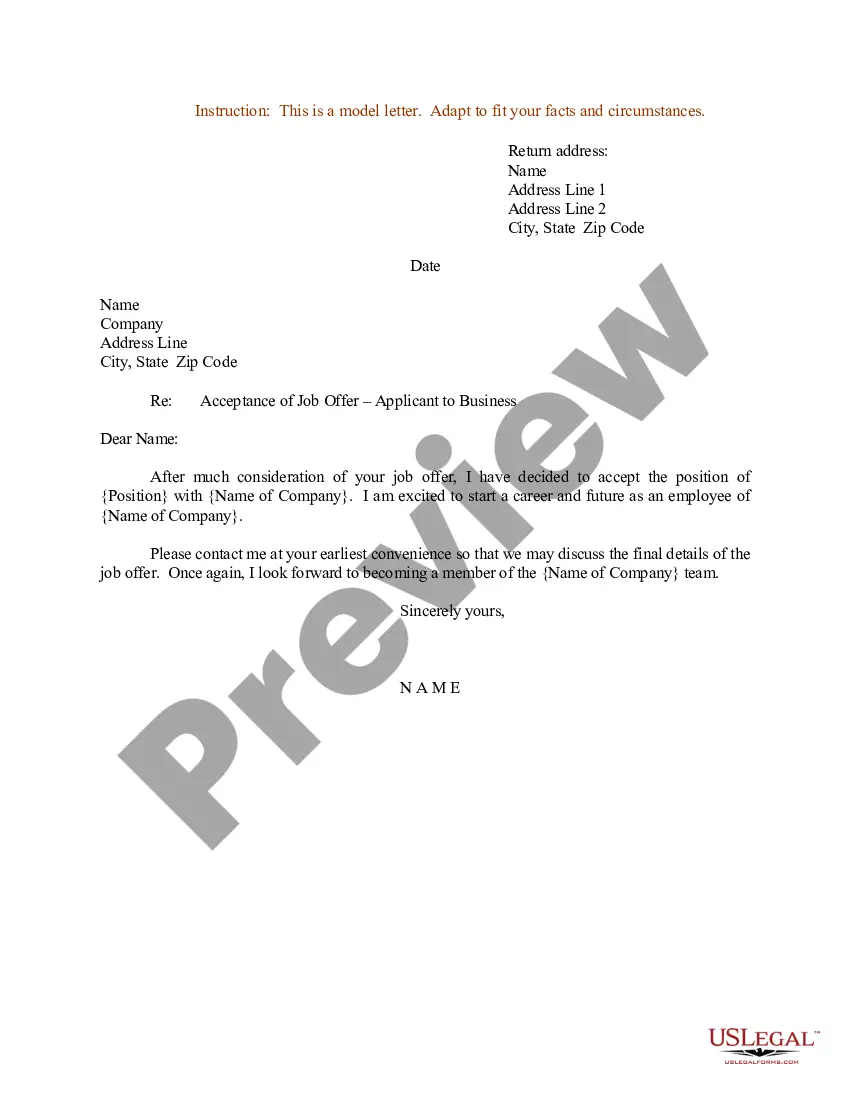
Letter To Accept School Offer In Florida
Description
Get your form ready online
Our built-in tools help you complete, sign, share, and store your documents in one place.
Make edits, fill in missing information, and update formatting in US Legal Forms—just like you would in MS Word.
Download a copy, print it, send it by email, or mail it via USPS—whatever works best for your next step.
Sign and collect signatures with our SignNow integration. Send to multiple recipients, set reminders, and more. Go Premium to unlock E-Sign.
If this form requires notarization, complete it online through a secure video call—no need to meet a notary in person or wait for an appointment.
We protect your documents and personal data by following strict security and privacy standards.

Make edits, fill in missing information, and update formatting in US Legal Forms—just like you would in MS Word.

Download a copy, print it, send it by email, or mail it via USPS—whatever works best for your next step.

Sign and collect signatures with our SignNow integration. Send to multiple recipients, set reminders, and more. Go Premium to unlock E-Sign.

If this form requires notarization, complete it online through a secure video call—no need to meet a notary in person or wait for an appointment.

We protect your documents and personal data by following strict security and privacy standards.
Looking for another form?









Form popularity
FAQ
A college acceptance letter generally contains several key elements: Congratulatory Messages: Acknowledgement of the student's hard work and success. Admission Offer Details: Information about the program or major to which the student has been admitted.
How to write an admissions acceptance letter Prepare the header. Begin the letter with an official header that includes the student's full name and address. Confirm the candidate's admission. Share congratulations. Explain how to accept. Include optional details. Encourage them to accept.
If you received your college acceptance letter via email, you can respond directly to that email. If the letter was sent through direct mail, consider replying with a physical letter. The college admissions board often specifies their preferred method of communication in the acceptance letter.
Thank the admissions office for their time and consideration during the application process. Conclude the letter politely, such as ``Sincerely'' or ``Best regards,'' followed by your name. It's important to respond promptly, as colleges often have deadlines for students to accept or decline their offers.
Tips for responding to a college acceptance letter If you received your college acceptance letter via email, you can respond directly to that email. If the letter was sent through direct mail, consider replying with a physical letter.
Most colleges give you until May 1 to make your acceptance decision if you applied under regular decision or early action, although it is extremely important to double-check with your college to make sure it doesn't have a different date.
School choice is a term that refers to programs offering alternatives to assigned local public school options. Public school choice options include open enrollment policies, magnet schools, and charter schools. Other options include school vouchers, scholarship tax credits, and education savings accounts (ESAs).
If you ignore a college acceptance letter, admissions will consider that the same as a rejection. However, it's more respectful to decline. This generally only requires a few minutes to log in to the school's online system and reject the admission offer.
Ron DeSantis expanded Florida's school voucher program and removed the previous requirements. Now all K-12 students are eligible to apply to the program. DeSantis has stated that priority should be given to students whose "household income does not exceed 185% of the federal poverty level" and anyone in foster care.
Florida law defines "habitual truant" as a student who has 15 or more unexcused absences within 90 calendar days with or without the knowledge or consent of the student's parent or guardian, and who is subject to compulsory school attendance.
