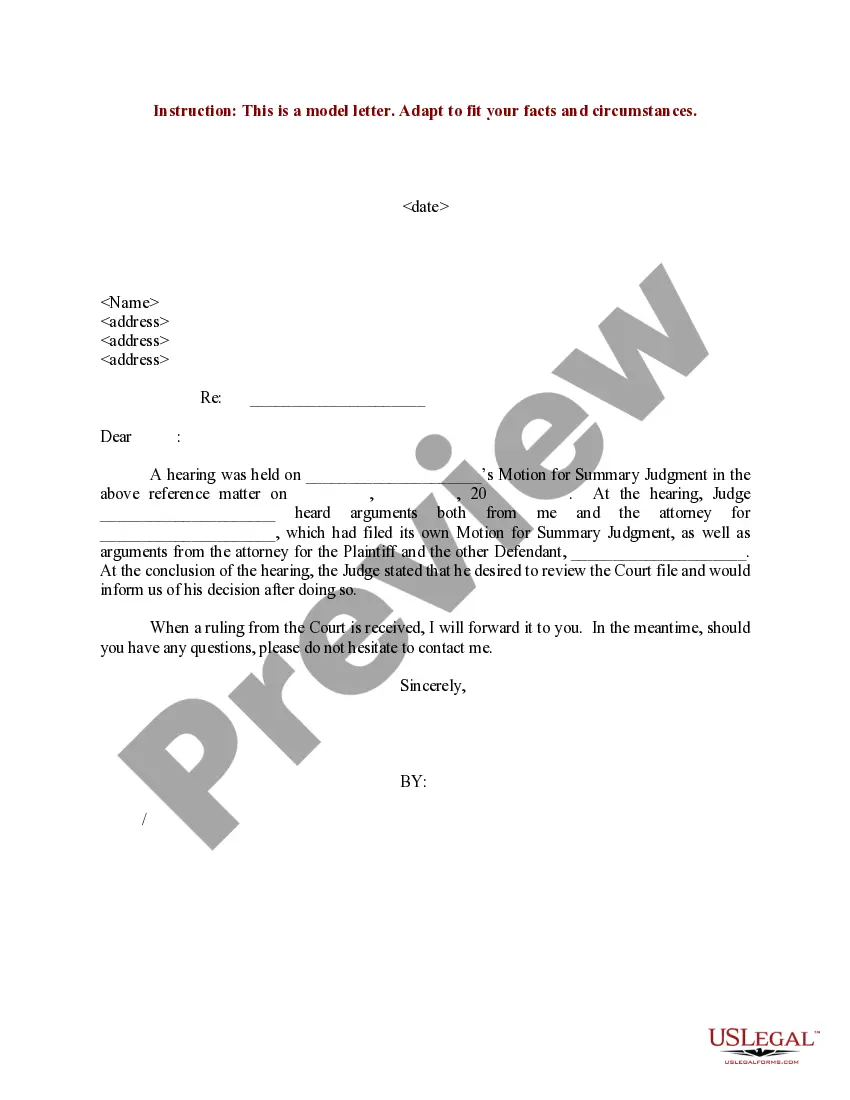
Motion Hearing In Court In Santa Clara
Description
Get your form ready online
Our built-in tools help you complete, sign, share, and store your documents in one place.
Make edits, fill in missing information, and update formatting in US Legal Forms—just like you would in MS Word.
Download a copy, print it, send it by email, or mail it via USPS—whatever works best for your next step.
Sign and collect signatures with our SignNow integration. Send to multiple recipients, set reminders, and more. Go Premium to unlock E-Sign.
If this form requires notarization, complete it online through a secure video call—no need to meet a notary in person or wait for an appointment.
We protect your documents and personal data by following strict security and privacy standards.

Make edits, fill in missing information, and update formatting in US Legal Forms—just like you would in MS Word.

Download a copy, print it, send it by email, or mail it via USPS—whatever works best for your next step.

Sign and collect signatures with our SignNow integration. Send to multiple recipients, set reminders, and more. Go Premium to unlock E-Sign.

If this form requires notarization, complete it online through a secure video call—no need to meet a notary in person or wait for an appointment.

We protect your documents and personal data by following strict security and privacy standards.
Looking for another form?

Form popularity
FAQ
A motion is heard on a 24 day cycle, meaning that when you file a motion, you can expect that your case will be scheduled before a judge within approximately 24 days. There is often times a motion can be delayed when an adjournment is requested or when the court's calendar requires.
Motion Hearings: These hearings occur when one party in the case wants the judge to make a decision on a specific aspect of the case before the trial. They can vary in length, often taking anywhere from a few minutes to several hours, depending on the complexity of the motion being discussed.
Minimum advance notice: 16+5: sixteen court (business) days before hearing plus five calendar days for mail service on other party. Opposition: papers filed by the opposing party to object to a motion. Deadline to file: nine court (business) days before hearing.
The court will schedule your hearing. During this hearing, the judge makes sure both your Los Angeles criminal defense lawyer and the prosecution are ready to proceed. The judge also hears any legal arguments related to the motion your lawyer has to make.
A motion is an application to the court made by the prosecutor or defense attorney, requesting that the court make a decision on a certain issue before the trial begins. The motion can affect the trial, courtroom, defendants, evidence, or testimony.
When you file your motion, the court clerk will insert the date, time, and place of the hearing on your motion. You must then “serve” (mail) a copy of your filed motion (including all exhibits and the date, time, and place of hearing) to all other parties in the case.
The court will schedule your hearing. During this hearing, the judge makes sure both your Los Angeles criminal defense lawyer and the prosecution are ready to proceed. The judge also hears any legal arguments related to the motion your lawyer has to make.
If you want to file a motion, the process is generally something like this: You write your motion. You file your motion with the court clerk. The court clerk inserts the date and time your motion will be heard by the judge. You “serve” (mail) your motion to the other side.
You will have to formally prepare the Motion or oppose a Motion on pleading paper in ance with the law and California Rules of Court. There are no fillable forms. Motions are complicated. You may wish to seek the advice of a lawyer to be sure the documents are properly prepared.