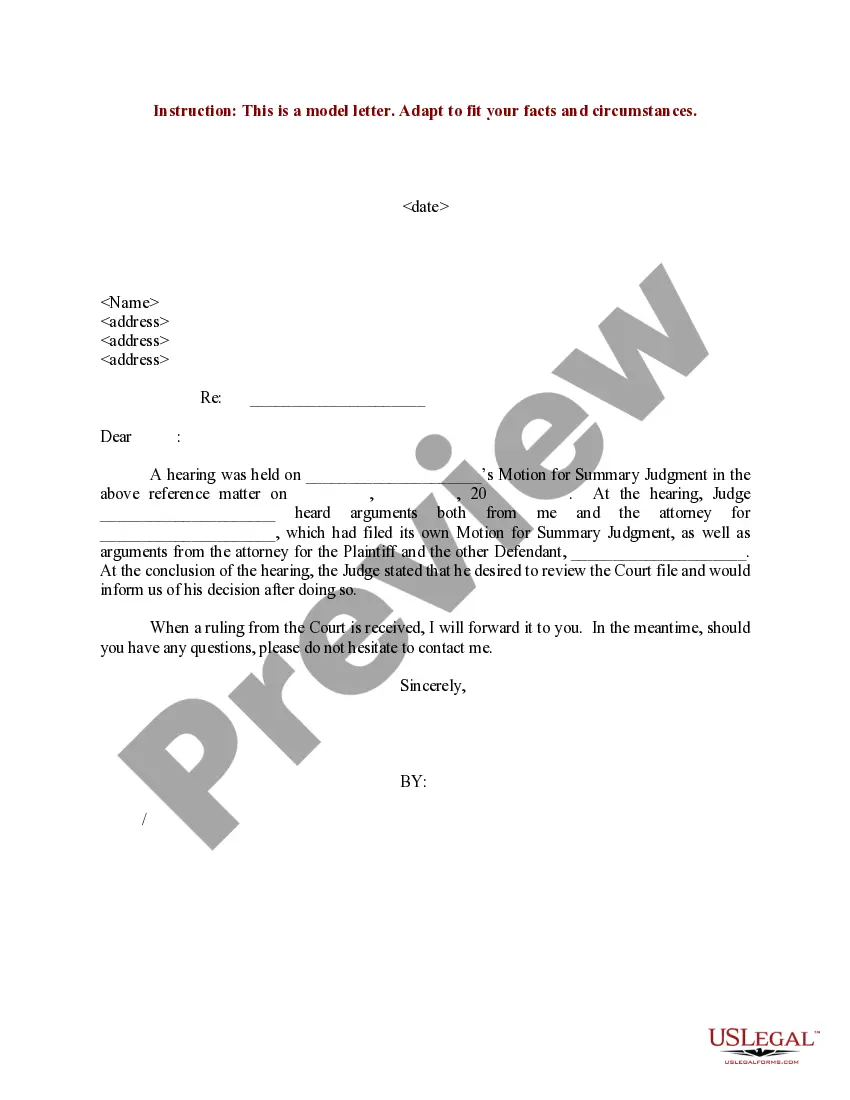
Letter Concerning Hearing Without Consent In Cuyahoga
Description
Get your form ready online
Our built-in tools help you complete, sign, share, and store your documents in one place.
Make edits, fill in missing information, and update formatting in US Legal Forms—just like you would in MS Word.
Download a copy, print it, send it by email, or mail it via USPS—whatever works best for your next step.
Sign and collect signatures with our SignNow integration. Send to multiple recipients, set reminders, and more. Go Premium to unlock E-Sign.
If this form requires notarization, complete it online through a secure video call—no need to meet a notary in person or wait for an appointment.
We protect your documents and personal data by following strict security and privacy standards.

Make edits, fill in missing information, and update formatting in US Legal Forms—just like you would in MS Word.

Download a copy, print it, send it by email, or mail it via USPS—whatever works best for your next step.

Sign and collect signatures with our SignNow integration. Send to multiple recipients, set reminders, and more. Go Premium to unlock E-Sign.

If this form requires notarization, complete it online through a secure video call—no need to meet a notary in person or wait for an appointment.

We protect your documents and personal data by following strict security and privacy standards.
Looking for another form?



Form popularity
FAQ
A motion to show cause is used to bring one party's failure to comply with a Court order to the Court's attention. The motion to show cause must be completely filled out and must be supported by an Affidavit.
11.0 HEARING AND SUBMISSION OF MOTIONS If the motion requires consideration of facts not appearing of record, the movant shall serve and file copies of all affidavits, depositions, photographs or documentary evidence which the movant desires to submit in support of the motion.
Appellate courts often issue orders to show cause to lower courts requesting that the lower court explain why the appellant should not be granted the relief requested by the writ or appeal. An order to show cause is always an interim order (because it is never the first nor the final action in a legal action).
For example, if your ex-wife believes that you are smoking weed or drinking alcohol in front of your child in violation of the Order that states no drugs or alcohol are to be in the presence of the minor child, her attorney may file an Order to Show Cause.
After both parties have argued their case and presented evidence, the judge will render a decision. The judge can order a non-compliant party to take steps to remedy the situation, and impose legal penalties upon the non-compliant party.
The arraignment judge checks that the defendant knows the charges they face. The court assigns the defendant an attorney if they don't have one. Defendants enter a plea to the charges.
An order to show cause (O.S.C.), is a court order or the demand of a judge requiring a party to justify or explain why the court should or should not grant a motion or a relief. For example, if a party requests a restraining order from a judge, the judge may need more information.
Not Guilty Plea This is the most common initial plea, and your criminal defense attorney will likely enter a not-guilty plea at your arraignment to begin the process.