Meeting Minutes For Corporation In Pima
Description
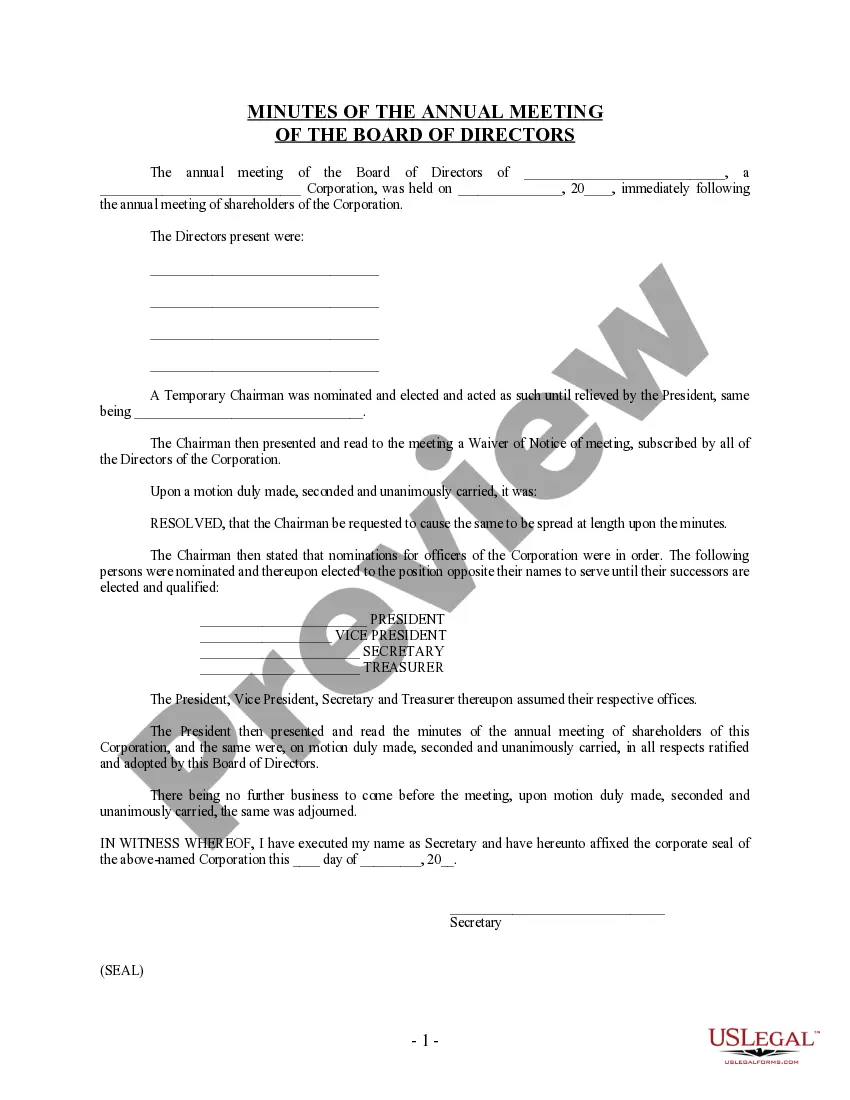
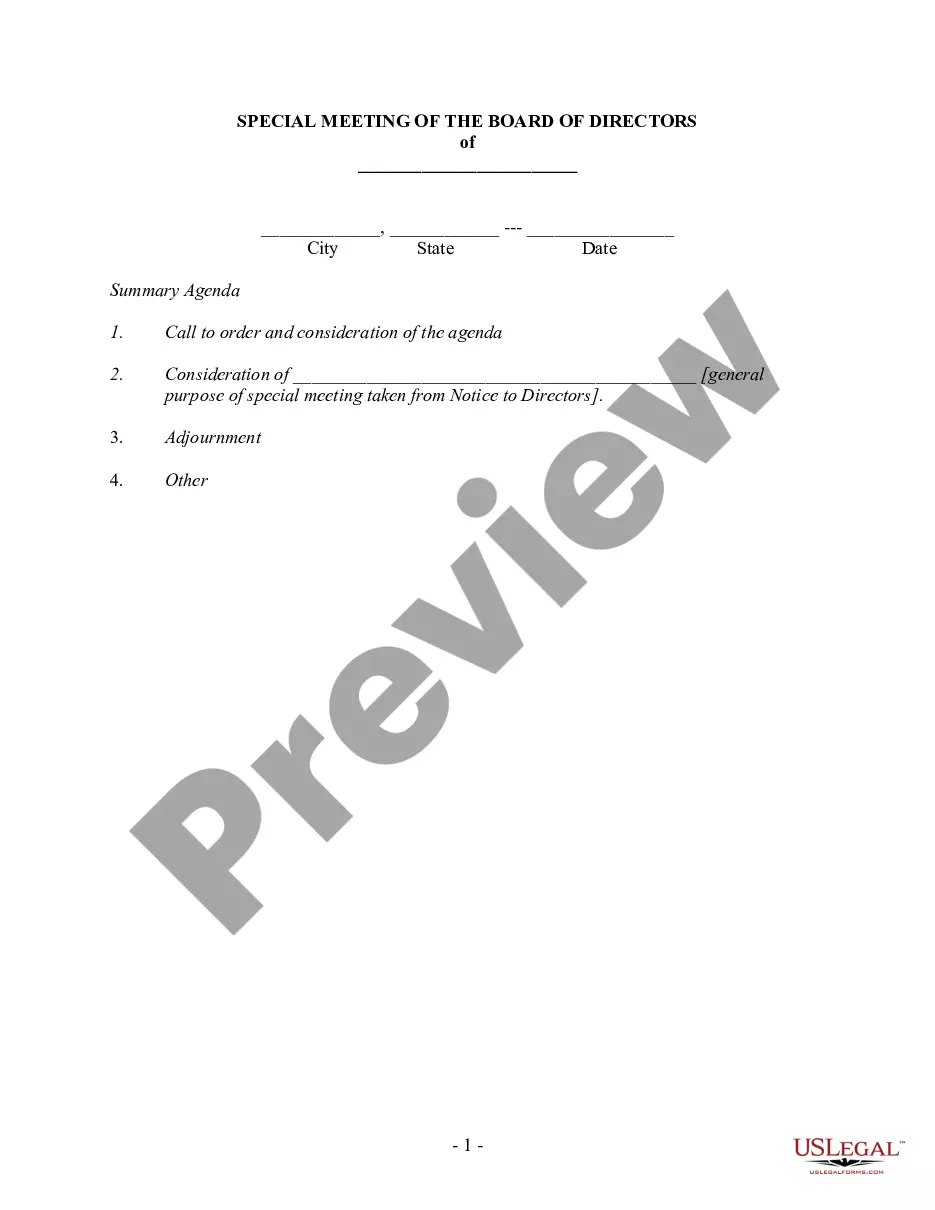
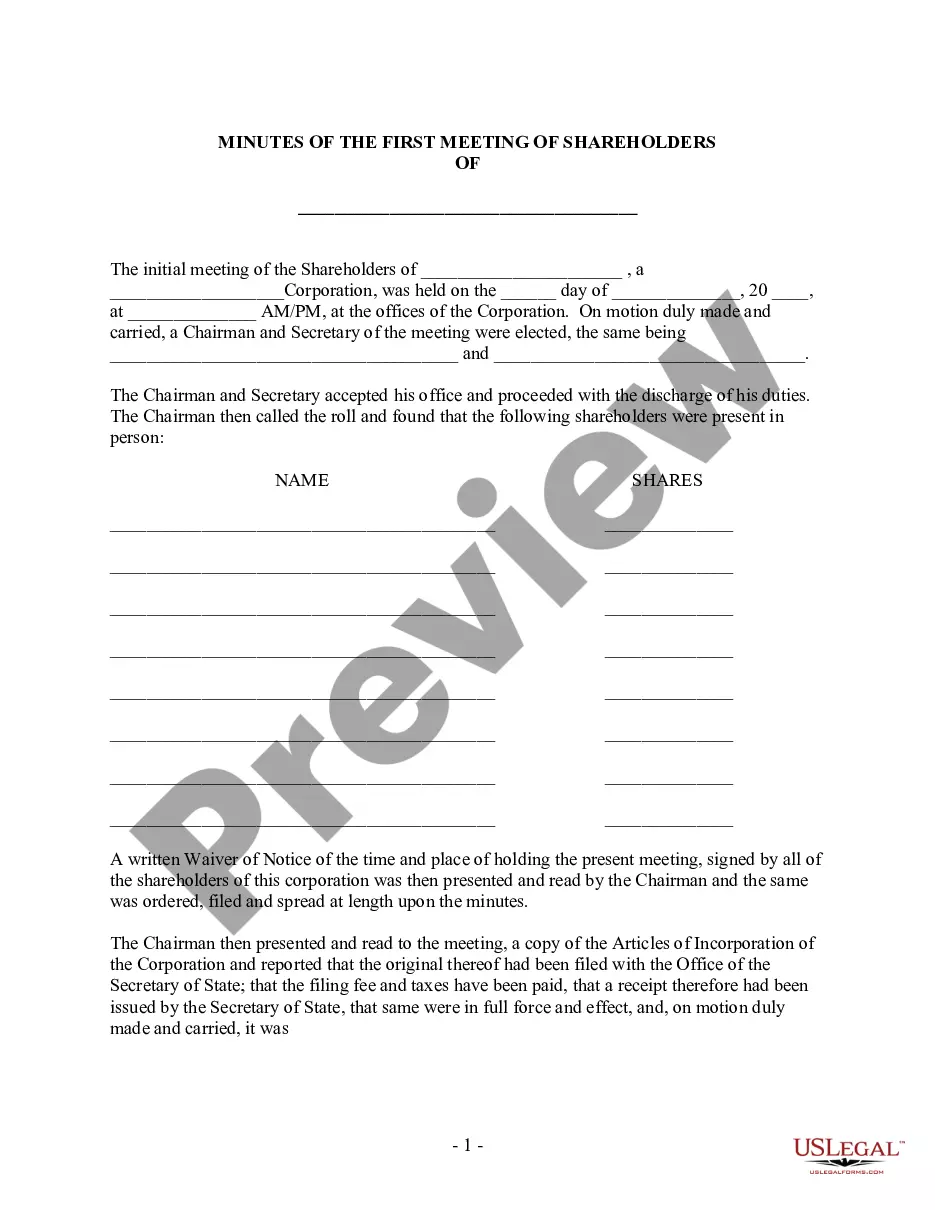
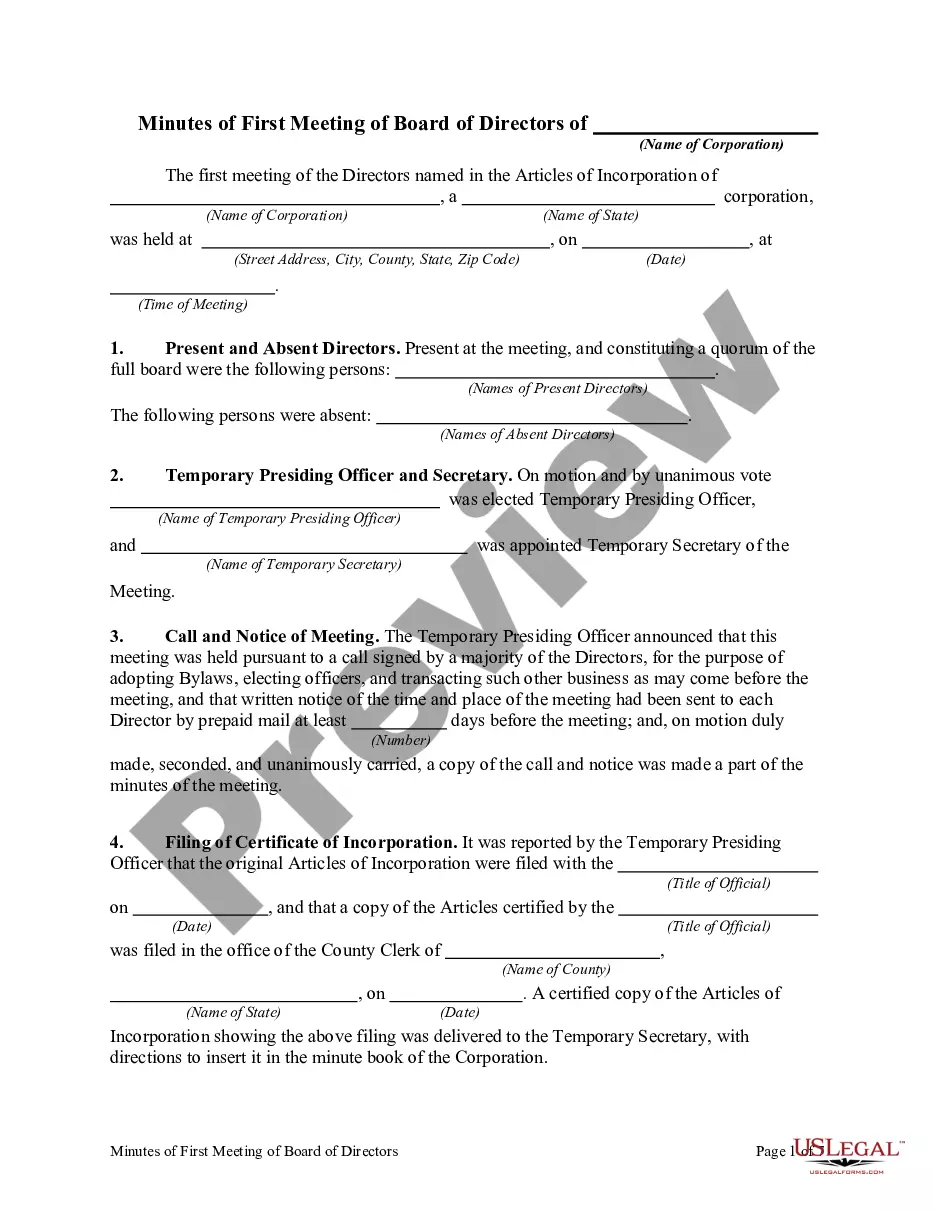
Get your form ready online
Our built-in tools help you complete, sign, share, and store your documents in one place.
Make edits, fill in missing information, and update formatting in US Legal Forms—just like you would in MS Word.
Download a copy, print it, send it by email, or mail it via USPS—whatever works best for your next step.
Sign and collect signatures with our SignNow integration. Send to multiple recipients, set reminders, and more. Go Premium to unlock E-Sign.
If this form requires notarization, complete it online through a secure video call—no need to meet a notary in person or wait for an appointment.
We protect your documents and personal data by following strict security and privacy standards.

Make edits, fill in missing information, and update formatting in US Legal Forms—just like you would in MS Word.

Download a copy, print it, send it by email, or mail it via USPS—whatever works best for your next step.

Sign and collect signatures with our SignNow integration. Send to multiple recipients, set reminders, and more. Go Premium to unlock E-Sign.

If this form requires notarization, complete it online through a secure video call—no need to meet a notary in person or wait for an appointment.

We protect your documents and personal data by following strict security and privacy standards.
Looking for another form?

Form popularity
FAQ
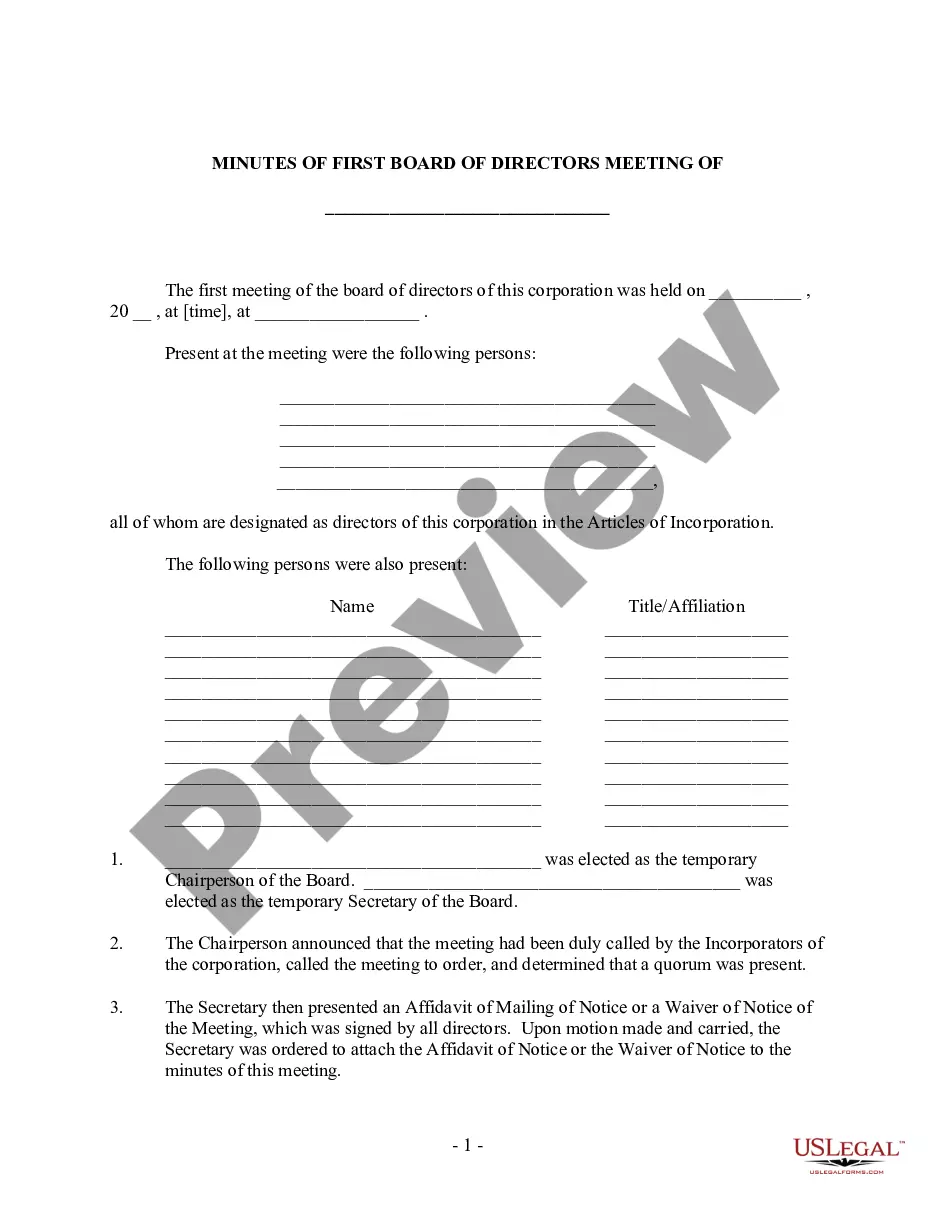
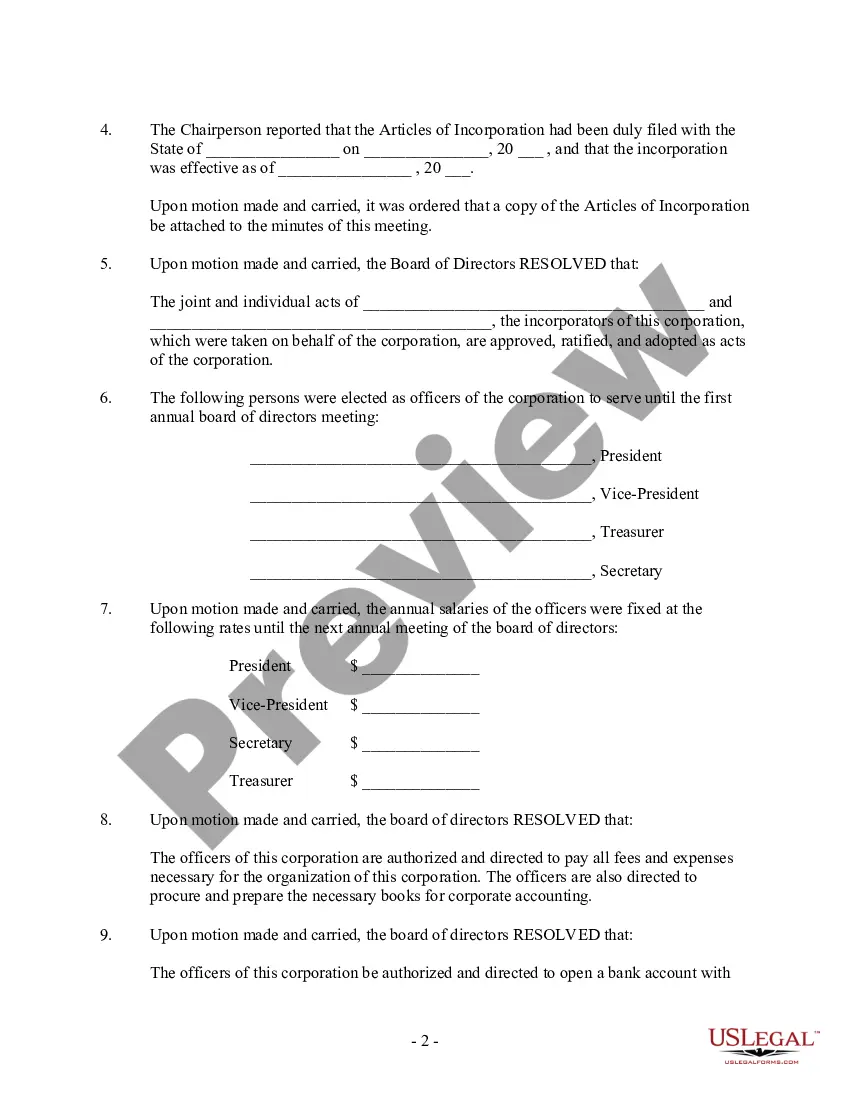
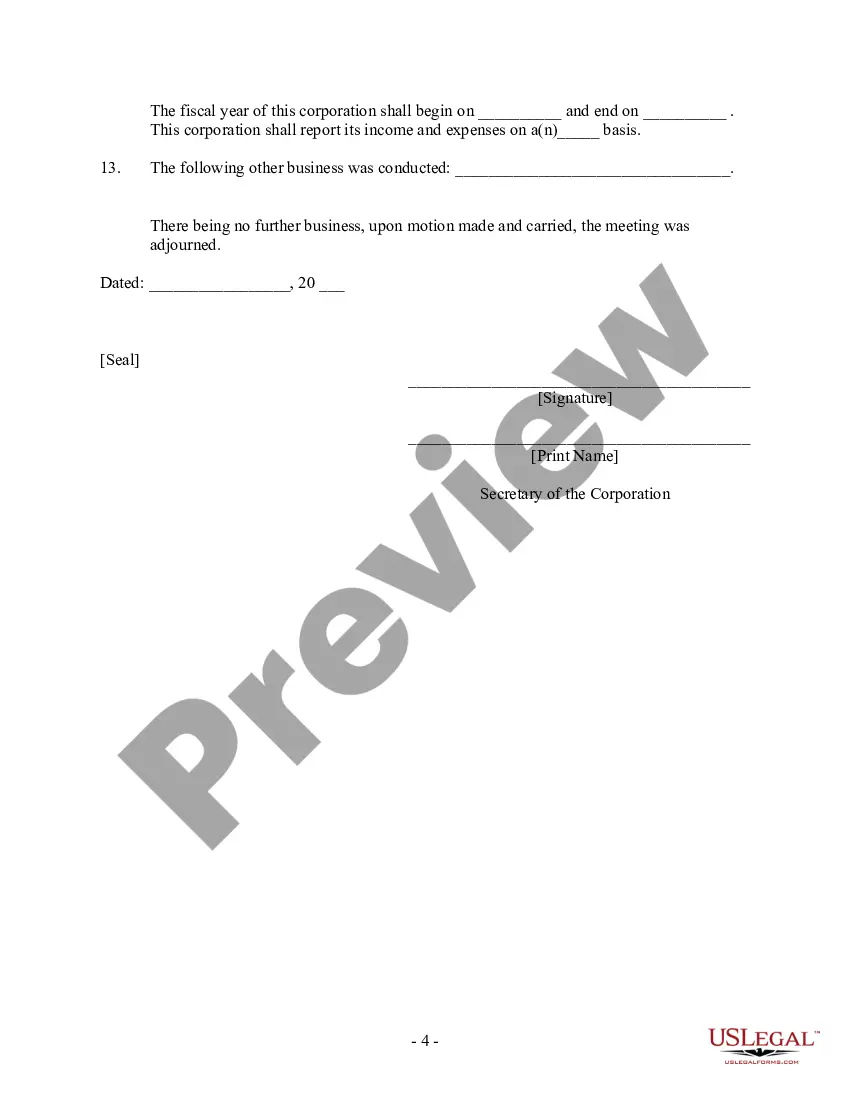
What to include in meeting minutes Why the meeting happened. First and last names of attendees. The date and time of the meeting. Projects assigned during the meeting and their deadlines. Decisions employees and leadership made during the meeting. Any corrections to previous meeting minutes. Motions that passed or failed.
Approve the minutes: Once corrections are complete, the chair asks for a motion to approve the minutes. One member makes the motion, a second member approves it, and the chair calls for a vote. The approval of meeting minutes goes through with a majority vote.
They are legally required to include these details: Date, time, and location of the meeting. Record of notice of board meeting provision and acknowledgment. Names of attendees and absentees, including guests. Approval of previous meeting minutes.
To take notes for board meeting minutes, focus on summarizing the most important points. Begin by noting the meeting start time and attendees. As the meeting progresses, document key discussions, decisions, and action items. Avoid writing verbatim; instead, summarize reports and motions.
Meeting minutes describe actions taken during a meeting, while a resolution describes actions that a corporation's board of directors have authorized.
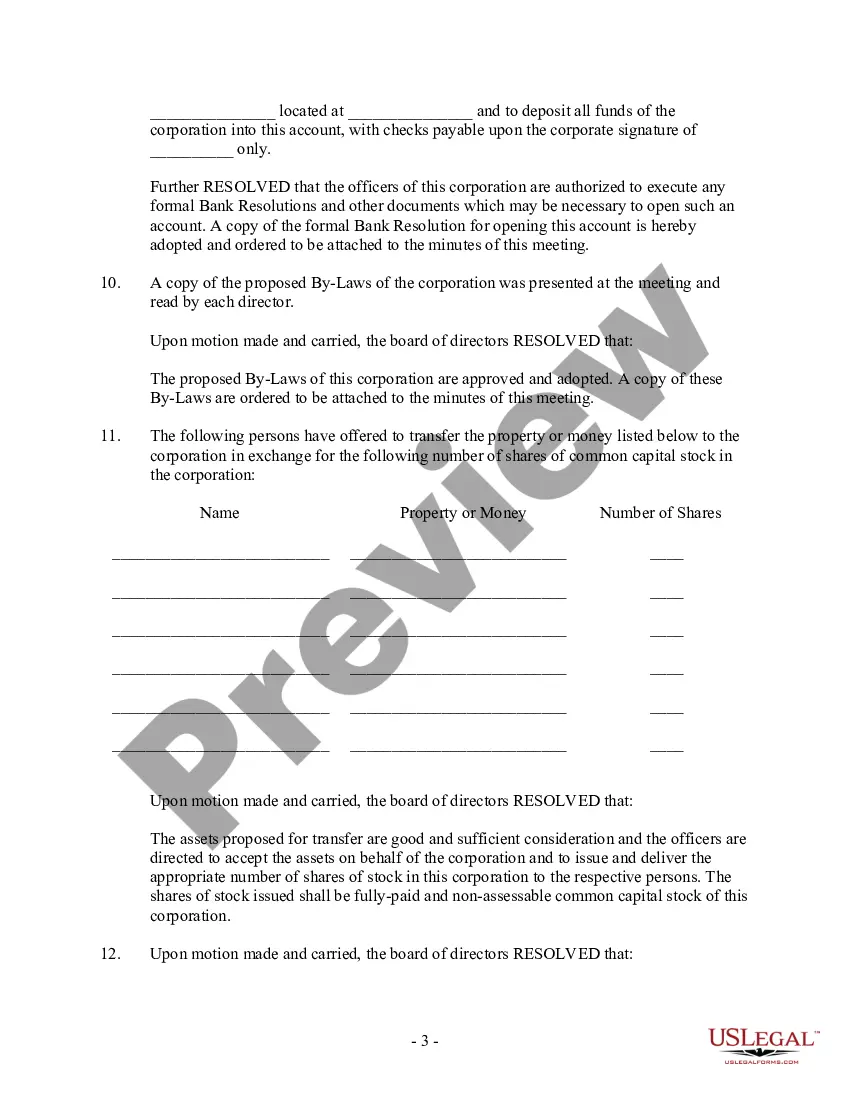
Bylaws define how the corporation will be structured and run while the minutes are a records of what took place during a corporate a meeting.
Are board meeting minutes confidential? Yes. The board should assume the minutes are confidential and, in most cases, they will remain so.
The bylaws set the rules for meetings, specify voting procedures, and establish officer positions and responsibilities. Bylaws can be amended, as set forth within the bylaws themselves, when necessary to suit the organization's needs. Typically, the Board of Directors must vote to pass any amendments.
Board meeting minutes are the official and legal records that capture essential details about meeting participants, discussions, and outcomes. While “minutes” may suggest the focus on capturing every second, the real objective is to distill the most important information for effective governance.
They contain the basic rules for the conduct of the corporation's business and affairs. The bylaws may contain any provision for managing the business and regulating the corporation's affairs that is not inconsistent with statutory law or the corporation's Articles of Incorporation.