Acta Directorio Formal In Maryland
Description




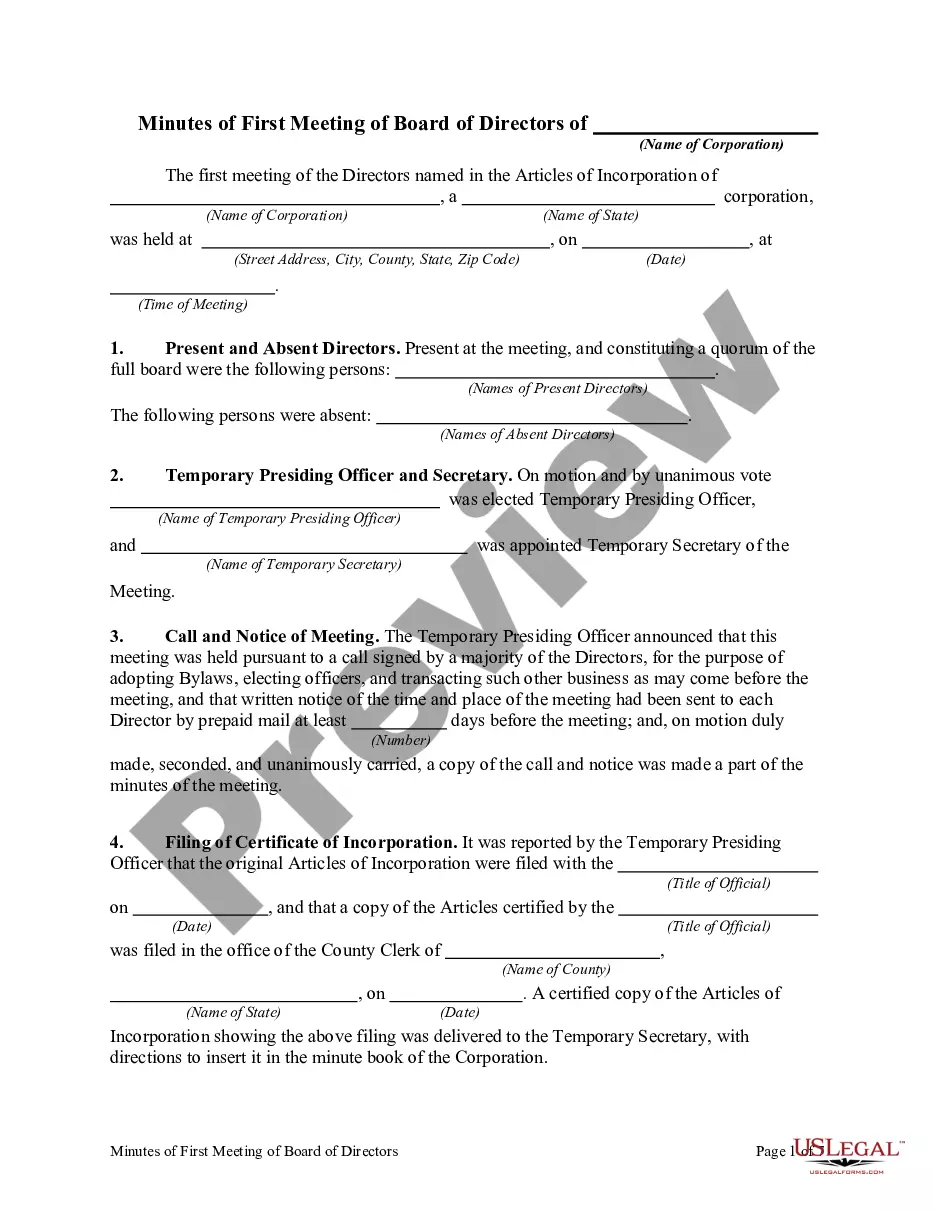
Get your form ready online
Our built-in tools help you complete, sign, share, and store your documents in one place.
Make edits, fill in missing information, and update formatting in US Legal Forms—just like you would in MS Word.
Download a copy, print it, send it by email, or mail it via USPS—whatever works best for your next step.
Sign and collect signatures with our SignNow integration. Send to multiple recipients, set reminders, and more. Go Premium to unlock E-Sign.
If this form requires notarization, complete it online through a secure video call—no need to meet a notary in person or wait for an appointment.
We protect your documents and personal data by following strict security and privacy standards.

Make edits, fill in missing information, and update formatting in US Legal Forms—just like you would in MS Word.

Download a copy, print it, send it by email, or mail it via USPS—whatever works best for your next step.

Sign and collect signatures with our SignNow integration. Send to multiple recipients, set reminders, and more. Go Premium to unlock E-Sign.

If this form requires notarization, complete it online through a secure video call—no need to meet a notary in person or wait for an appointment.

We protect your documents and personal data by following strict security and privacy standards.
Looking for another form?





Form popularity
FAQ
Any nonprofit group or organization located in Maryland must register with the Maryland Secretary of State. Any non-exempt nonprofit, in any state, intending to solicit in Maryland must also register, along with anyone intending to solicit in Maryland on behalf of a nonprofit.
All legal business entities formed, qualified, or registered to do business in Maryland MUST file an Annual Report: Legal business entities (Corporations, LLC, LP, LLP, etc.), whether they are foreign or domestic, must file a Form 1 Annual Report (fees apply)
To report a suspected violation of the Maryland Solicitations Act, please submit a complaint to the Charitable Organizations Division at the Office of the Secretary of State online here or by phone at 410-974-5521.
Under California law, nonprofits are not immune to lawsuits, and you can seek legal redress for breach of contract, discrimination, or other rights violations. Given your circumstances, consulting an attorney who can guide you through this process would be beneficial.
Public officials in government are directly accountable to their constituents and must be elected and reelected by those they serve. In the nonprofit sector, organizations are meant to be accountable to their boards, donors, community partners, staff members, grantees, and volunteers.
BUSINESS PERSONAL PROPERTY RETURN An Annual Report must be filed by all business entities formed, qualified or registered to do business in the State of Maryland, as of January 1st .
How do I form a corporation in Maryland? Step 1: Name your Maryland corporation. Step 2: Appoint directors. Step 3: Choose a Maryland resident agent. Step 4: File the Maryland Articles of Incorporation. Step 5: Create corporate bylaws. Step 6: Draft a shareholder agreement. Step 7: Issue shares of stock.
While a California S-Corp can offer certain tax advantages, it does not meet the specific legal and regulatory requirements set forth by California law for professions which have a California Professional Corporation designated for professional practice in corporate form.
One of the key differences between a corporation and a professional corporation is that the shareholders of a professional corporation must be licensed professionals who are authorized to provide professional services in their respective fields. This requirement does not apply to a regular corporation.
Maryland allows professionals, such as accountants, attorneys and physicians, to form a professional corporation (PC). After forming a corporation, you must undertake certain steps on an ongoing basis to keep your business in compliance.