Board Meeting Corporate For Bonus Issue In Chicago
Description


Get your form ready online
Our built-in tools help you complete, sign, share, and store your documents in one place.
Make edits, fill in missing information, and update formatting in US Legal Forms—just like you would in MS Word.
Download a copy, print it, send it by email, or mail it via USPS—whatever works best for your next step.
Sign and collect signatures with our SignNow integration. Send to multiple recipients, set reminders, and more. Go Premium to unlock E-Sign.
If this form requires notarization, complete it online through a secure video call—no need to meet a notary in person or wait for an appointment.
We protect your documents and personal data by following strict security and privacy standards.

Make edits, fill in missing information, and update formatting in US Legal Forms—just like you would in MS Word.

Download a copy, print it, send it by email, or mail it via USPS—whatever works best for your next step.

Sign and collect signatures with our SignNow integration. Send to multiple recipients, set reminders, and more. Go Premium to unlock E-Sign.

If this form requires notarization, complete it online through a secure video call—no need to meet a notary in person or wait for an appointment.

We protect your documents and personal data by following strict security and privacy standards.
Looking for another form?
Form popularity
FAQ
Recording without consent in Illinois can lead to serious legal repercussions: Criminal Penalties: Unauthorized recording is classified as a felony offense, which can result in imprisonment.
Recording meetings. Subject to the provisions of Section 8-701 of the Code of Civil Procedure, any person may record the proceedings at meetings required to be open by this Act by tape, film or other means. The authority holding the meeting shall prescribe reasonable rules to govern the right to make such recordings.
The Illinois Open Meetings Act 5 ILCS 120/ was enacted to protect the citizens' right to know the actions and reasoning of public body decisions, since the purpose of a public body is to assist the people. The statute fosters open meetings and is construed against closed meetings.
Consent must be provided by all meeting attendees before recording the session. Zoom recordings should avoid gallery view (thumbprint-sized photos) to avoid any violation of FERPA.
The Illinois Open Meetings Act 5 ILCS 120/ was enacted to protect the citizens' right to know the actions and reasoning of public body decisions, since the purpose of a public body is to assist the people. The statute fosters open meetings and is construed against closed meetings.
Subject to the provisions of Section 8-701 of the Code of Civil Procedure, any person may record the proceedings at meetings required to be open by this Act by tape, film or other means.
"Public Body" – The Open Meetings Act defines "public body" to include "all legislative, executive, administrative or advisory bodies of the State, counties, townships, cities, villages, incorporated towns, school districts and all other municipal corporations, boards, bureaus, committees or commissions of this State, ...
How do you write a motion for minutes of a meeting? To write a motion for minutes of a meeting, use the following format: Main motion: Moved by name. The motion carried or failed with number in favour and number against by a ballot vote.
Only one thing (motion) can be discussed at a time. A motion is the topic under discussion (e.g., “I move that we add a coffee break to this meeting”).
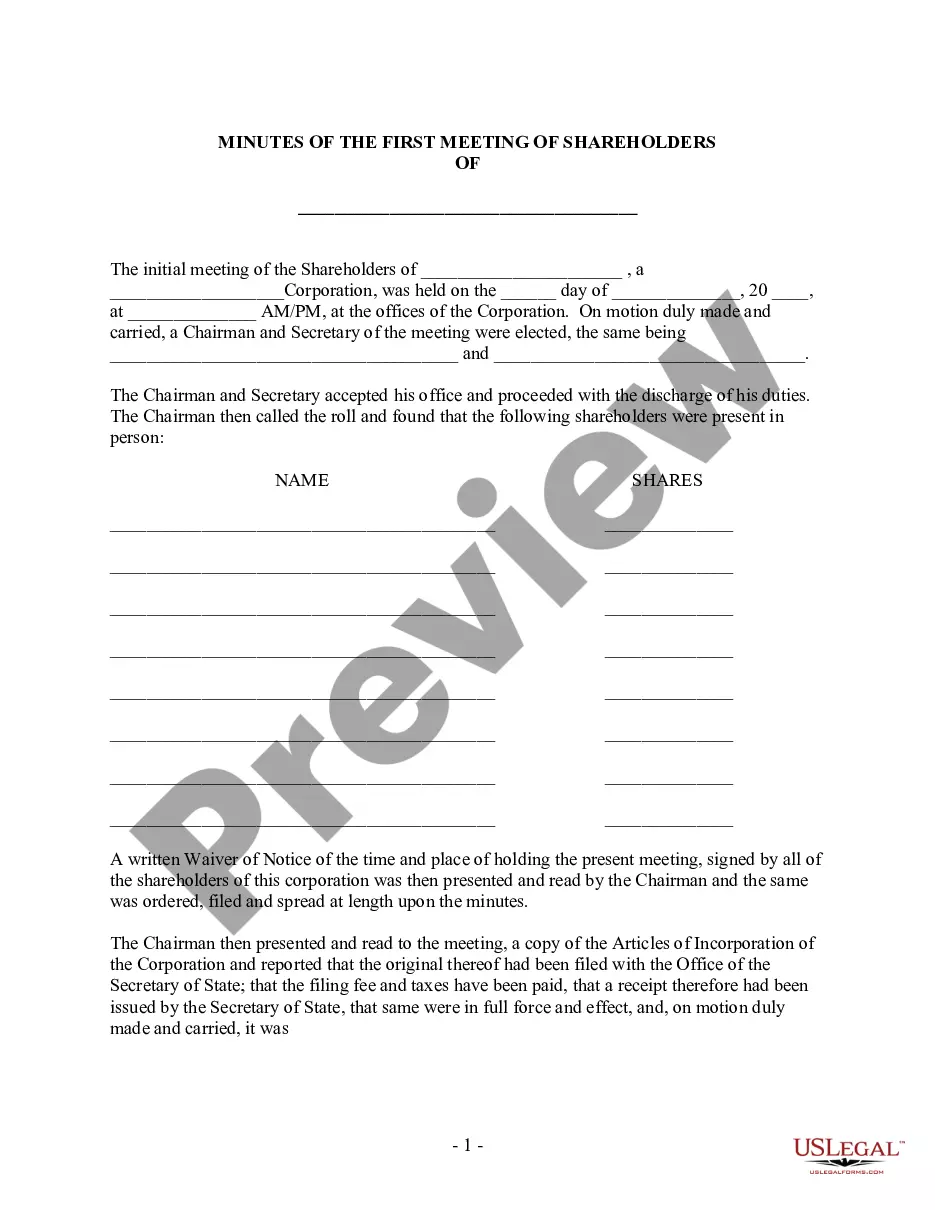
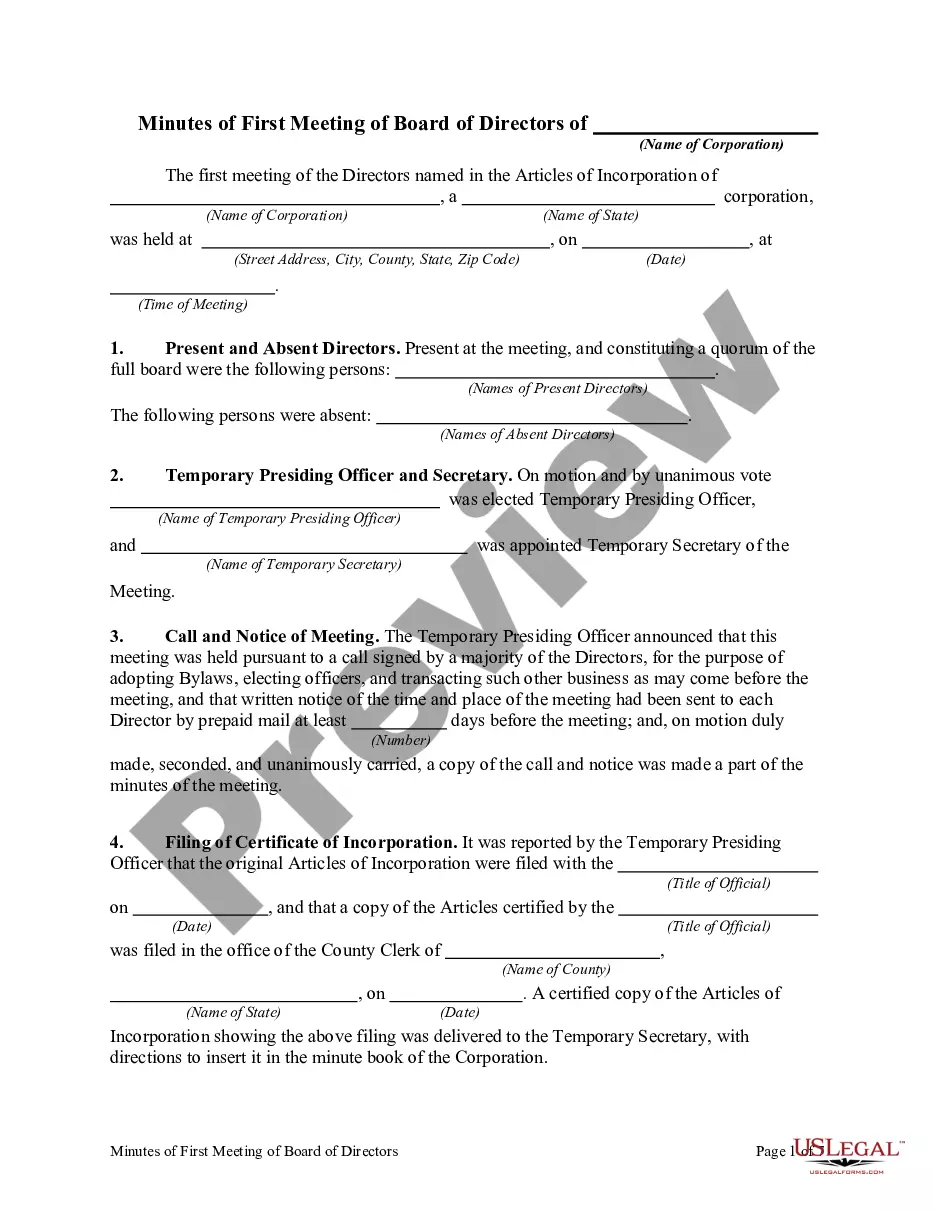
Corporate meeting minutes typically include: The meeting's date, time and location. A list of attendees and absentees, including any present board members or officers. Agenda items. Summaries of all discussion points. Details of all activities completed or agreed upon. Results of any votes or motions.