Board Meeting Corporate Format
Description


Get your form ready online
Our built-in tools help you complete, sign, share, and store your documents in one place.
Make edits, fill in missing information, and update formatting in US Legal Forms—just like you would in MS Word.
Download a copy, print it, send it by email, or mail it via USPS—whatever works best for your next step.
Sign and collect signatures with our SignNow integration. Send to multiple recipients, set reminders, and more. Go Premium to unlock E-Sign.
If this form requires notarization, complete it online through a secure video call—no need to meet a notary in person or wait for an appointment.
We protect your documents and personal data by following strict security and privacy standards.

Make edits, fill in missing information, and update formatting in US Legal Forms—just like you would in MS Word.

Download a copy, print it, send it by email, or mail it via USPS—whatever works best for your next step.

Sign and collect signatures with our SignNow integration. Send to multiple recipients, set reminders, and more. Go Premium to unlock E-Sign.

If this form requires notarization, complete it online through a secure video call—no need to meet a notary in person or wait for an appointment.

We protect your documents and personal data by following strict security and privacy standards.
Looking for another form?








How to fill out First Board Of Directors Meeting Minutes - Corporate Resolutions?
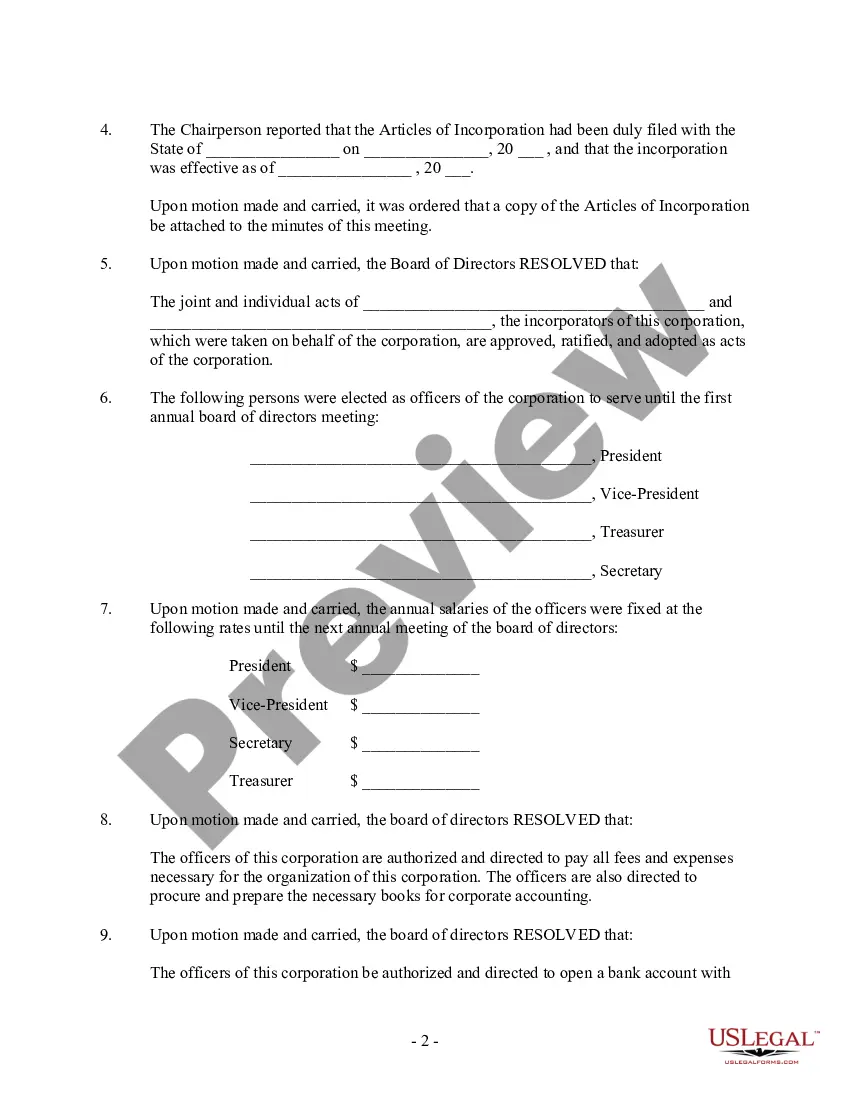
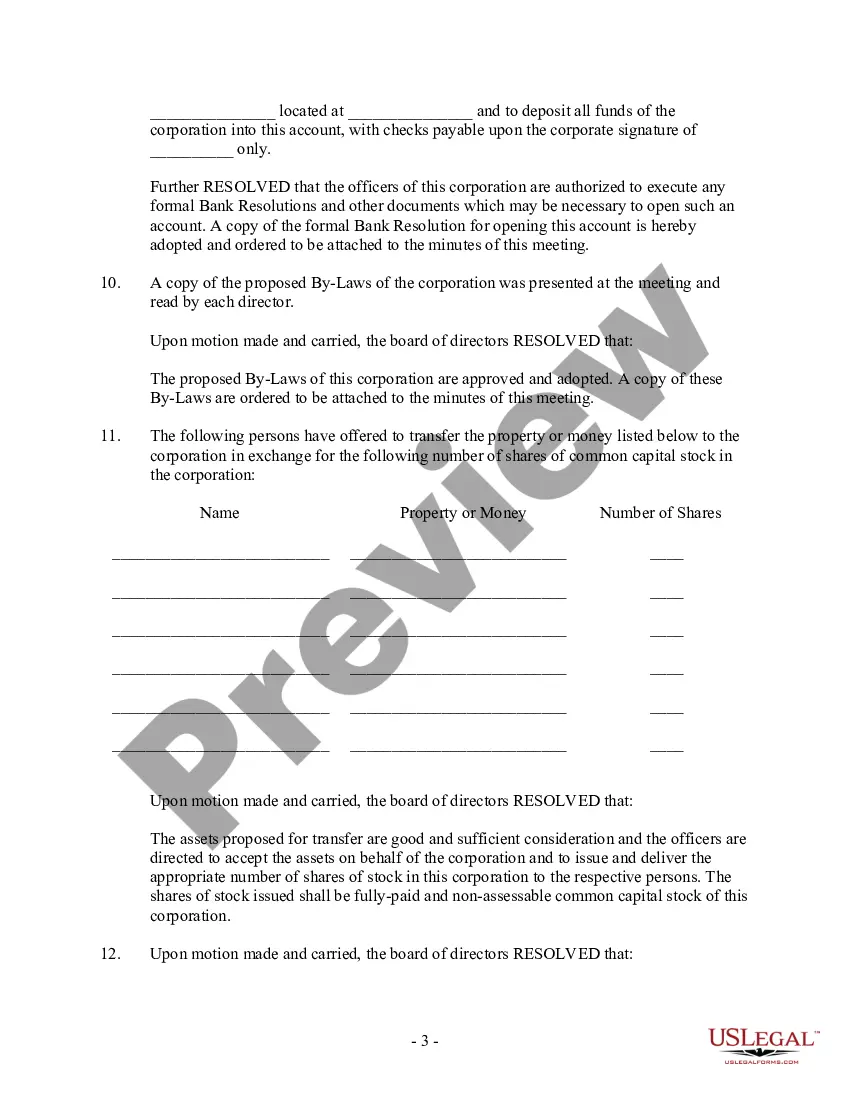
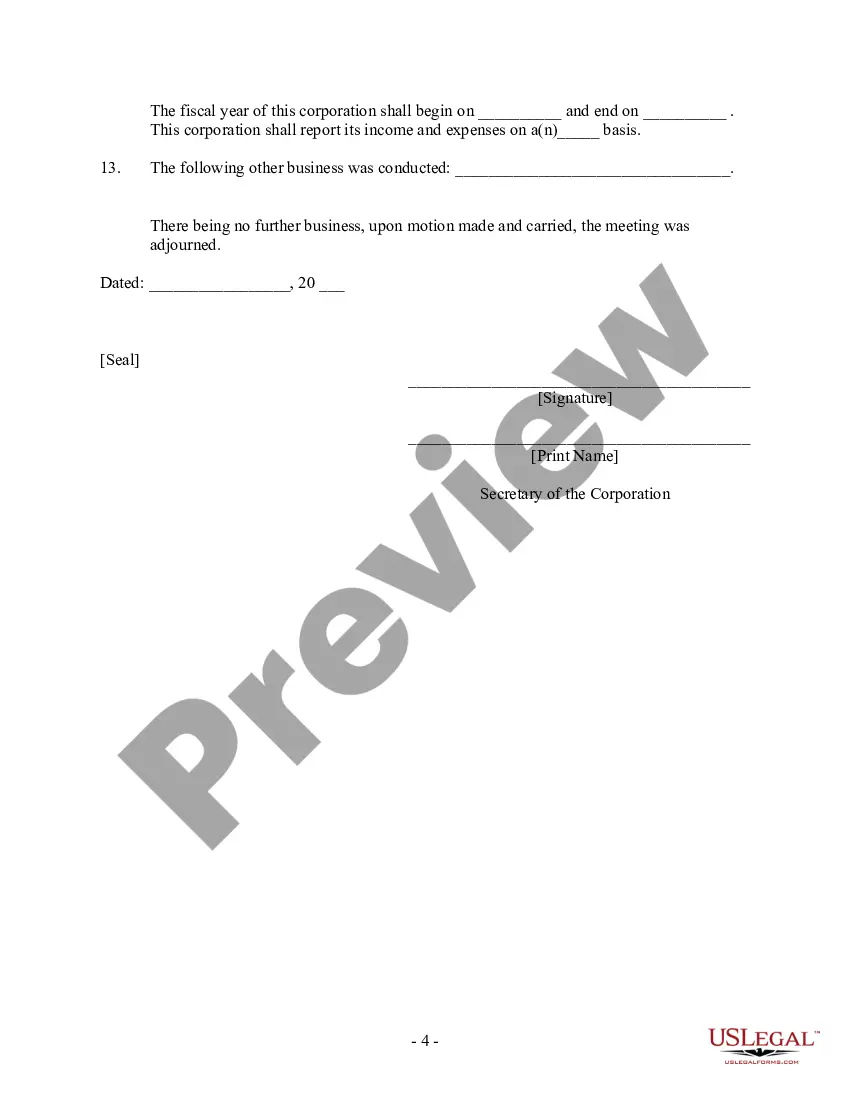
The Board Meeting Corporate Format displayed on this page is a versatile legal template created by experienced attorneys in accordance with federal and local laws and regulations.
For over 25 years, US Legal Forms has supplied individuals, organizations, and legal professionals with more than 85,000 validated, state-specific forms for various business and personal circumstances. It’s the quickest, simplest, and most dependable method to acquire the documents you require, as the service ensures bank-level data security and anti-malware safeguards.
Register for US Legal Forms to have authenticated legal templates for all of life's situations readily available.
- Search for the document you require and examine it.
- Select the pricing option that works for you and create an account. Use PayPal or a credit card for a quick payment. If you already possess an account, Log In and verify your subscription to continue.
- Choose the file type you wish for your Board Meeting Corporate Format (PDF, Word, RTF) and store the sample on your device.
- Print the template to fill it out manually. Alternatively, utilize an online comprehensive PDF editor to quickly and accurately complete and sign your form with a legally-binding electronic signature.
- Reuse the same document whenever necessary. Access the My documents tab in your profile to redownload previously saved forms.
Form popularity
FAQ
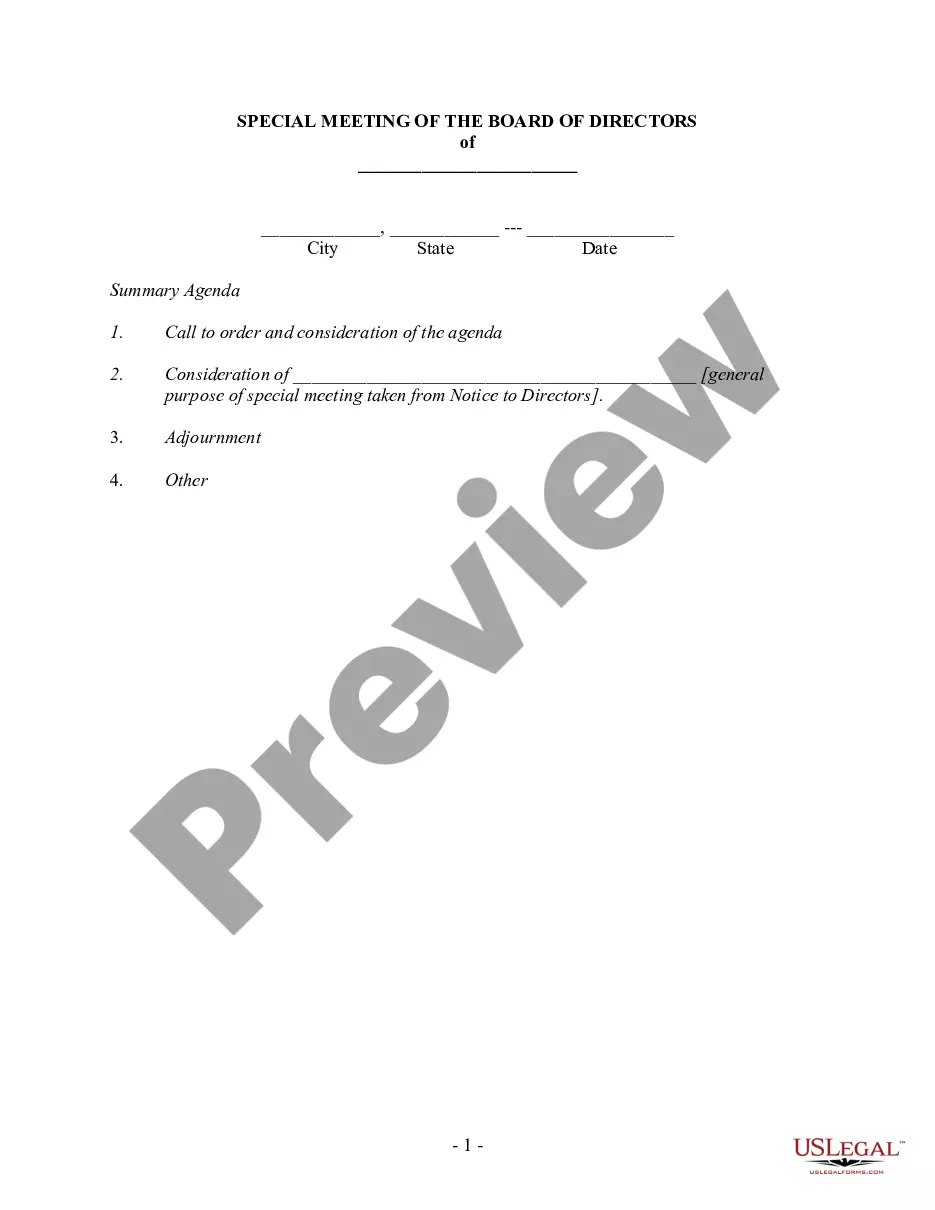
To structure a board meeting effectively, start by preparing a clear agenda that outlines the key topics for discussion. Next, ensure that all necessary materials are distributed to board members in advance, allowing them time to review. Follow the board meeting corporate format by opening with a call to order, conducting roll call, and approving previous meeting minutes. Finally, allocate time for each agenda item, encourage participation from all members, and conclude with a summary of decisions made and action items assigned.
Corporate board meetings are generally private gatherings designed for directors to discuss sensitive business matters. However, some companies choose to allow public access to enhance transparency and trust. If you want to understand the specific policies regarding public access, you can consult your company's bylaws or guidelines. Additionally, using resources like USLegalForms can help you navigate the complexities of corporate governance and board meeting corporate format requirements.
The 40 20 40 rule for meetings suggests that you should allocate 40% of your time to discussing the main topic, 20% to sharing ideas and opinions, and 40% to wrapping up and planning next steps. This format helps keep your board meeting corporate format focused and efficient. By following this structure, you encourage participation while ensuring that all essential points are covered. Implementing this rule can enhance the effectiveness of your meetings and lead to better decision-making.
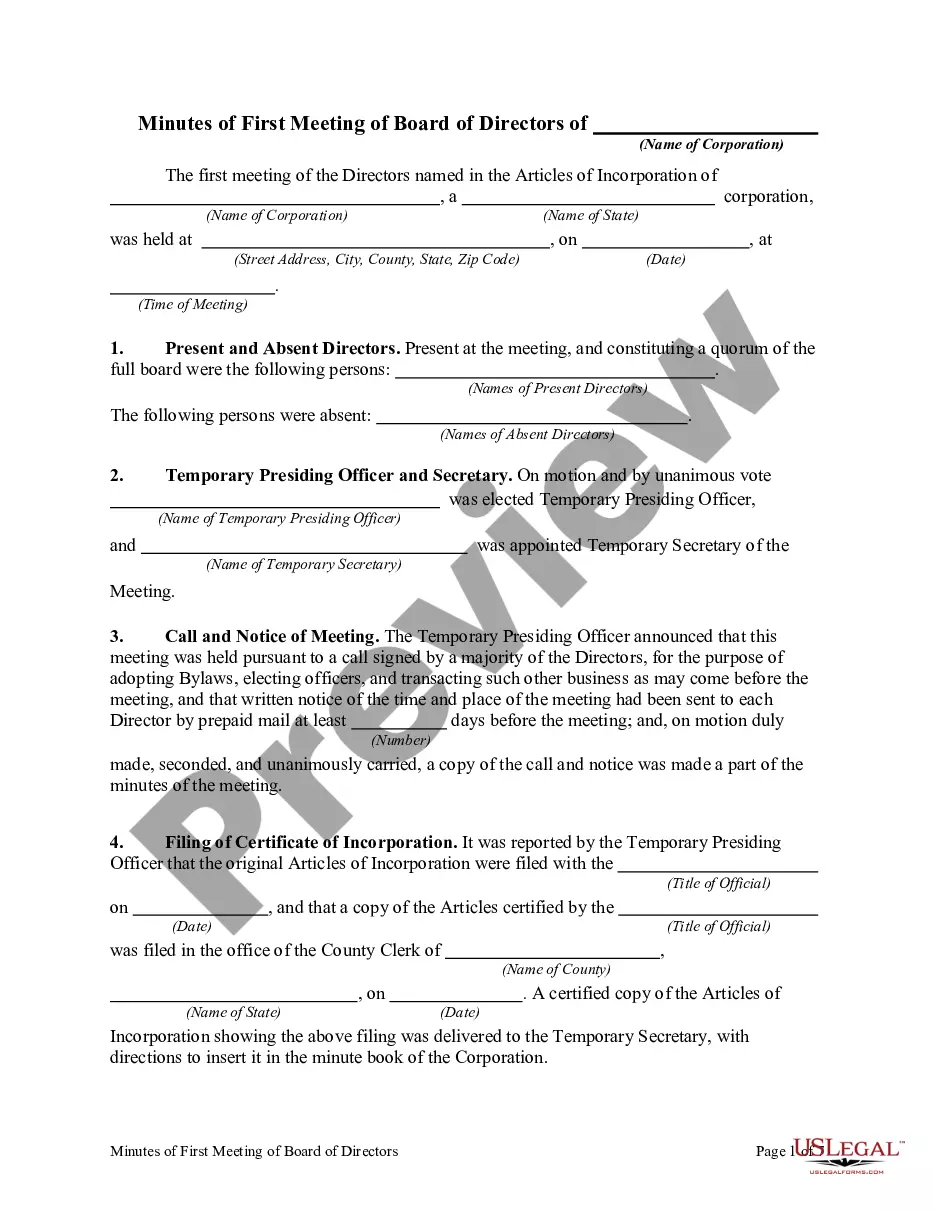
Filling out corporate minutes in the board meeting corporate format requires careful documentation of the meeting's proceedings. Start by noting the date, time, and location of the meeting, along with the names of attendees. Next, summarize the discussions and decisions made, ensuring to include any motions and the results of votes. Utilizing platforms like US Legal Forms can simplify this process, providing templates that ensure compliance with legal standards and help you maintain accurate records.
To document a board meeting, start by creating a detailed agenda that outlines the topics to be discussed. During the meeting, take comprehensive notes that capture key decisions, discussions, and votes. After the meeting, prepare the minutes in the board meeting corporate format, ensuring they include the date, attendees, and a summary of each agenda item. You can also use US Legal Forms to access templates that simplify this process, ensuring your documentation is both accurate and professional.
Following are 10 steps that can help you compose an effective meeting minutes report: Make an outline. ... Include factual information. ... Write down the purpose. ... Record decisions made. ... Add details for the next meeting. ... Be concise. ... Consider recording. ... Edit and proofread.
To take effective meeting minutes, the secretary should include: Date of the meeting. Time the meeting was called to order. Names of the meeting participants and absentees. Corrections and amendments to previous meeting minutes. Additions to the current agenda. Whether a quorum is present. Motions taken or rejected.
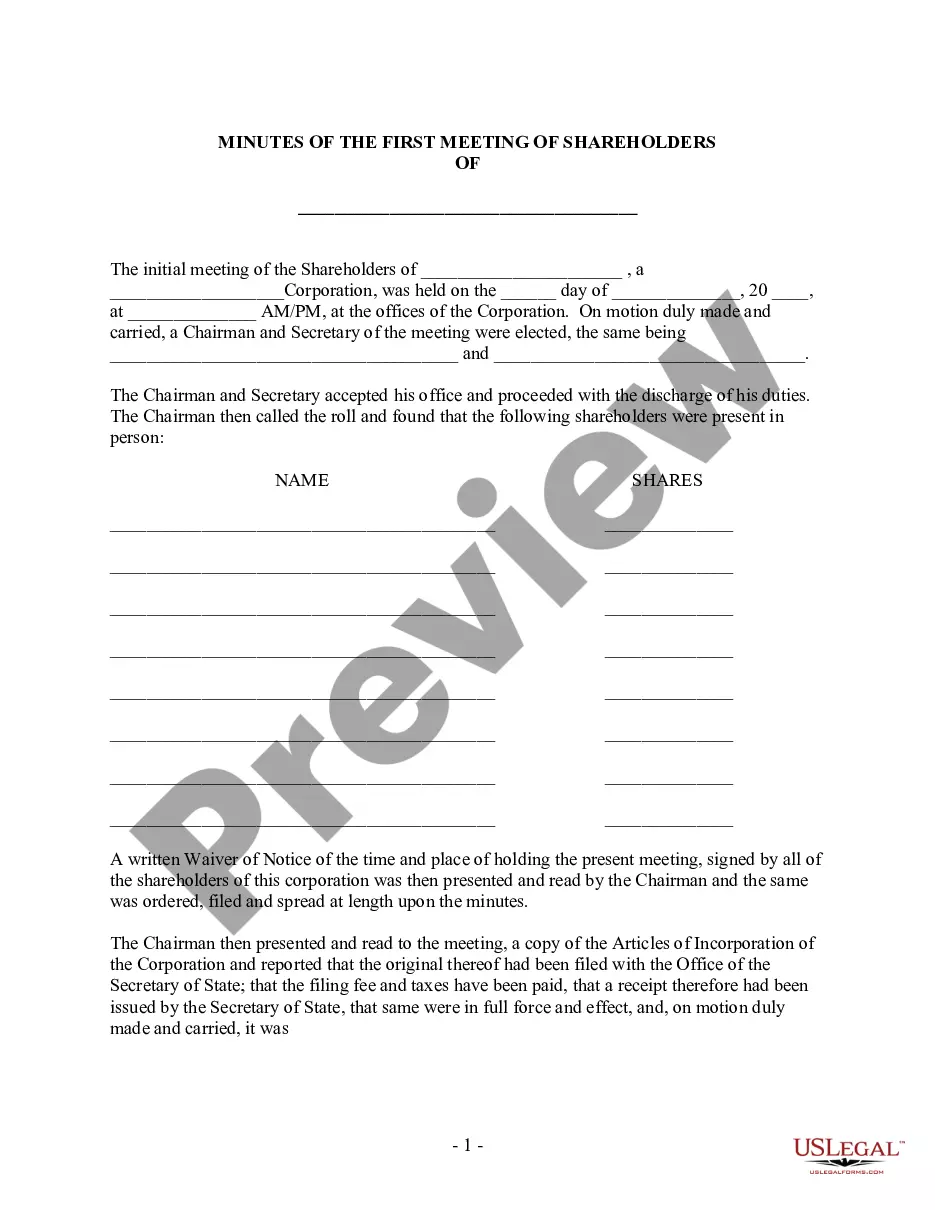
The minutes should include corporation details like the name of the corporation and the names of the chairperson and secretary of the meeting. The meeting place and time should also be found somewhere in the minutes, along with the names of the shareholders.
Your First Meeting Allow ample time for introductions. ... Facilitate as much discussion as possible around key strategic issues. ... Remember that directors need a clear overview and strong understanding of your business before they can help you. ... Don't be afraid to say, ?I need help!?