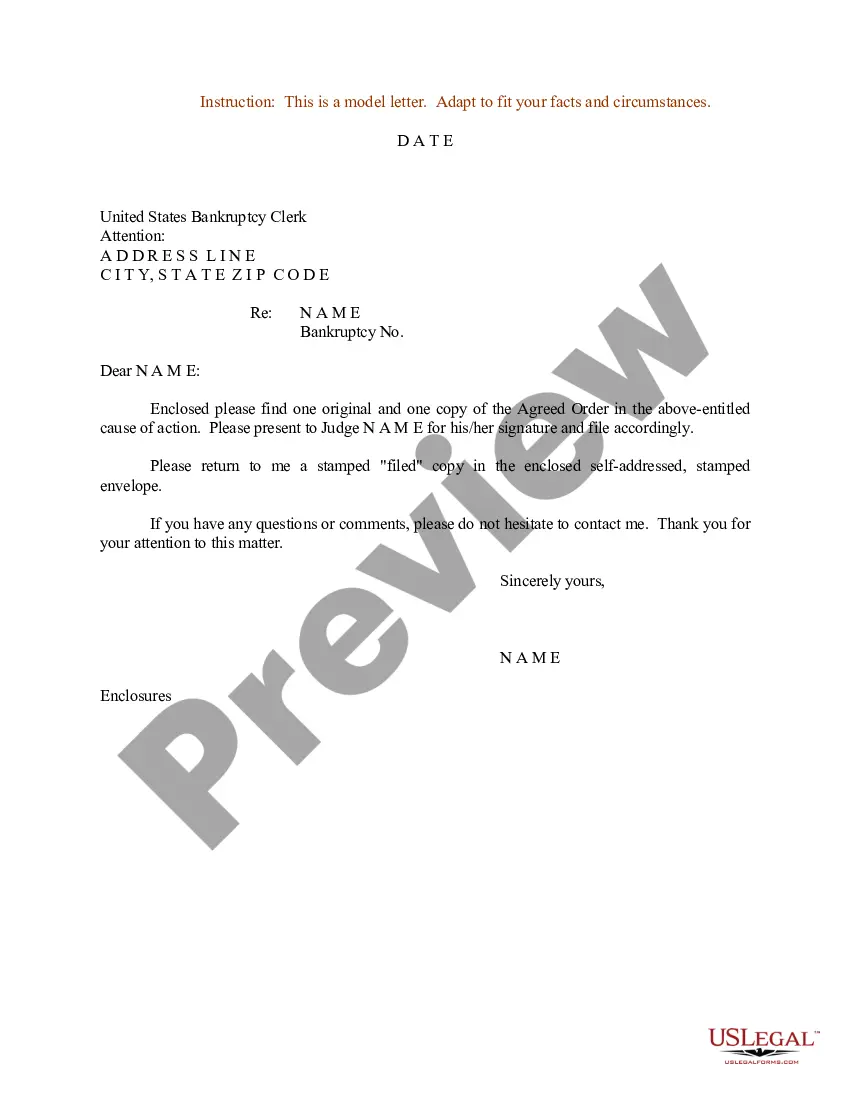
Sample Order For Judge To Sign In King
Description


Get your form ready online
Our built-in tools help you complete, sign, share, and store your documents in one place.
Make edits, fill in missing information, and update formatting in US Legal Forms—just like you would in MS Word.
Download a copy, print it, send it by email, or mail it via USPS—whatever works best for your next step.
Sign and collect signatures with our SignNow integration. Send to multiple recipients, set reminders, and more. Go Premium to unlock E-Sign.
If this form requires notarization, complete it online through a secure video call—no need to meet a notary in person or wait for an appointment.
We protect your documents and personal data by following strict security and privacy standards.

Make edits, fill in missing information, and update formatting in US Legal Forms—just like you would in MS Word.

Download a copy, print it, send it by email, or mail it via USPS—whatever works best for your next step.

Sign and collect signatures with our SignNow integration. Send to multiple recipients, set reminders, and more. Go Premium to unlock E-Sign.

If this form requires notarization, complete it online through a secure video call—no need to meet a notary in person or wait for an appointment.

We protect your documents and personal data by following strict security and privacy standards.
Looking for another form?









Form popularity
FAQ
Judgment: A court decision. Also called a decree or an order.
A court order is an official proclamation by a judge (or panel of judges) that defines the legal relationships between the parties to a hearing, a trial, an appeal or other court proceedings. Such ruling requires or authorizes the carrying out of certain steps by one or more parties to a case.
For almost all judges, write "Dear Judge" followed by the judge's last name to begin the letter. Write this on its own line, followed by a comma. Address justices of the UK Supreme Court as "Dear (Lord/Lady) (surname)" instead. If writing to a U.S. state or federal Supreme Court, use “Dear Justice” instead.
What is another word for court order? ruleregulation command decree dictum direction edict instruction precept statute114 more rows
A decision issued by a court or authoritative body. This includes final and non-final orders issued by a court. Also known as court order or judicial order.
If you want to file a motion, the process is generally something like this: You write your motion. You file your motion with the court clerk. The court clerk inserts the date and time your motion will be heard by the judge. You “serve” (mail) your motion to the other side.
Other Final Disp. Pre-Note means the case has been disposed of before hte Note of Issue was filed. The case was either settled or dismissed based on a motion. I suspect the Judge granted a motion to dismiss the case based upon Misc.
Judges from the High Court, Appeals Court, and Supreme Court are referred to as "Justice Surname". In social settings, it is appropriate to use "Judge" in all cases.
If the judge's name is "John Smith," then in references to him that would be read by others (e.g., the mailing address on a letter) you would refer to him "The Honorable John Smith" (or some might just use "Hon."). In directly communicating with him in writing, I would start with "Dear Judge Smith."
In person: In an interview, social event, or in court, address a judge as “Your Honor” or “Judge last name.” If you are more familiar with the judge, you may call her just “Judge.” In any context, avoid “Sir” or “Ma'am.” Special Titles.

