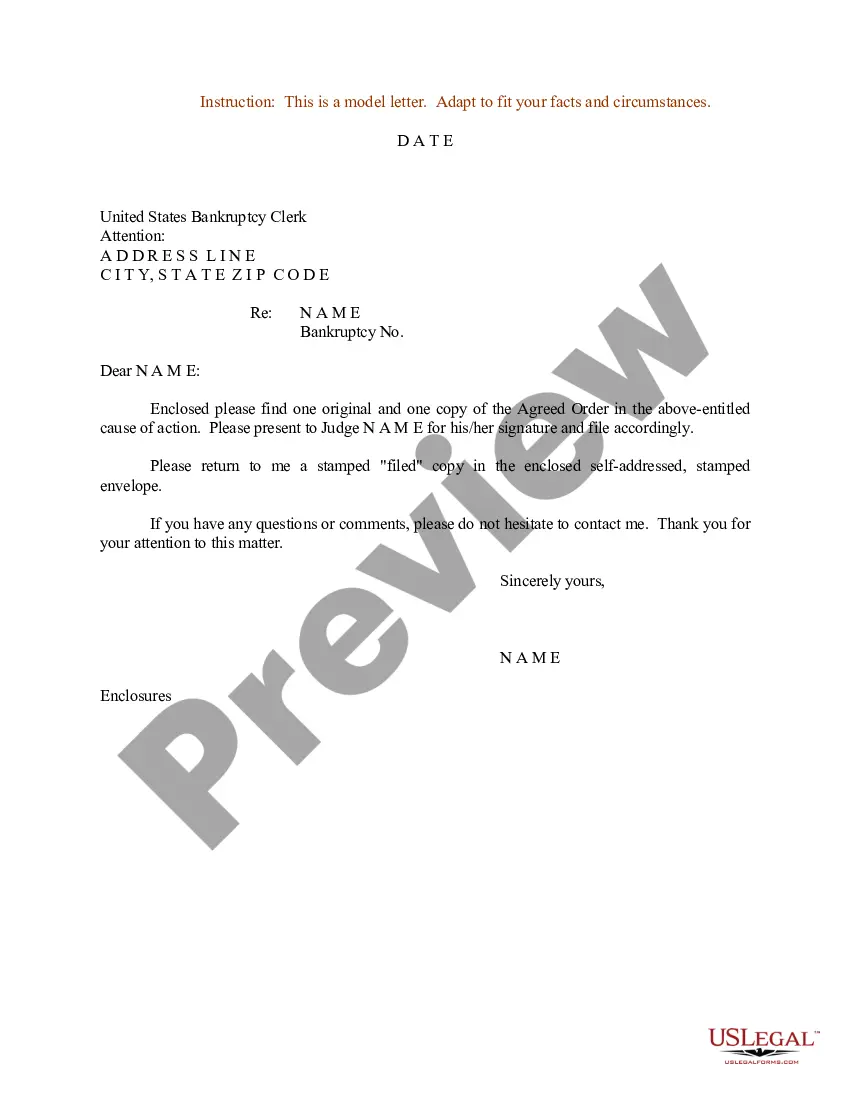
Sample Order For Judge To Sign In Houston
Description


Get your form ready online
Our built-in tools help you complete, sign, share, and store your documents in one place.
Make edits, fill in missing information, and update formatting in US Legal Forms—just like you would in MS Word.
Download a copy, print it, send it by email, or mail it via USPS—whatever works best for your next step.
Sign and collect signatures with our SignNow integration. Send to multiple recipients, set reminders, and more. Go Premium to unlock E-Sign.
If this form requires notarization, complete it online through a secure video call—no need to meet a notary in person or wait for an appointment.
We protect your documents and personal data by following strict security and privacy standards.

Make edits, fill in missing information, and update formatting in US Legal Forms—just like you would in MS Word.

Download a copy, print it, send it by email, or mail it via USPS—whatever works best for your next step.

Sign and collect signatures with our SignNow integration. Send to multiple recipients, set reminders, and more. Go Premium to unlock E-Sign.

If this form requires notarization, complete it online through a secure video call—no need to meet a notary in person or wait for an appointment.

We protect your documents and personal data by following strict security and privacy standards.
Looking for another form?

Form popularity
FAQ
When signing the letter, you should close out with “Respectfully” or “Sincerely,” followed by both a typed and handwritten signature with your first and last name.
The proposed order should include the case name and number, the names of the parties, the terms of the agreement or the court's ruling, and any other relevant information required by the court's rules or local practice.
If the proposed order needs to be served on parties, DO NOT include a proof of service page on the back of the proposed order. Instead, LBR 9021-1(b)(3) provides that the party who lodges an order must first serve and file a "Notice of Lodgment".
Proposed Orders refer to any unsigned orders, such as Final Decrees, Rule Nisi, Orders on Affidavit of Poverty, Child Support Addendums, and similar documents.
A proposed order, in the context of legal proceedings, is a document that outlines the specific actions or decisions that a party involved in a case is asking the court to make. It is typically drafted by one of the parties or their attorney and presented to the court for approval.
Quick Guide: Writing a Motion for Court Be clear and concise so the motion feels persuasive and logical to a judge. Present the information in a sequential way and include details about your reasoning, supporting facts, and ideas for next steps.
Unless otherwise directed by the Court, proposed orders may not be submitted in the absence of a motion. (In other words, a proposed order is not a substitute for a motion.)
Elements: full mailing address of the sender. date on which letter is written. address of person to whom letter is addressed. subject line. salutation. body (the main message) complimentary closing. signature line (be sure to sign your letter)
At or before the hearing, give the judge a “proposed order.” A proposed order is a document describing the things you want the judge to order. Make sure you give a copy of the proposed order to the lawyer or person on the other side of the case.
In person: In an interview, social event, or in court, address a judge as “Your Honor” or “Judge last name.” If you are more familiar with the judge, you may call her just “Judge.” In any context, avoid “Sir” or “Ma'am.” Special Titles.
