Sample Order For Judge To Sign In Georgia
Description


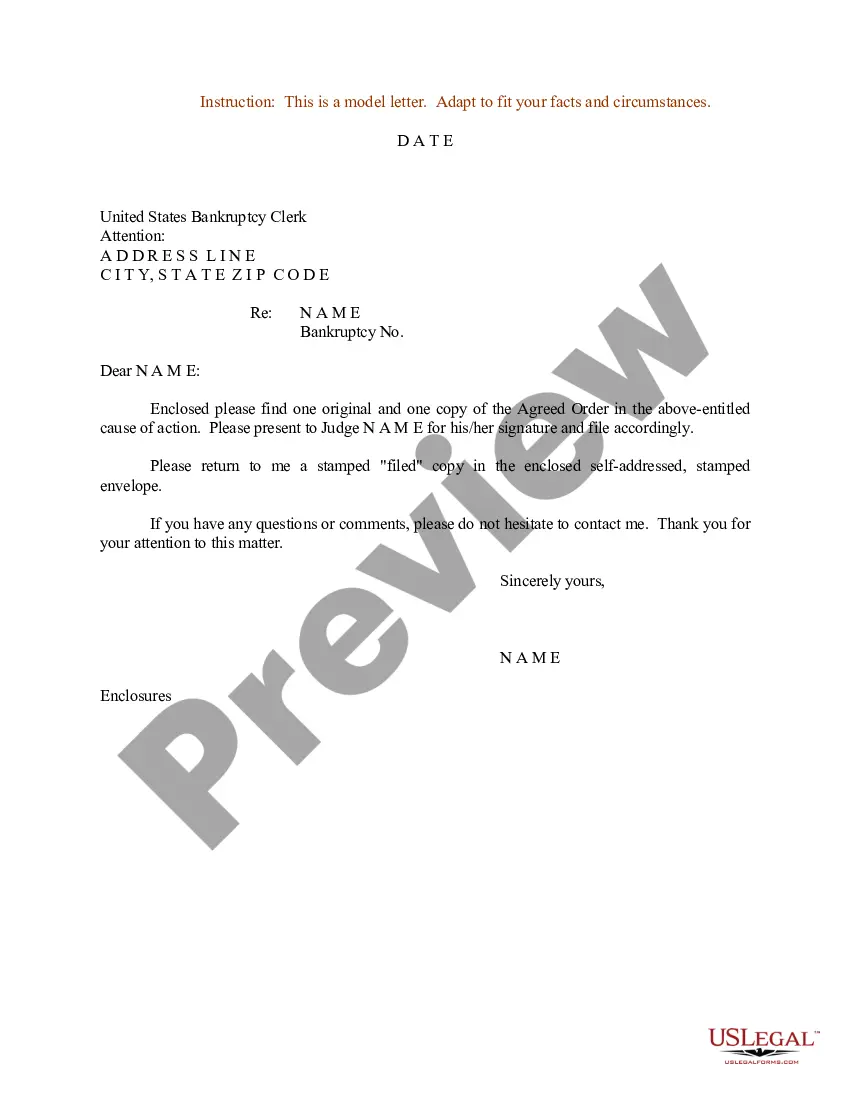
Get your form ready online
Our built-in tools help you complete, sign, share, and store your documents in one place.
Make edits, fill in missing information, and update formatting in US Legal Forms—just like you would in MS Word.
Download a copy, print it, send it by email, or mail it via USPS—whatever works best for your next step.
Sign and collect signatures with our SignNow integration. Send to multiple recipients, set reminders, and more. Go Premium to unlock E-Sign.
If this form requires notarization, complete it online through a secure video call—no need to meet a notary in person or wait for an appointment.
We protect your documents and personal data by following strict security and privacy standards.

Make edits, fill in missing information, and update formatting in US Legal Forms—just like you would in MS Word.

Download a copy, print it, send it by email, or mail it via USPS—whatever works best for your next step.

Sign and collect signatures with our SignNow integration. Send to multiple recipients, set reminders, and more. Go Premium to unlock E-Sign.

If this form requires notarization, complete it online through a secure video call—no need to meet a notary in person or wait for an appointment.

We protect your documents and personal data by following strict security and privacy standards.
Looking for another form?







Form popularity
FAQ
In many cases throughout Georgia, a rule nisi is issued before a temporary hearing for issues arising from divorce cases. Meaning “to show cause” rule nisi allows the opposing party to receive notice of a hearing so that both parties are provided the opportunity to be heard before a court of law.
In some situations, you might also make a motion by writing a letter to the judge that explains what you are asking for, and why. Any time you send anything in writing to the judge you must also send a copy to the other party or his/her attorney. The other party would then have a chance to respond.
Superior court judges serve six-year terms and are elected by county voters on a nonpartisan ballot at a general election during even-numbered years. Vacancies occurring during those terms—due to retirements, deaths, or other departures—are filled through appointment by the Governor.
A U.S. magistrate judge is a judicial officer of the district court and is appointed by majority vote of the active district judges of the court to exercise jurisdiction over matters assigned by statute as well as those delegated by the district judges.
Judges. All serving judges are elected by popular vote either from the entire state in the cases of the Supreme Court and the Court of Appeals or from a given circuit in the case of Superior Courts. Judges of the Supreme Court and the Court of Appeals serve for terms of six years.
Judges of the Georgia Magistrate Courts are either elected or appointed to terms of varying lengths.
Judges of the Georgia Magistrate Courts are either elected or appointed to terms of varying lengths. The elections for this court type are contested and may be partisan or nonpartisan.
To qualify as a magistrate, an individual must reside in the county for at least one year preceding his or her term of office, be 25 years of age, and have a high school diploma or its equivalent. A magistrate court judge may also serve as a judge of another limited jurisdiction court in the same county.
Rule 2.11 - Disqualification and Recusal (A) Judges shall disqualify themselves in any proceeding in which their impartiality might reasonably be questioned, or in which: (1) The judge has a personal bias or prejudice concerning a party or a party's lawyer, or personal knowledge of disputed evidentiary facts concerning ...
The term “Rule Nisi” comes from Latin and means “unless.” In legal terms, it refers to an order or ruling that will become final unless one or both parties can show cause why it should not be. In other words, it is an order that becomes absolute unless someone objects.
