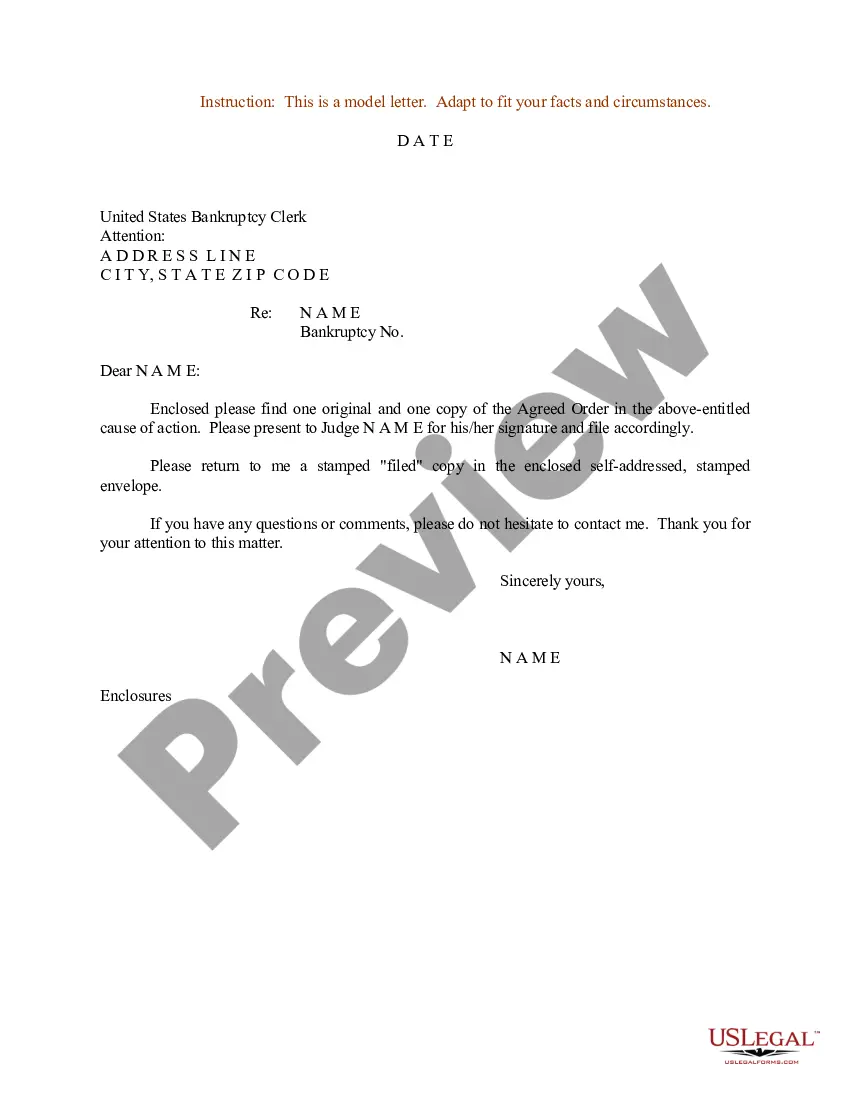
Sample Order For Judge To Sign In Fulton
Description


Get your form ready online
Our built-in tools help you complete, sign, share, and store your documents in one place.
Make edits, fill in missing information, and update formatting in US Legal Forms—just like you would in MS Word.
Download a copy, print it, send it by email, or mail it via USPS—whatever works best for your next step.
Sign and collect signatures with our SignNow integration. Send to multiple recipients, set reminders, and more. Go Premium to unlock E-Sign.
If this form requires notarization, complete it online through a secure video call—no need to meet a notary in person or wait for an appointment.
We protect your documents and personal data by following strict security and privacy standards.

Make edits, fill in missing information, and update formatting in US Legal Forms—just like you would in MS Word.

Download a copy, print it, send it by email, or mail it via USPS—whatever works best for your next step.

Sign and collect signatures with our SignNow integration. Send to multiple recipients, set reminders, and more. Go Premium to unlock E-Sign.

If this form requires notarization, complete it online through a secure video call—no need to meet a notary in person or wait for an appointment.

We protect your documents and personal data by following strict security and privacy standards.
Looking for another form?







Form popularity
FAQ
You can address most judges at the start of a letter as "Dear Judge" (or "Dear Justice" if they serve in a U.S. state or federal Supreme Court, or in certain courts of other countries). When addressing the envelope, it is best to use the judge's full title, along with the full name of the court in which he/she serves.
Superior Court Senior Judges BAXTER, Jerry W. Judge Baxter has served as a Senior Judge for Superior Court of Fulton County since 2017. BEDFORD, T. Jackson, Jr. BRASHER, Christopher S. DEMPSEY, Alford J., Jr. DOWNS, Doris L. ETHERIDGE, Philip F. GOGER, John J. NEWKIRK, Henry M.
Legal Examples: A Show Cause Order is issued to a party who has allegedly violated a court order. The individual must appear in court to explain why they should not be held in contempt for failing to comply with the original order, such as not paying court-ordered child support.
The 5 most common tips in writing an effective leniency letter to a judge include: write a clear introduction, introduce yourself and establish credibility, provide reasons for leniency, tell a story, and. provide contact information.
Close your letter with a polite sign-off, such as “Sincerely” or “Thank You.” After signing your name, include your full contact details, such as your full name, email address, and phone number. Providing your contact information is important because the judge may need to verify certain details in your letter.
Tips for an Effective Character Letter To a Judge in California Understand the Purpose of a Character Letter. Use Specific Anecdotes Over General Praise. Address the Impact on the Defendant's Support Network. Maintain Respect For the Court. Respect the Judge's Time. Align Your Expectations with Reality.
The greeting appears two lines below the employer's address and should be “Dear Mr.,” “Dear Ms.,” “Dear Mx.,” “Dear First Name LastName,” or “Dear Judge.” When possible, avoid addressing your letter generally, such as Dear Sir or Madam, or “To Whom It May Concern”; instead take the time to find the contact person ...
In person: In an interview, social event, or in court, address a judge as “Your Honor” or “Judge last name.” If you are more familiar with the judge, you may call her just “Judge.” In any context, avoid “Sir” or “Ma'am.” Special Titles.
For almost all judges, write "Dear Judge" followed by the judge's last name to begin the letter. Write this on its own line, followed by a comma. Address justices of the UK Supreme Court as "Dear (Lord/Lady) (surname)" instead. If writing to a U.S. state or federal Supreme Court, use “Dear Justice” instead.
1. Use formal language: Address the judge as "Honorable Full Name". 2. Include proper titles: Use "Dear Judge Last Name" as the salutation.

