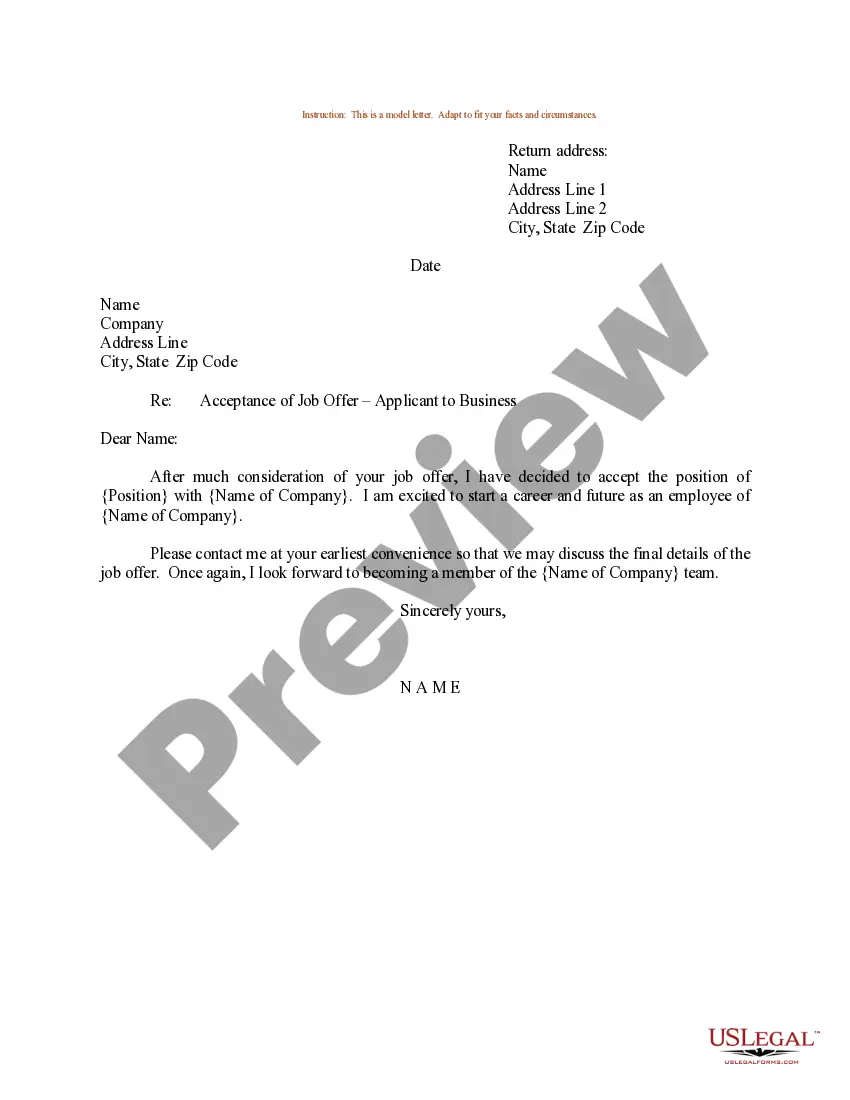
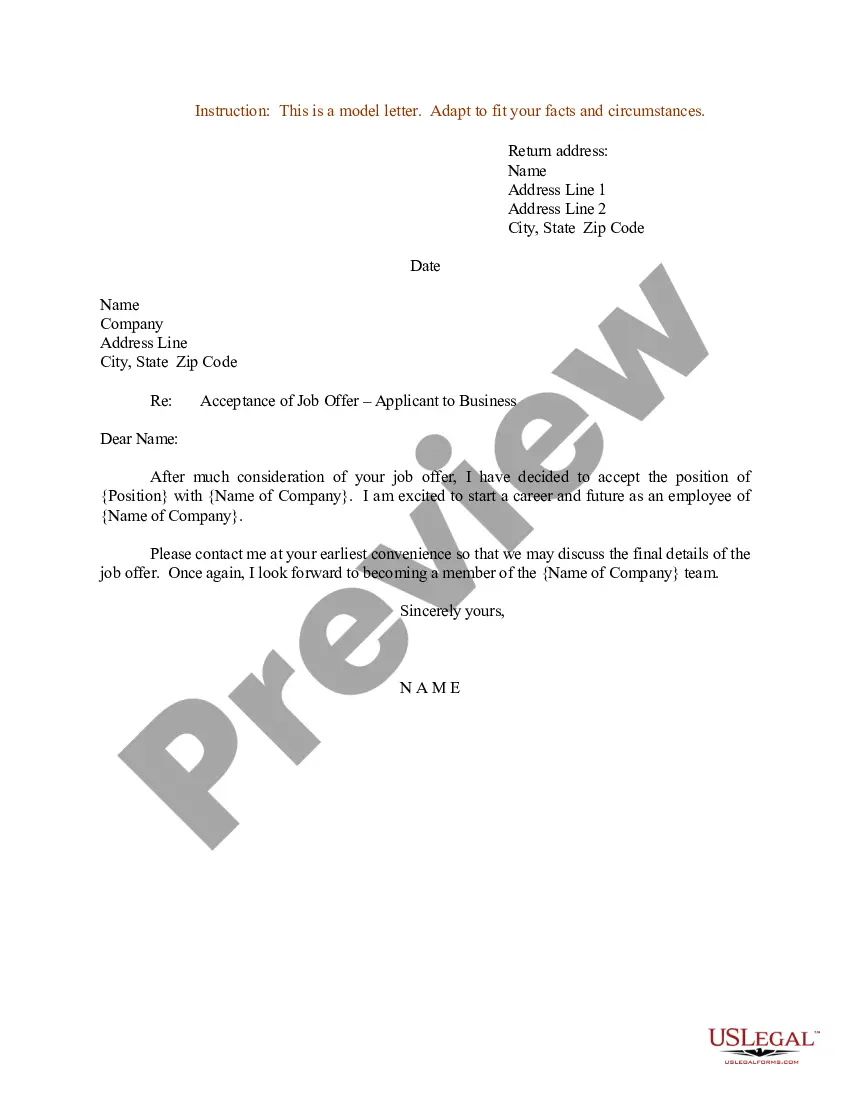
Military Acceptance Letter Format In Orange
Description
Get your form ready online
Our built-in tools help you complete, sign, share, and store your documents in one place.
Make edits, fill in missing information, and update formatting in US Legal Forms—just like you would in MS Word.
Download a copy, print it, send it by email, or mail it via USPS—whatever works best for your next step.
Sign and collect signatures with our SignNow integration. Send to multiple recipients, set reminders, and more. Go Premium to unlock E-Sign.
If this form requires notarization, complete it online through a secure video call—no need to meet a notary in person or wait for an appointment.
We protect your documents and personal data by following strict security and privacy standards.

Make edits, fill in missing information, and update formatting in US Legal Forms—just like you would in MS Word.

Download a copy, print it, send it by email, or mail it via USPS—whatever works best for your next step.

Sign and collect signatures with our SignNow integration. Send to multiple recipients, set reminders, and more. Go Premium to unlock E-Sign.

If this form requires notarization, complete it online through a secure video call—no need to meet a notary in person or wait for an appointment.

We protect your documents and personal data by following strict security and privacy standards.
Looking for another form?








Form popularity
FAQ
A NEXUS letter is the medical evidence a doctor prepares for a veteran that explains how and why the veteran's current medical condition is related to his military service or secondary to an established service connected disability.
It should focus on the facts and the doctor's conclusions. The doctor should mention in the letter that he has reviewed your entire VA file and medical records. If he fails to do so, the VA may disregard his letter. The letter should mention that the doctor has recently examined you.
A strong disability nexus letter for PTSD must include: A discussion of relevant medical history from service to the present day, The likelihood that the PTSD was caused or aggravated during service, and. A reasoned explanation for the conclusion.
Tips for a Doctor to Write an Effective Nexus Letter Identify the veteran and the purpose of your letter of support. Identify yourself, including your credentials and experience. Explain your clinical relationship with the veteran. State the veterans diagnosis.
Yes, you can win a claim without a Nexus letter if your condition is clearly documented and directly connected to your service, but it may help to strengthen VA disability claims with insufficient evidence.
4 Essential Elements of a Successful VA Nexus Letter Professionals Qualified to Write Nexus Letters. Physician's Credentials: Establishing Trust and Authority. Comprehensive Review of Medical and Military Records. Expert Medical Opinion on Service Connection. Comprehensive Medical Rationale Supporting the Opinion.