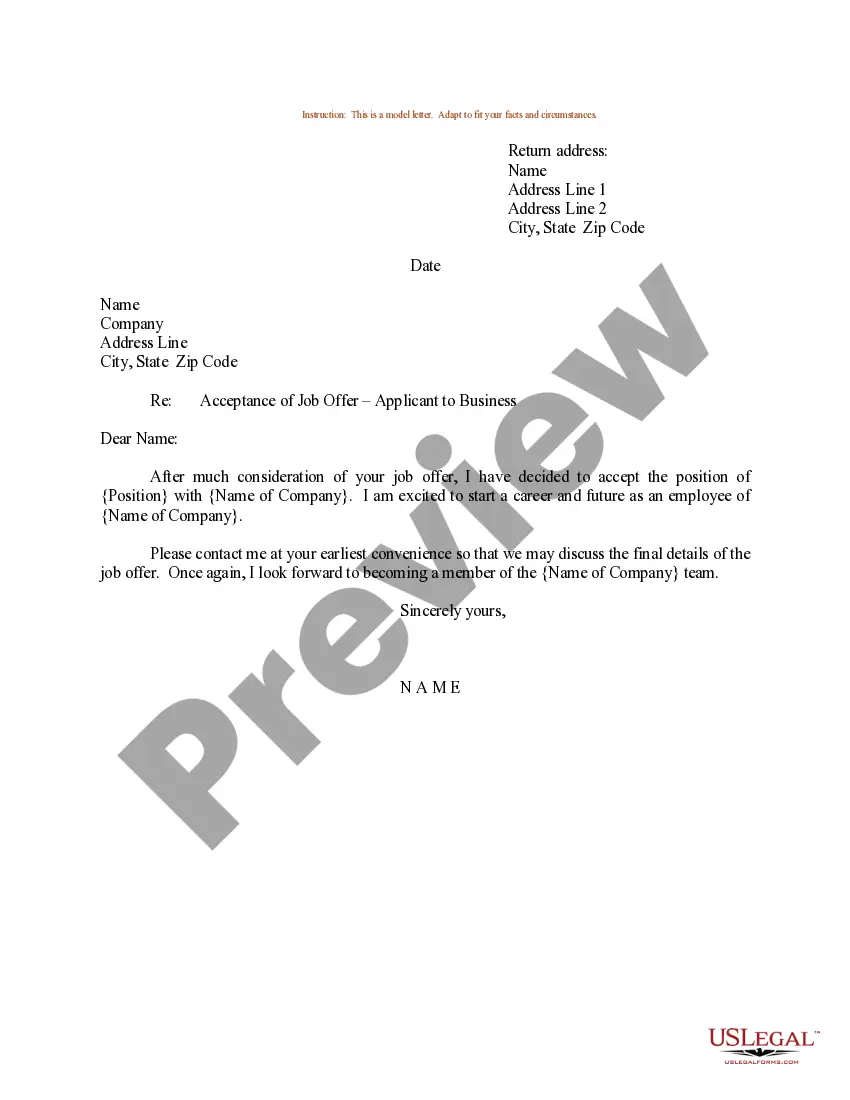
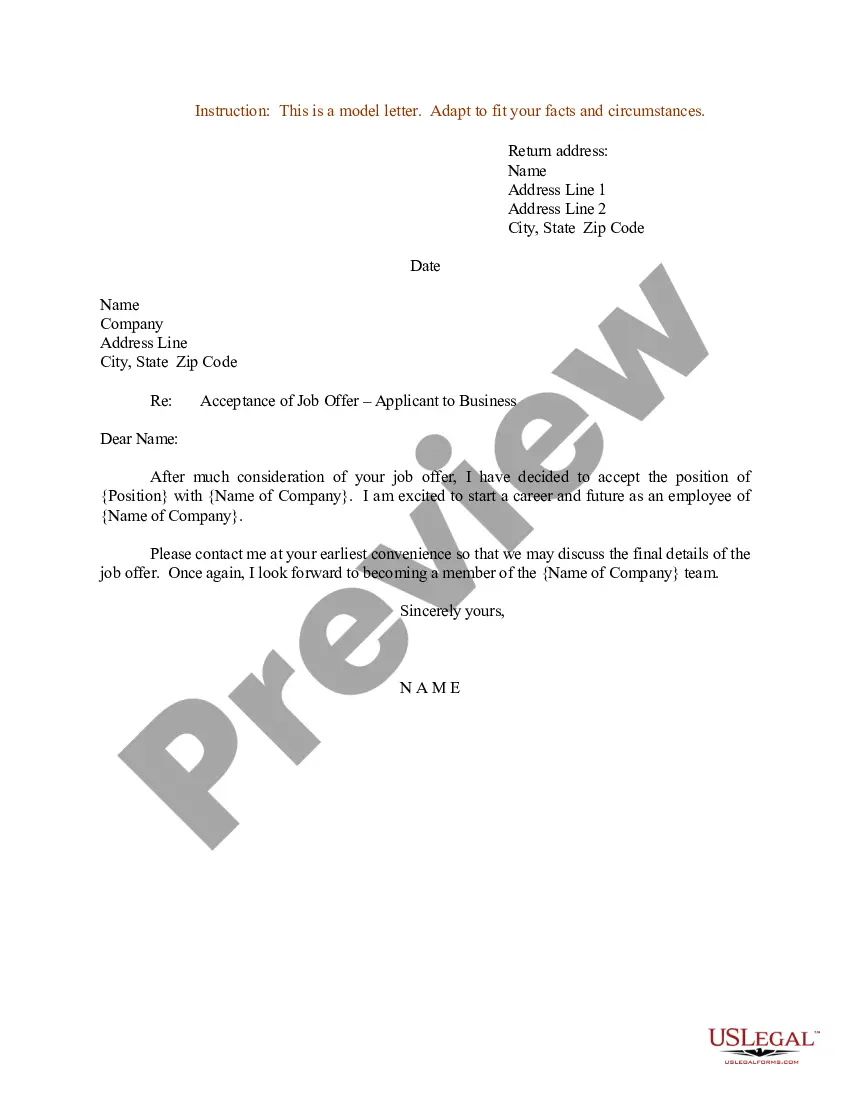
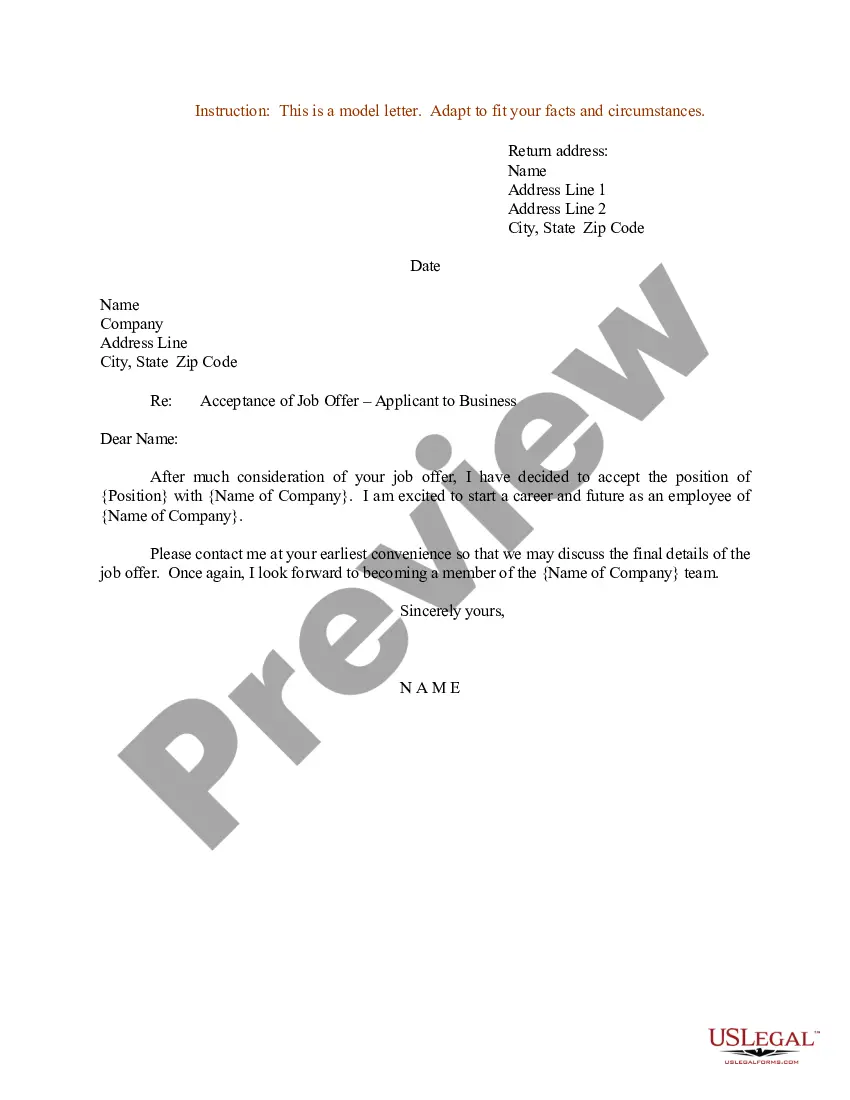
Military Acceptance Letter For J In Kings
Description
Get your form ready online
Our built-in tools help you complete, sign, share, and store your documents in one place.
Make edits, fill in missing information, and update formatting in US Legal Forms—just like you would in MS Word.
Download a copy, print it, send it by email, or mail it via USPS—whatever works best for your next step.
Sign and collect signatures with our SignNow integration. Send to multiple recipients, set reminders, and more. Go Premium to unlock E-Sign.
If this form requires notarization, complete it online through a secure video call—no need to meet a notary in person or wait for an appointment.
We protect your documents and personal data by following strict security and privacy standards.

Make edits, fill in missing information, and update formatting in US Legal Forms—just like you would in MS Word.

Download a copy, print it, send it by email, or mail it via USPS—whatever works best for your next step.

Sign and collect signatures with our SignNow integration. Send to multiple recipients, set reminders, and more. Go Premium to unlock E-Sign.

If this form requires notarization, complete it online through a secure video call—no need to meet a notary in person or wait for an appointment.

We protect your documents and personal data by following strict security and privacy standards.
Looking for another form?




Form popularity
FAQ
How Hard Is It to Get Into West Point? West Point is notorious for being very selective, with an 11% acceptance rate.
The 50% number comes from the amount of people with congressional nominations who get in. The nomination is generally the hardest part, though, so there are a good number of people who won't get a nomination even though they've done everything else.
A nomination is required to attend West Point. There are two types: Congressional (your Representative or one of your State's Senators) and Service-Connected. Each Congressional Representative and Senator has their own requirements and deadlines for nomination applications, but all of them are due sometime in the fall.
How does the nomination process work? Every member of the U.S. House of Representatives and U.S. Senate can award ten nominations to each of the service academies. Every office has its own process, so contact your Congressperson and Senators.
A candidate may seek a nomination from the following: A member of the U.S. House of Representatives who represents the congressional district in which the candidate resides. Both U.S. Senators from his or her state. Apply directly to the Vice President of the United States.
Nominations are based on a "whole person" evaluation. Factors such as academic achievements, extra-curricular activities, leadership skills, physical aptitude, character, motivation, and the results of interviews are taken into consideration and compared with other applicants.
Your commitment will be at least five years of active duty and three years in the Individual Ready Reserve (IRR)—where you'll return to civilian life but need to be ready to help in a national emergency—for a total of eight years. However, if you leave USMA before your junior year, you don't have a service commitment.
For assistance at any point during the application process, please contact your Regional Admissions Officer . Meet the Basic Requirements. U.S. citizenship. Take the ACT or SAT. Submit Your Application. Obtain a Nomination. Complete the CFA. Pass the medical exam. Complete Your Candidate Checklist.
NATO Phonetic Alphabet SymbolCode WordMorse Code J Juliett ● ▬ ▬ ▬ K Kilo ▬ ● ▬ L Lima ● ▬ ● ● M Mike ▬ ▬22 more rows
Sign your name and, if you feel comfortable, include your address so they can write back. Example Structure: Dear (Soldier's Name), I hope this letter finds you well. My name is (Your Name), and I'm from (Your Location). I just wanted to take a moment to thank you for your service and sacrifice.