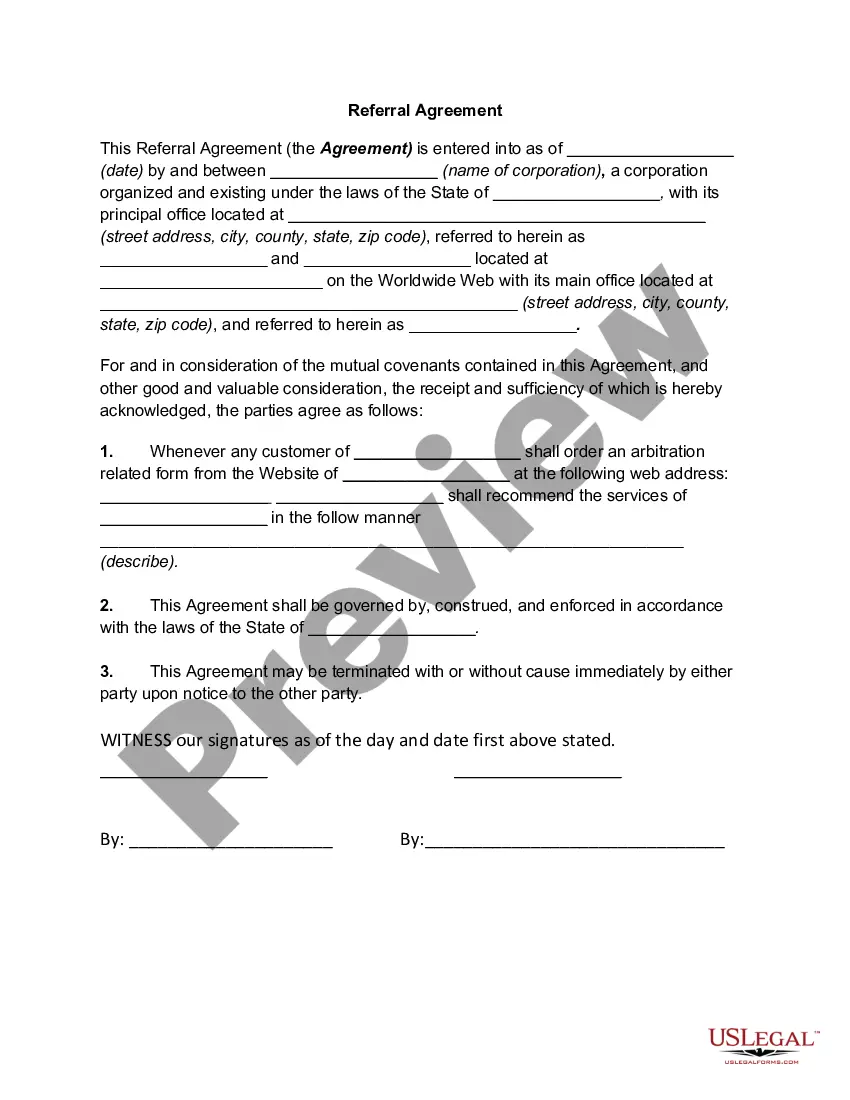
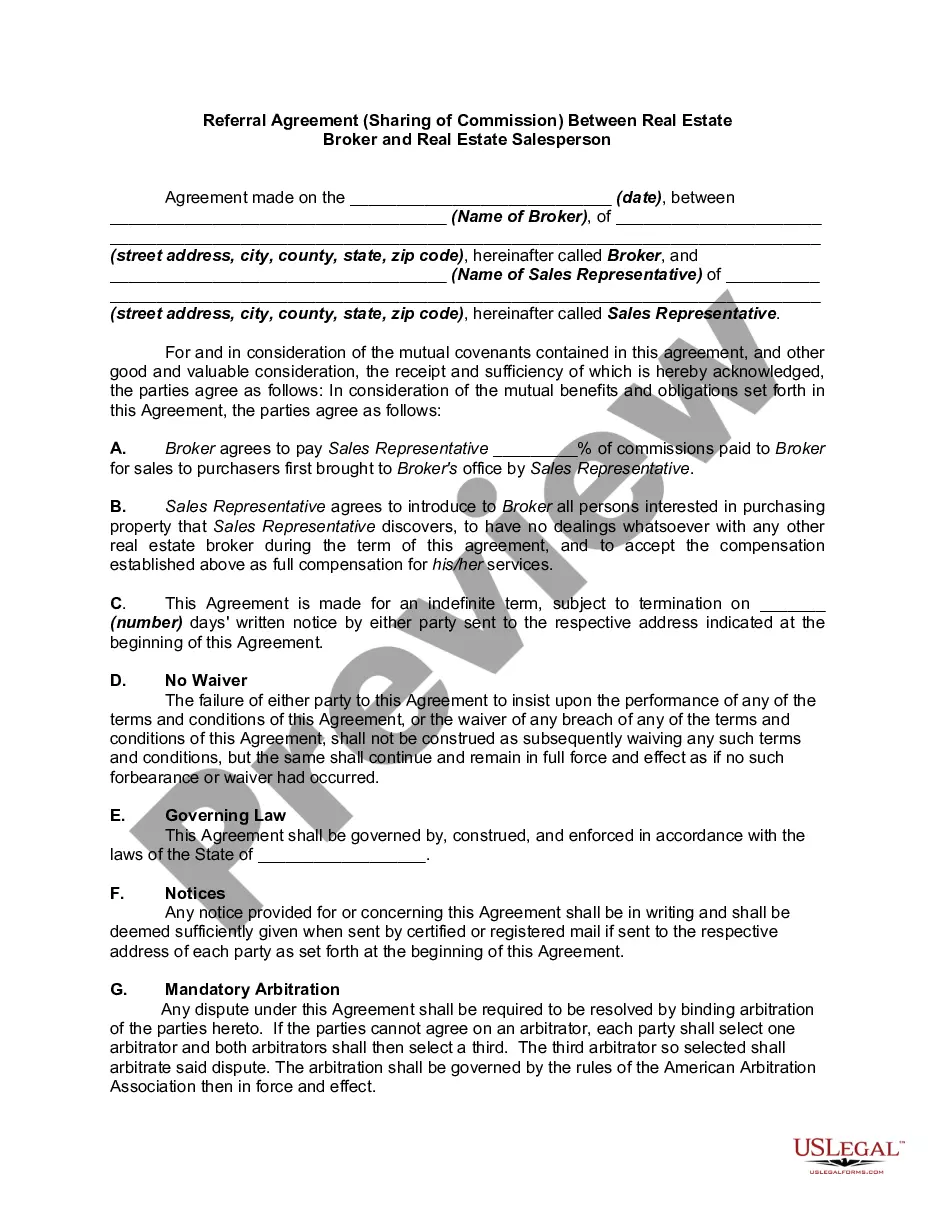
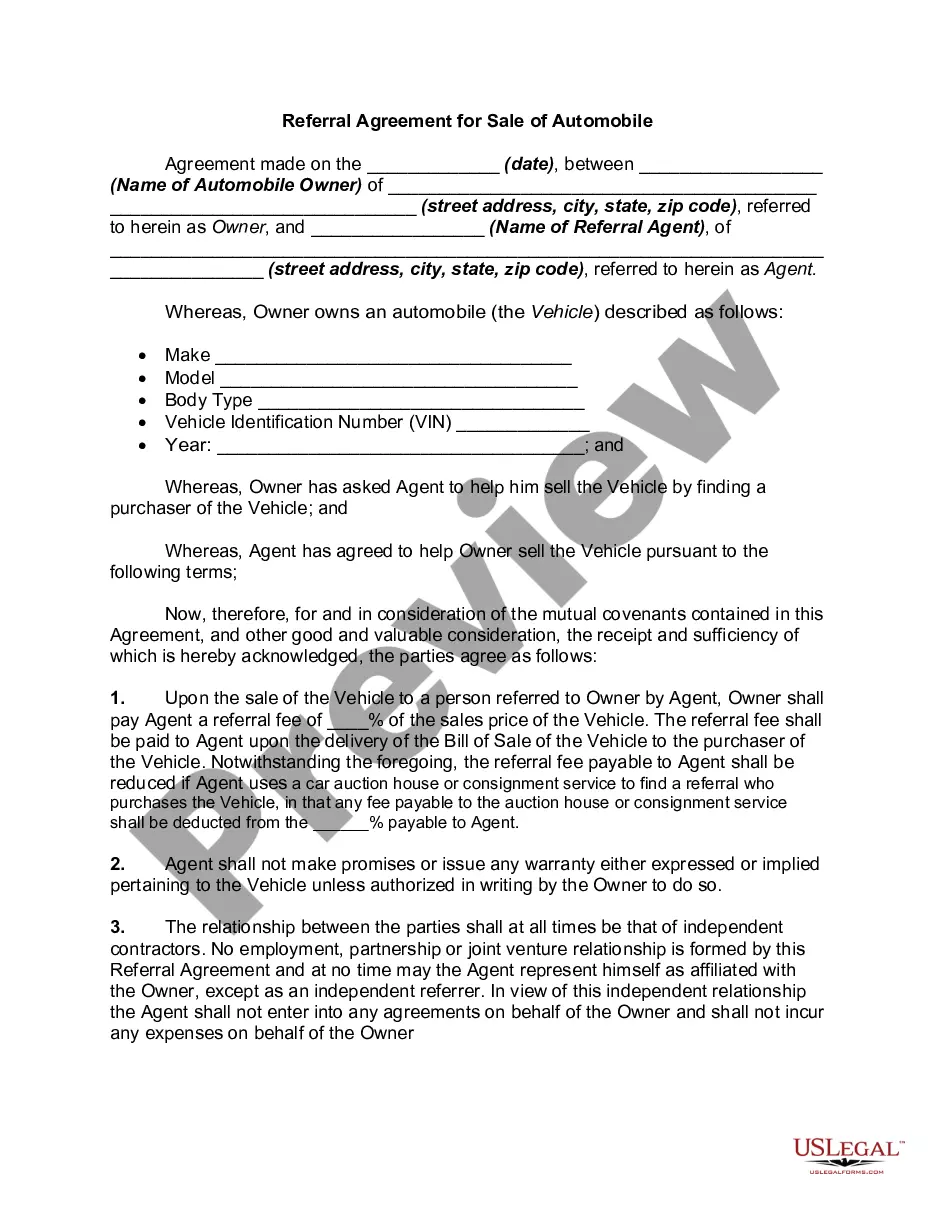
Client Referral Agreement For Services In Palm Beach
Description
Get your form ready online
Our built-in tools help you complete, sign, share, and store your documents in one place.
Make edits, fill in missing information, and update formatting in US Legal Forms—just like you would in MS Word.
Download a copy, print it, send it by email, or mail it via USPS—whatever works best for your next step.
Sign and collect signatures with our SignNow integration. Send to multiple recipients, set reminders, and more. Go Premium to unlock E-Sign.
If this form requires notarization, complete it online through a secure video call—no need to meet a notary in person or wait for an appointment.
We protect your documents and personal data by following strict security and privacy standards.

Make edits, fill in missing information, and update formatting in US Legal Forms—just like you would in MS Word.

Download a copy, print it, send it by email, or mail it via USPS—whatever works best for your next step.

Sign and collect signatures with our SignNow integration. Send to multiple recipients, set reminders, and more. Go Premium to unlock E-Sign.

If this form requires notarization, complete it online through a secure video call—no need to meet a notary in person or wait for an appointment.

We protect your documents and personal data by following strict security and privacy standards.
Looking for another form?
Form popularity
FAQ
What does Referral arrangement mean? Any arrangement to refer or recommend a client to a third party or to be introduced to a client by a third party.
The agreement usually provides guidelines for compensating the party that refers the customer, safeguards the referred clients or customers, and maintains confidentiality. It's essentially a win-win situation for both parties.
Complementary businesses: Businesses that offer non-competing but complementary services can partner through referral agreements. For example, a web designer might refer clients to a marketing agency or vice versa. This allows both businesses to expand their reach and target a wider audience.
How to Draft a Referral Agreement? Step 1: Identifying the Parties. Step 2: Scope of Referral Services. Step 3: Payment or Commission Details. Step 4: Term and Termination. Step 5: Confidentiality. Step 6: Non-Compete Clause (Optional) ... Step 7: Indemnification. Step 8: Termination.
Parts of a referral agreement Date. The date should appear at the beginning and end of the contract. Names and roles of the parties involved. Identify the parties to the agreement. Duration of the agreement. State how long the agreement will last. Consideration. Acceptance.
A referral agreement is a formal contract that two businesses sign to enable one party to refer customers or clients to the other party for a reward. Many businesses enter into referral agreements because they consider good referrals as a valuable and reliable source of revenue.
As with all agreements, referral contracts must have the following to be legally enforceable: Date. The date should appear at the beginning and end of the contract. Names and roles of the parties involved. Identify the parties to the agreement. Duration of the agreement. Consideration. Acceptance.
Referral forms gather essential information necessary for effective referrals. Typical form fields include: Name and contact details. Reason for the referral. Specific services or specialists being referred to.
A referral agreement should cover several aspects, such as the scope and duration of the agreement, the referral process and criteria, compensation and payment terms, performance and quality standards, as well as confidentiality and non-compete clauses.
8 Steps You Can Follow To Create A Referral Program Step 1: Define Your Referral Program Goals. Step 2: Design Your Referral Program. Step 3: Choose Your Rewards And Incentives. Step 4: Make sure you have a killer offer! ... Step 5: Build Your Referral Program.